

Welding Clothing in China: Your Ultimate Guide to Safety and Quality Gear
2026-07-23
When it comes to welding, safety isn’t just a priority—it’s a necessity. China has emerged as a global hub for protective gear, offering everything from flame-resistant jackets to heavy-duty gloves. But with so many options, how do you separate reliable quality from risky shortcuts? This guide dives deep into the world of welding clothing in China, spotlighting trusted brands like DROTEX, known for their rigorous standards and durable designs. Whether you’re a seasoned welder or just getting started, understanding what makes gear truly safe can save more than your skin—it could save your life.
Beyond the Sparks: What Makes Chinese Welding Apparel Reliable
When a welder steps into the shower of molten metal, the last thing they should question is whether their gear will hold. Chinese welding apparel has moved beyond basic flame resistance, embedding reliability into every stitch through a pragmatic blend of material science and real-world testing. Fabrics like treated cotton and aramid blends are engineered to resist ignition while staying breathable enough for long shifts in stifling shipyards. The secret isn’t just in the fiber—it’s in how the seams are reinforced with heat-resistant threads that refuse to unravel under thermal stress, a detail often overlooked until it’s too late.
Reliability also grows from a culture of continuous iteration rather than complacency. Manufacturers closely monitor feedback from heavy industries—mining, construction, and pipeline work—and adjust designs to cope with real hazards like jagged edges, grinding sparks, and repetitive motion wear. Reinforced panels are now strategically placed not just on the chest and arms, but on high-friction zones like the left shoulder where torch cables often rest. This quiet evolution, driven by workers’ daily grit, turns protective clothing into a second skin that doesn’t bind, split, or give way mid-bead.
Durability in the field is matched by a rigorous, multi-standard approach to certification. Rather than meeting a single baseline, many producers test to overlapping international benchmarks, ensuring that a jacket purchased in Singapore performs as stubbornly as one used in Rotterdam. That might mean exposing samples to prolonged radiant heat, or putting zippers through thousands of cycles to confirm they won’t jam in an emergency. What emerges is apparel that earns trust not through flashy claims, but through a quiet consistency: wash after wash, shift after shift, the protection remains uncompromised.
Fabric Deep Dive: Balancing Heat Resistance and Day-Long Comfort
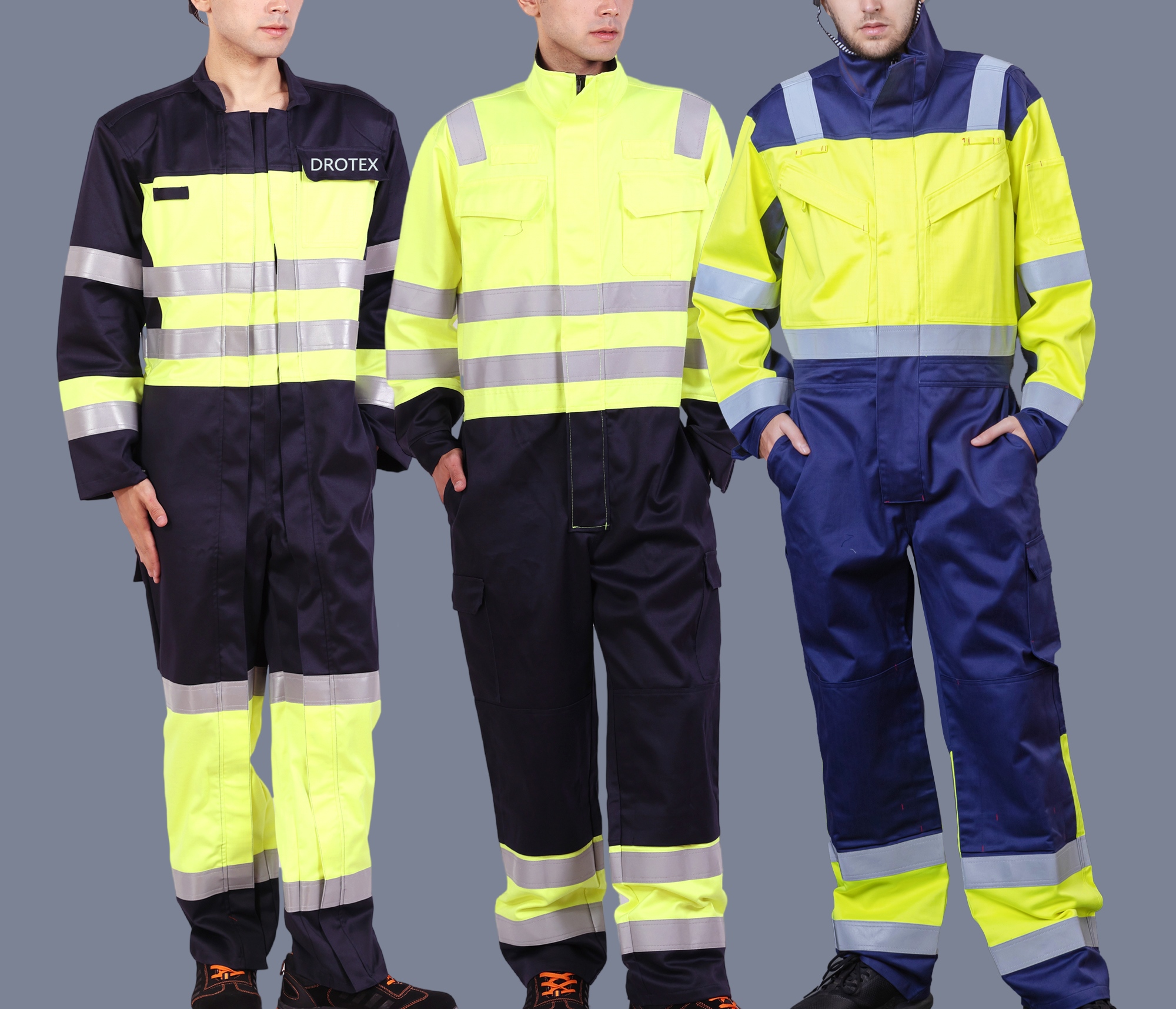
The real test of any performance fabric isn’t just how it handles a spike in temperature—it’s whether it can do so while remaining genuinely comfortable hour after hour. Too often, heat-resistant materials trap moisture or stiffen against the skin the moment activity stops. What sets a properly engineered textile apart is its ability to wick efficiently during high output, then settle into a soft, unobtrusive drape once you’ve cooled down. This dual-phase behavior relies on a blend of open-knit constructions and fiber-level treatments that dissipate heat without sacrificing pliability.
Behind the scenes, the yarn choice and weave density determine how air flows through the garment without compromising its thermal barrier. Hollow-core fibers can create a microclimate that buffers against external heat while channeling sweat away from the body. The result is a fabric that doesn’t just shield you from an oven-like environment—it actively regulates your microclimate, so you stay dry and irritation-free even when the sun is relentless. It’s a balance that’s tricky to get right, but when it’s done well, you notice the absence of distraction more than anything else.
Navigating Certifications and Safety Marks in Protective Wear
Understanding the landscape of certifications and safety marks in protective wear is essential for making informed decisions. These symbols are not just stickers; they represent rigorous testing against specific standards. Whether it's for high-visibility clothing, chemical-resistant gloves, or protective footwear, each mark confirms that the gear meets defined safety requirements. Familiarizing yourself with commonly recognized marks can help you cut through marketing claims and focus on genuine protection.
Different regions and industries rely on distinct certification systems. In Europe, the CE mark coupled with a notified body number and specific EN standards gives detailed insight into the level of protection. In North America, markings from organizations like ANSI, NFPA, or CSA indicate compliance with local regulations. It’s important to check that the mark is not just present, but that it matches the exact hazard you expect to face—a chemical suit certified for splash protection won’t necessarily withstand liquid jets or vapors.
Beyond the logo, reading the accompanying label or user leaflet reveals vital information on sizing, care, limitations, and shelf life. Some certifications also require periodic retesting or have expiration dates. When purchasing, look for transparent documentation rather than vague claims of “certified quality.” By learning to navigate these symbols efficiently, you can build a protective wardrobe that truly performs on the job.
Hidden Details That Reveal Superior Stitching and Seam Integrity
A quick glance at a garment might not tell you much, but turn it inside out and the real story unfolds. Inside seams, often overlooked, carry the fingerprints of the maker—tiny, deliberate choices that separate meticulous craftsmanship from rushed assembly. Look for stitching that remains consistently spaced, even around curves and corners, without any puckering or loose threads. The thread itself should match the fabric's weight and color, blending in or contrasting with purpose, not as an afterthought.
Seam finishing is another silent indicator. Bound, flat-felled, or French seams don't just prevent fraying; they speak to a commitment that goes beyond minimum standards. Run your fingers along the seam—quality work feels smooth and unobtrusive, never itchy or bulky. On tailored pieces, inspect areas like armholes and collars where stress concentrates. A well-crafted garment reveals reinforcement stitches or neatly tucked edges that hold shape under movement, proving the piece was built to last, not just to sell.
Modern Innovations: How Ergonomic Cuts Reduce Fatigue
The way we handle raw materials in a kitchen or workshop has quietly been reimagined. It's not just about sharper blades or stronger motors anymore—it's about how the tool interacts with the human body. Ergonomic cutting techniques shift the focus from brute force to biomechanics, distributing pressure more evenly across the hand and wrist. This reduces the buildup of stress in localized areas, meaning tasks that once left you feeling drained after an hour can now be sustained throughout the day with noticeably less strain.
One subtle but powerful advancement is the integration of angled handles and contoured grips, which keep the wrist in a neutral position. When the joint is aligned naturally, it takes far less effort to control the cut, and the supporting muscles don't have to work overtime to stabilize each movement. Combined with materials that absorb vibration, these designs prevent the micro-fatigue that usually creeps up after repetitive use. The result feels less like fighting the material and more like guiding it.
Beyond the tool itself, the way workstations are configured has undergone a similar rethink. Height-adjustable surfaces, strategically placed guides, and clamp systems that minimize awkward postures all contribute. By removing the need to hunch over or apply pressure from an unnatural angle, these setups allow the user to maintain consistent energy levels. It's a shift that prioritizes endurance and comfort, turning a potentially exhausting process into something far more sustainable for both professionals and hobbyists alike.
Practical Maintenance Habits That Keep Safety Gear at Its Peak
Most people toss their gear into a corner after a long day, but the real pros know that a five-minute inspection can catch a loose strap or a cracked buckle before it becomes a real hazard. Instead of a casual glance, run your fingers along seams and check for stiffness or discoloration—these subtle signs often hint at deeper wear. Pair that with a simple wipe-down after each use; dust and sweat aren’t just gross, they slowly eat away at materials. A damp cloth is usually all it takes to keep fabrics and foams in fighting shape.
Storage is where good habits slip. Don’t just pile everything in a sweltering trunk or a freezing shed. UV rays and temperature swings wreck elasticity and weaken shells. Even a basic wall hook in a cool, dry closet makes a world of difference. For helmets, a padded bag adds an extra shield against accidental drops that can compromise inner layers without a single visible crack. And let’s be honest, leaving gear in direct sunlight after a weekend trip is a slow fade to brittleness.
Sometimes it’s the small, almost obsessive rituals that pay off—like rotating between two sets of gloves so each pair has time to fully dry and spring back to its original shape. Or using a light silicone-based conditioner on lenses and seals to fend off fog and cracking, rather than waiting until blurry vision becomes a distraction on the job. These aren’t just chores; they’re ways to stretch a paycheck and avoid that sinking feeling when gear fails right when you need it most.
FAQ
Chinese welding clothing often combines advanced flame-resistant materials with rigorous safety testing, offering reliable protection at competitive prices. Many manufacturers comply with international standards like ISO 11611, ensuring durability and comfort in demanding environments.
Start by assessing the specific risks of your welding method—MIG, TIG, or stick. Look for jackets and aprons with appropriate heat and spatter resistance, and don't overlook details like reinforced stitching, adjustable cuffs, and breathable panels to balance protection with mobility.
Verify that items meet recognized standards such as EN ISO 11611 for welding protection, EN ISO 11612 for heat and flame, and possibly NFPA 70E for electrical arc flash. Reputable suppliers will clearly label certifications and provide test reports upon request.
Yes, premium options typically use higher-grade leather or inherently flame-resistant fabrics like treated cotton blends, with better seam construction and longer lifespan. Budget gear may suffice for light-duty tasks, but investing in quality pays off for frequent or heavy-duty welding.
Many Chinese manufacturers offer customization, from adjusting sizes and adding company logos to selecting specific materials and colors. You can often request samples before bulk orders, allowing you to evaluate fit and performance for your team's needs.
Follow the manufacturer's cleaning instructions carefully—usually gentle washing with mild detergent and no fabric softeners. Regularly inspect for holes, thinning, or damaged closures, and retire any garment that shows significant wear, as compromised gear can expose you to burns.
Novices often prioritize price over protection, ignore proper sizing leading to restricted movement, or overlook the importance of ancillary items like spats and caps. Always match the gear to the actual welding conditions and don't skip reading user reviews or requesting sample evaluations.
Trade platforms like Alibaba or Made-in-China.com aggregate thousands of suppliers, but you can also source directly from industrial hubs like Wenzhou or Guangzhou. Attend trade fairs such as the Canton Fair, or request referrals from industry peers to connect with vetted manufacturers who prioritize quality control.
Conclusion
Chinese welding clothing has evolved far beyond basic protection, integrating advanced fabrics and thoughtful design to meet real-world demands. At its core, reliability stems from tightly woven, inherently flame-resistant materials like modacrylic blends and treated cotton, which balance heat shielding with breathability. The hidden strengths lie in reinforced stress points—double-stitched seams, bar-tacked pockets, and seamless underarm gussets—that prevent burst-outs under strain. Certifications such as EN ISO 11611 and AWS F2.3 offer a tangible trust mark, but savvy buyers look for third-party test reports validating arc rating and shrinkage control. Ergonomic patterning, once an afterthought, now drives comfort: pre-bent sleeves, articulated knees, and side-action pleats reduce drag when crouching or reaching, cutting fatigue over ten-hour shifts. It’s this marriage of gritty durability and wearer-centric engineering that sets top-tier gear apart.
Yet even the best apparel demands care to stay effective. Simple habits—cold-water washing with liquid detergents, air-drying away from direct sunlight, and prompt removal of oil or metal spatter—preserve both fire resistance and fabric integrity. Avoid fabric softeners and chlorine bleach, which degrade protective coatings. Storage in cool, dry lockers rather than grimy toolboxes prevents premature wear. Many Chinese manufacturers now embed QR codes linking to maintenance logs, reinforcing a culture of safety beyond the purchase. Ultimately, quality welding gear isn’t a single feature but a system: flame-resistant core, smart fit, verifiable protection, and a maintenance routine that extends its lifecycle. In a trade where seconds matter, this holistic approach ensures that protective clothing doesn’t just shield against sparks but becomes an invisible partner in every weld.
Contact Us
Contact Person: Sandy
Email: [email protected]
Tel/WhatsApp: 86150 8310 5120
Website: https://www.frdrotex.com