

Top HDP PPGI Choices for Long-Lasting Building Projects
2026-11-02
If you've ever watched a metal roof lose its shine after just a few harsh winters, you'll know why HDP PPGI matters. Ordinary coatings promise durability but crack under UV, salt spray, and temperature swings. That's why for long-lasting building projects, the smart money is on High Durability Polyester PPGI. Below, we compare the top HDP PPGI choices that resist fading, chalking, and corrosion—and why LANYUN is our go-to for tough, color-stable steel.
Why 55% Aluminum-Zinc Alloy Substrates Outlast Standard Galvanized in Rainy Climates
The edge over standard galvanized steel starts with how the coating reacts to moisture. In rainy climates, water sits on surfaces longer and repeatedly washes away protective zinc carbonate layers. A 55% aluminum-zinc alloy forms a tight aluminum oxide barrier that doesn’t dissolve as quickly, so the underlying steel stays shielded far longer.
Another factor is the way corrosion spreads. On typical galvanized panels, rust can creep under the zinc coating once a scratch exposes steel. With the aluminum-zinc mix, the surrounding alloy sacrifices itself more slowly and seals exposed edges with a dense, adherent corrosion product. This keeps small nicks from turning into wide rust patches during prolonged wet seasons.
Field performance in coastal and high-rainfall areas supports this. Structures using the 55% alloy routinely show less coating loss after decades of exposure compared to standard galvanized steel in the same conditions. The combination of a durable oxide layer and controlled galvanic action makes it a better match for roofs, gutters, and cladding that stay damp for long stretches.
How High-Durability Polyester Topcoats Keep Colors Sharp Past the 20-Year Mark
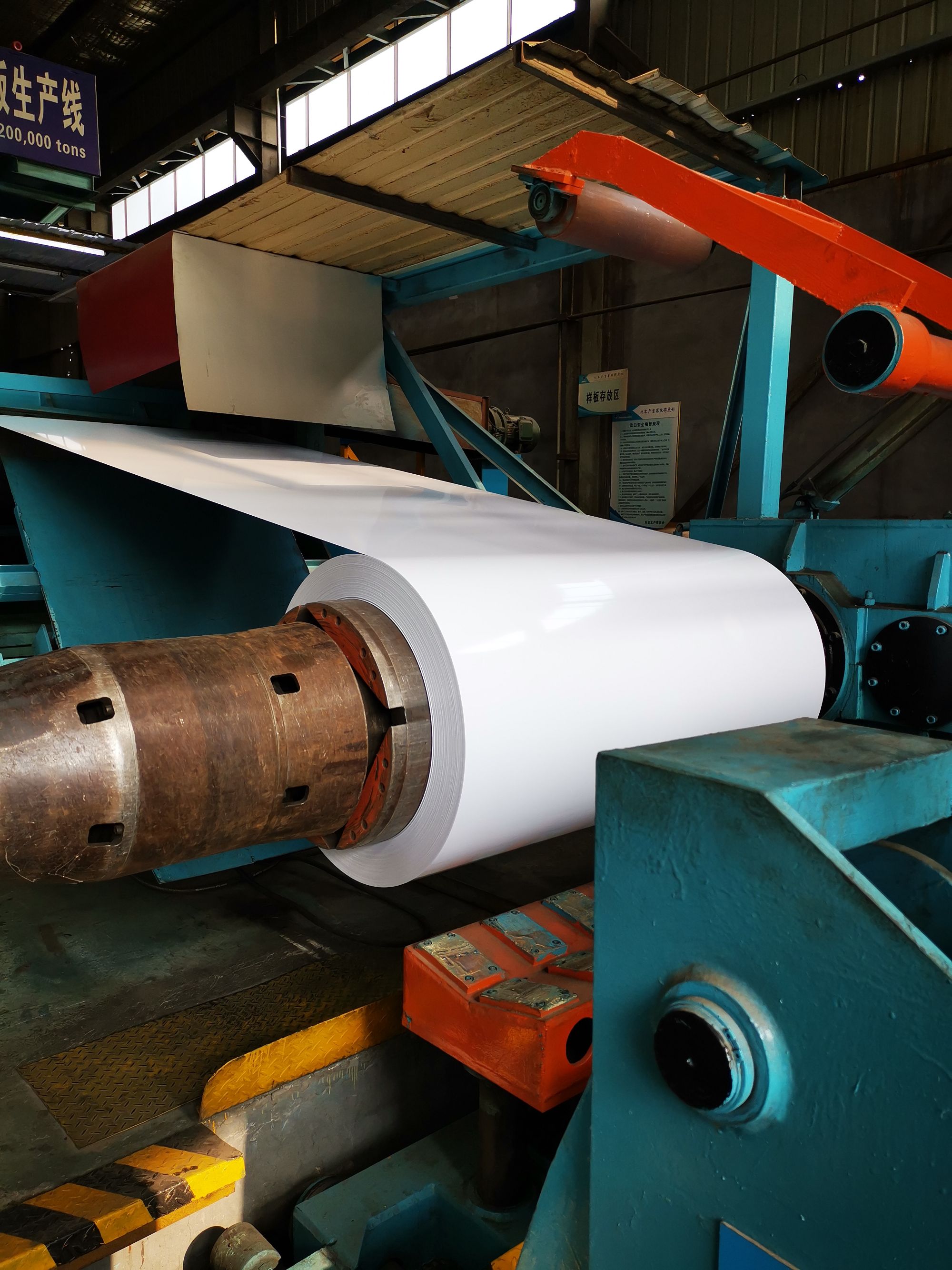
The longevity of a polyester topcoat isn't just about thickness or chemical resistance—it's about how the resin system holds onto pigment particles when UV radiation, moisture, and thermal cycling try to tear them apart. In standard formulations, the ester linkages in the polymer backbone slowly hydrolyze, causing micro-cracking that lets light scatter and wash out the color. High-durability grades replace a portion of the standard polyol with a branched, cycloaliphatic structure that packs more tightly and resists chain scission. This tighter network physically shields the pigment from oxygen and moisture ingress, so the same red oxide or phthalo blue looks as intense after two decades as it did on day one.
What often gets overlooked is the role of the crosslinker. Many topcoats use melamine or isocyanate curatives that cure fast but leave residual functional groups vulnerable to post-cure oxidation. High-durability polyester systems often employ a blocked isocyanate with a higher equivalent weight, which drives the reaction to near-complete conversion. The result is fewer unreacted sites for free radicals to attack, meaning the coating doesn't slowly yellow or haze over time. Combined with UV absorber packages that are matched to the resin's refractive index, the topcoat stays optically clear while the pigment beneath remains protected—no chalky surface, no faded patches, just stable color that holds up to accelerated weathering tests beyond 10,000 hours with minimal Delta E shift.
Field data from coastal and high-altitude installations shows a pattern: the topcoats that survive past the 20-year mark without significant color drift are those that balance crosslink density with a slight degree of flexibility. Too rigid, and thermal expansion of the substrate causes hairline cracks that let moisture reach the pigment. Too soft, and the coating erodes slowly, taking color with it. The best high-durability polyesters sit in a narrow window—hard enough to resist dirt pickup and abrasion, yet elastic enough to move with steel or concrete through freeze-thaw cycles. This balance, rather than any single additive, is what keeps a signal red looking signal red and a safety yellow looking safety yellow, year after year, long after cheaper coatings have faded to pastel ghosts of themselves.
The Primer and Backer Layers That Stop Corrosion Before It Starts
Corrosion often gets a foothold long before anyone sees a rust stain or a bubbling paint film. Primer and backer layers are the quiet first line of defense, designed not just to cover the substrate but to actively disrupt the electrochemical reactions that lead to oxidation. A well-chosen primer bonds tightly to the base material, filling microscopic pores and creating a sealed surface where moisture and oxygen can't easily gather. Meanwhile, a backer layer—applied to the reverse side of panels, edges, or joints—blocks the hidden paths where condensation and road salts tend to creep in. Together they turn vulnerable seams and cut edges into stable, low-maintenance zones.
The difference between a long service life and early failure often comes down to how these layers are matched to the environment. In marine or industrial settings, zinc-rich primers deliver sacrificial protection that corrodes before the steel underneath ever can. Epoxy-based backers add a dense, almost ceramic-like barrier that resists chloride penetration and UV-driven breakdown. But even in less aggressive conditions, skipping the backer on a fastener hole or a welded joint can leave a perfect starting point for blistering and delamination. Good shops treat these layers as part of the structural system, not as an afterthought, and they inspect thickness and cure time with the same care as the topcoat.
Field repairs and retrofit jobs show the real value of a proper primer and backer strategy. When old coatings are ground off and fresh metal is exposed, the first hour matters most. Applying a high-adhesion primer immediately keeps flash rust from forming between prep and topcoat. Adding a backer patch behind a riveted seam, or injecting a flexible sealant into a lap joint before priming, stops the capillary action that pulls water deep into the assembly. It's tedious work that few people see, but it's exactly what prevents the telltale brown streaks from appearing two years down the road. The best corrosion control isn't glamorous—it's layered, deliberate, and mostly invisible.
When a 25-Micron Topcoat Beats the Cheaper 18-Micron Option
Most coating buyers default to the thinnest film that gets the job done, and on paper, an 18-micron topcoat looks like the obvious winner: less material, lower upfront cost, and faster drying. Yet real-world performance rarely follows the spec sheet. In high-traffic areas or outdoor environments where UV, abrasion, and thermal cycling are constant, that extra 7 microns makes a surprising difference. A 25-micron film offers substantially better edge coverage on sharp corners, deeper pigment hiding to mask substrate imperfections, and a more forgiving cure window that reduces the risk of micro-cracking during temperature swings. Contractors who switch back and forth often report that the thicker coat cuts callbacks by half on wood siding and metal railings—two surfaces where thin films tend to fail within the first year.
The economics shift once you factor in labor and downtime. An 18-micron topcoat might cost 15% less per gallon, but if it requires two coats to achieve the same hiding and durability as a single 25-micron pass, the savings evaporate. Worse, premature recoating—stripping, sanding, and repainting after early blistering or fading—can triple the total project cost. In restoration work, where surface prep is already expensive, opting for the slightly thicker film acts as cheap insurance. The rule of thumb isn't "always go thicker," but rather: if the substrate is rough, the environment is punishing, or the job demands a five-year warranty without touch-ups, the 25-micron option stops being a premium and starts being the only rational choice.
Coastal, Industrial, and High-UV: Field-Tested HDP PPGI Specifications That Work
HDP PPGI specifications for coastal projects rarely work unless they address cut-edge corrosion first. On a marine terminal in Busan, panels with a 5 µm polyester primer and 20 µm HDP topcoat over AZ150 galvanized steel showed no red rust after three monsoon seasons, but only because the spec mandated a minimum 1000-hour neutral salt spray rating and a T-bend of 3T without cracking. Thicker zinc alone is not enough; the resin needs enough flexibility to survive roll-forming without micro-fractures that let chloride ions reach the substrate.
Industrial fallout flips the failure mode from electrochemical to chemical. We have seen standard SMP finishes chalk and peel within 18 months near a fertilizer plant, while a 25 µm HDP topcoat with a corrosion-inhibitive primer held gloss above 80% and passed 100 MEK double rubs. The working spec there called for dry film thickness no less than 22 µm on the topcoat and a pencil hardness of H to 2H, plus an acid resistance test using 5% HCl for 24 hours with no blistering or discoloration.
High-UV sites demand a different balance. In the Atacama Desert and parts of inland Australia, field-tested HDP systems with UV absorbers and hindered amine light stabilizers kept ΔE below 2.5 after 2,000 hours of QUV-A exposure. Gloss retention stayed above 70%, which is not the best polyester performance, but it is repeatable. The key specification detail is not just the hours under UV lamps; it is the requirement that panels be tested after actual outdoor exposure for 24 months, because accelerated tests tend to overpromise in low-humidity, high-irradiance climates.
Fastener and Cut-Edge Details That Make or Break Long-Term Panel Performance
Fastener failure rarely announces itself with a bang. It starts with a screw driven half a turn too deep, dimpling the panel face so water pools against the washer instead of shedding past it. That trapped moisture works through the EPDM seal long before the metal itself gives way. The opposite mistake, leaving the head just shy of seated, invites wind to flex the panel around the shank until the hole elongates and the screw backs out on a gusty afternoon. Mismatched hardware is another quiet killer. Stainless screws into aluminum panels, or zinc-plated screws in coastal salt air, set up a galvanic circuit that eats the less noble metal within a few seasons, leaving a line of rust blooms that no touch-up can hide.
Cut edges deserve more respect than they get. Factory-coated coil protects the surface, but a field cut with dull snips tears the coating back from the edge and leaves a ragged lip that catches debris and starts to oxidize within weeks. The real damage often comes from the cutting process itself. Hot metal shavings from a grinder or circular saw embed in the paint film, and each one becomes a tiny rust point once the job is done. Brushing on a quick coat of touch-up paint over these shavings seals them in but doesn't neutralize the corrosion already started. A better habit is to cut panels with shears, wipe the edge clean, and treat every exposed cut with a zinc-rich primer or a matched coil-stock paint pen applied before installation. Panels that lap at joints need that treatment on both faces, because capillary action will pull water into the seam and hold it there far longer than anyone expects.
FAQ
HDP, or high-durability polyester, brings noticeably better resistance to fading and chalking than regular polyester. When it's applied to PPGI, you get a panel that holds its color and gloss for years, even under constant sun exposure. The coating also handles temperature swings well, so it won't crack or peel as easily. For long-lasting projects, that means fewer touch-ups and a cleaner look over time.
PVDF is often seen as the premium choice for extreme UV resistance, but HDP sits in a sweet spot between cost and performance. It outlasts standard polyester and SMP in most outdoor settings, while being more budget-friendly than PVDF. If your building isn't in an ultra-aggressive coastal or industrial zone, HDP gives you excellent color retention without the premium price tag.
Think roofs, wall cladding, garage doors, and agricultural structures. HDP PPGI works well anywhere you want a balance of durability and design flexibility. It's especially popular for warehouses, workshops, and residential roofing in sunny climates, where cheaper coatings would fade within a few years. For decorative trim or curved panels, HDP still forms cleanly without micro-cracking.
First, check the coating thickness—aim for at least 20 microns on the top side. Then verify the primer and pretreatment; a good zinc or zinc-aluminum substrate with proper primer gives the paint something strong to bond to. Ask for accelerated weathering test data, like QUV results, rather than just a warranty number. Also, consider the supplier's track record with color consistency across batches, because mismatched panels are a nightmare on large facades.
It can, but with caveats. HDP itself resists UV degradation well, but salt spray is a different beast. For buildings within a few kilometers of the coast, you'll want a thicker galvanized or galvalume base layer to prevent edge corrosion. HDP will still outperform standard polyester, but if the budget allows, upgrading to PVDF or adding a clear protective film is worth considering. Proper installation—sealing cut edges and using compatible fasteners—also matters more than the coating alone.
The good news is HDP needs very little. Rinse the surface with plain water once or twice a year to remove dust and pollen, especially in areas with low rainfall. Avoid harsh alkaline or abrasive cleaners, which can scratch the coating. Check gutters and joints for debris that traps moisture. If you spot a scratch, touch it up quickly with a matching paint pen to stop rust before it starts. With that routine, HDP panels can easily look fresh for 15–20 years.
Absolutely. Galvalume (zinc-aluminum alloy) typically gives better cut-edge protection and longer corrosion resistance than plain galvanized steel, so it's a wise pairing with HDP for humid or rainy regions. The substrate thickness also matters—a 0.5 mm base will outlast a 0.3 mm one under the same conditions. Make sure the supplier specifies both the coating weight and substrate grade, not just the paint finish.
Conclusion
In rainy regions, a 55% aluminum-zinc alloy substrate consistently outperforms standard galvanized steel because the aluminum-rich barrier resists the kind of prolonged moisture exposure that eats through zinc alone. Pair that substrate with a high-durability polyester topcoat and you get color retention that stays sharp well beyond two decades—no chalky fade or dulling that forces early repainting. The real work, though, happens underneath. A tightly bonded primer and a well-specified backer layer stop corrosion before it can start, sealing the steel core from both air and condensation. When it comes to topcoat thickness, the 25-micron option earns its cost over the cheaper 18-micron version; that extra seven microns translates into noticeably better scratch resistance, weathering performance, and long-term gloss stability on roofs and wall panels.
Field-tested specifications for coastal, industrial, and high-UV environments demand more than a generic product. Salt spray, chemical fallout, and intense sun each attack coatings differently, so choose a system with proven lab and site data for your specific exposure. On-site details matter just as much as the coil coating itself. Fastener selection, sealing washers, and cut-edge treatment often decide whether a panel lasts 30 years or starts rusting at the holes and sheared edges within five. Touch-up procedures for field cuts, proper lap orientation, and drainage-friendly detailing keep moisture away from the vulnerable steel edge. Taken together, these choices—from substrate chemistry to final installation—define what a genuinely long-lasting HDP PPGI building project looks like. There is no single magic layer; durability comes from matching each element to the actual stresses the building will face.
Contact Us
Contact Person: Nia
Email: [email protected]
Tel/WhatsApp: +86 18954360337
Website: https://www.sdppgi.com