

Top Conveyor Roller Company Traits for Reliable Material Handling
2026-11-02
Reliable material handling starts long before the first box hits the belt—it starts with a conveyor roller company that understands what your operation can't afford to lose. Too many buyers find that out the hard way. After years in the field, XAN has narrowed down the traits that actually predict long-term roller performance. Here's what to demand from your next supplier.
Precision Engineering That Keeps Lines Moving Without Interruption
Downtime rarely announces itself with a single dramatic failure. More often, it starts as a fractional misalignment, a seal wearing slightly unevenly, or a bearing running a few degrees hotter than it should. Precision engineering here targets those quiet variables before they compound. Tolerances are specified at the micron level, materials are chosen for thermal stability, and every rotating interface is balanced to reduce harmonic wear so the line holds its cadence without drifting into unplanned stops.
Instead of waiting for scheduled maintenance to catch drift, the system reads its own behavior in real time. Embedded sensors monitor tension, alignment, and temperature at critical transfer points, making micro-adjustments on the fly. That closed-loop feedback means corrections happen during operation, not after a stall. The payoff is a line that doesn't just recover quickly from interruptions, but avoids many of them entirely.
Just as important is what happens when a part does reach the end of its service life. Wear components are positioned for access without gutting neighboring modules, so swaps fit into short, planned windows rather than emergency shutdowns. This design-level foresight is what separates lines that occasionally achieve high speed from those that sustain it week after week.
Material Choices Built Around Your Specific Load and Environment
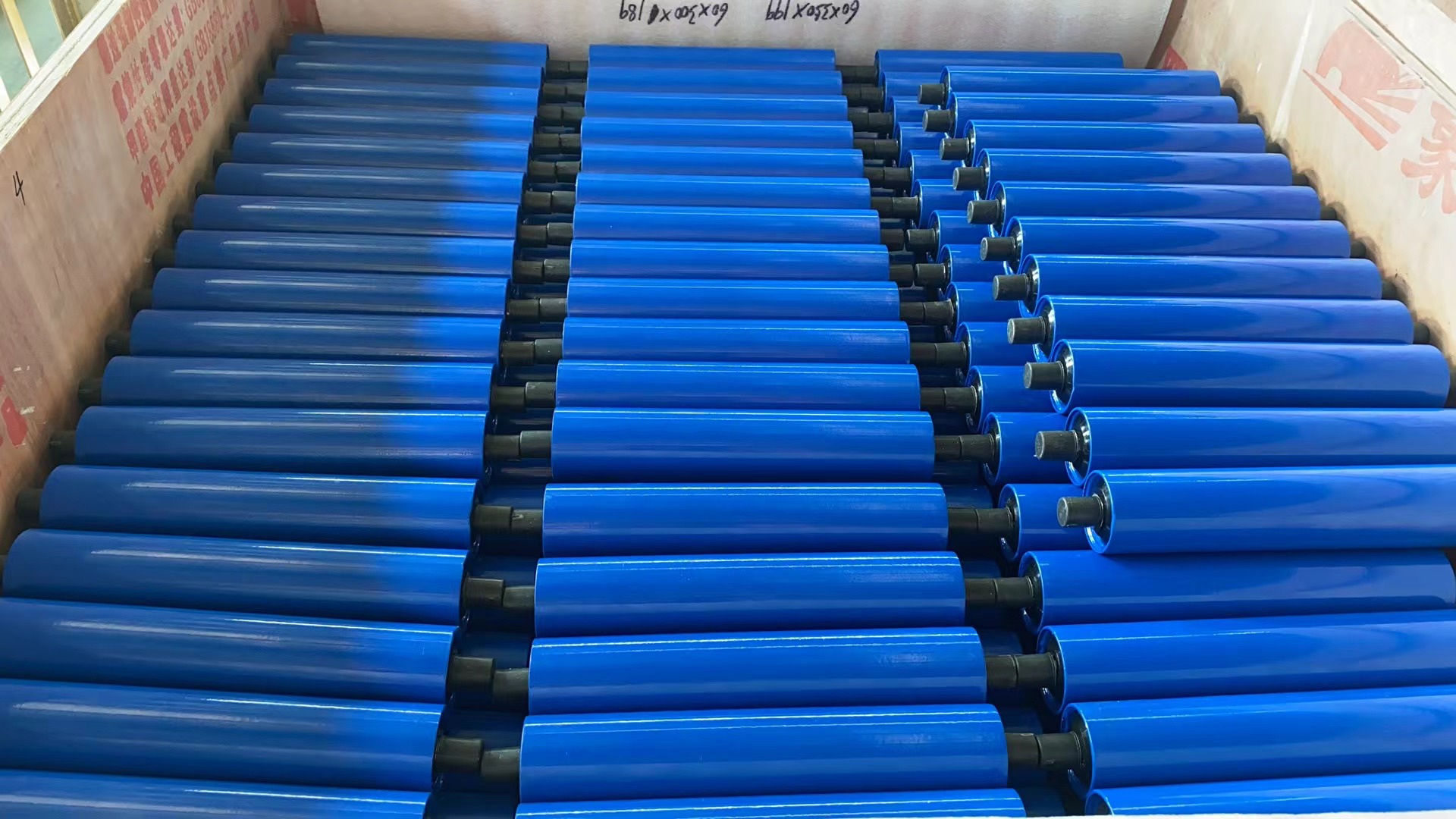
A beam that carries a steady, uniform weight wants something very different from one that gets hammered by sudden impacts or forced through constant flex cycles. We look at whether the load sits, swings, vibrates, or reverses direction—then match the material’s stiffness, fatigue limit, and damping behavior to those realities. Sometimes that means choosing a high-strength steel for its predictable sag resistance; other times an engineered polymer does a better job because it can absorb shock without cracking at the mounting points.
The environment often decides what you can’t use, long before you settle on what you should. Salt spray near a dock, washdown chemicals in a food plant, or UV exposure on a rooftop all eliminate otherwise excellent options. We cross-reference temperature swings, moisture, chemical contact, and even airborne particulates against the material’s corrosion and degradation profile. A stainless alloy may thrive where a coated carbon steel would fail in two seasons, and a glass-filled nylon might replace metal altogether when weight and electrical isolation matter.
Rather than starting from a generic “best” material, we work backwards from your actual operating window. If the load is constant but the room swings from freezing to steam-clean temperatures, thermal expansion and condensation resistance become the deciding factors. If vibration is relentless, a slightly softer durometer or a laminate with internal damping could extend service life far more than a stronger, brittle alternative. That kind of pairing—specific load behavior with the exact environment it lives in—is what keeps the part quiet, stable, and predictable over years of use.
Custom Roller Configurations Instead of One-Size-Fits-All
Standard rollers often assume every load, speed, and surface is identical, but real operations rarely work that way. A single stock option might be too soft for heavy cartons or too rigid for delicate parts, forcing you to compromise on throughput or product safety. Custom roller configurations flip that approach: you specify the diameter, wall thickness, bearing type, axle size, and even surface texture so the roller matches the exact forces and environment it will face. This means no more padding a mismatch with tape, grease, or constant replacements.
The biggest advantage shows up in how the system handles edge cases. For example, a washdown food plant might need stainless rollers with sealed bearings and a groove for O-rings, while an e-commerce sortation line could benefit from tapered rollers that keep packages centered without side guides. By working from your load weights, acceleration profiles, and ambient conditions, a custom configuration eliminates the small but cumulative inefficiencies that stock parts introduce—reducing noise, wear, and unexpected downtime that eats into your shift.
Perhaps the most overlooked benefit is the freedom to design around your existing frame rather than rebuilding it. Instead of shimming or cutting shafts to fit a standard length, you can order rollers cut to the millimeter with the exact spring-loaded or fixed end styles your application needs. This not only simplifies installation but also lets you fine-tune things like roller spacing and drive engagement, so the conveyor behaves more like a purpose-built machine than a compromise bolted together from catalog parts.
Rigorous Testing Before Any Roller Reaches Your Facility
Every roller we ship has already survived conditions far tougher than anything it will face on your production floor. Our testing bays run nonstop, cycling each unit through load simulations, surface wear trials, and thermal stress scenarios that mirror years of service in a matter of days. By the time a roller leaves our dock, it has been measured, prodded, and pushed past its rated limits—not once, but across multiple staggered batches.
We don't stop at checking the roller itself. Bearings, seals, shafts, and even the surface finish get pulled into the gauntlet. If a component squeaks under pressure or shows uneven wear after repeated passes, it never makes it into a crate. That kind of front-loaded scrutiny means your maintenance team spends less time troubleshooting unplanned downtime and more time hitting output targets.
Our test logs are not marketing fluff; they're working documents your engineers can request. Every serial number ties back to a specific set of stress tests, torque readings, and balance checks. When a roller arrives at your door, you're not getting a promise—you're getting proof it earned its place on your line.
Support That Extends Well Beyond the Initial Purchase
Real support doesn't stop the moment your order arrives. It continues through every question, adjustment, and unexpected hiccup that comes up weeks or months later. Whether you need help with setup, a replacement part, or simply want advice on getting the most out of your purchase, our team stays available and responsive. You reach a person who knows the product, not a script.
That ongoing relationship shapes how we design follow-up resources too. From clear troubleshooting guides to direct access to technicians who can walk you through a fix in real time, the goal is to make ownership feel easy long after the unboxing. If something changes in your needs, we are here to help you adapt rather than leaving you to figure it out alone.
Continuous Design Tweaks That Solve Emerging Handling Challenges
Every new surface condition or rider preference tends to expose a small gap between how a vehicle should feel and how it actually behaves mid-corner. Rather than chasing big suspension overhauls, our team keeps a running log of these moments and makes small, targeted adjustments to things like steering damper curves, fork oil height, or rear sag. A two-millimeter change in ride height can completely alter how confidently the front tire digs in when trail braking over broken pavement.
What often starts as a single complaint from a test rider turns into a pattern once we overlay notes from different days and temperatures. We have found that addressing the problem through a series of incremental tweaks instead of one dramatic change lets us isolate exactly which variable matters. Sometimes it is as simple as softening the high-speed compression a click or two after noticing the bars get twitchy on fast, off-camber sweepers.
The goal is never to chase a perfect setup, because that changes with every tire choice and road surface. Instead, we aim for a baseline that remains predictable, then refine it through continuous small edits after each ride. That approach has solved more handling quirks than any single redesign ever could.
FAQ
Pay attention to how they handle custom requirements. A reliable firm will ask about load weight, speed, and environmental factors like dust or moisture instead of pushing a one-size-fits-all product. Check whether they offer design assistance or at least review your specs with an engineer before quoting.
It's often the difference between a roller that lasts years and one that fails within months. In wet or corrosive settings, for example, stainless steel or specially coated rollers are mandatory. The best suppliers will recommend materials based on your specific application rather than simply selling what they have in stock.
Yes, but only when seen with their communication habits. A company that promises fast delivery but is slow to respond to questions may be hiding capacity issues. Solid suppliers typically give realistic dates, keep you informed of any changes, and have contingency plans for common component shortages.
Strong testing procedures show that a company understands failure points. Ask about load testing, run-out checks, and bearing life simulations. If they can share test reports or let you visit the facility, that's a good sign they don't just assemble parts—they verify performance.
Usually, yes. A lower initial price can fade quickly if you face downtime because rollers weren't aligned correctly or if you can't get replacement parts. Look for a partner that provides clear installation guides, on-site help when needed, and quick access to spare components.
Instead of counting years alone, ask for case studies or references from operations similar to yours. A company with deep experience will speak about specific challenges—like abrasive materials wearing down shells or high-speed sorting causing vibration—and explain how they solved them, not just list client names.
Look for documented inspection points, not just final checks. Good manufacturers inspect incoming raw materials, monitor machining tolerances, and test a sample of finished rollers. Some add traceability marks so you can track a batch back to its production date and operator.
Often it's due to poor inventory management or relying too heavily on outsourcing without oversight. You can avoid these issues by asking about their supply chain for critical parts like bearings and shafts, requesting a trial batch before a large order, and checking if they have multiple production lines or backup suppliers.
Conclusion
Reliable material handling rarely comes down to a single factor. The companies that earn trust in conveyor rollers do so by obsessing over the small things that keep a line from stalling. Precision engineering matters first. Shaft straightness, bearing fit, and tube concentricity all have to hold up under constant rotation and load. A roller that wobbles or binds will tear through belts and bearings, so top suppliers machine and assemble to tight tolerances rather than accepting loose off-the-shelf parts. Just as important is the material selection. A warehouse moving light cartons has very different needs from a foundry conveying hot, abrasive castings. The right company asks about load weight, temperature swings, moisture, chemical exposure, and duty cycle, then recommends specific tube materials, shaft coatings, and bearing seals. Custom configurations follow naturally. Instead of pushing a one-size-fits-all catalog, they adjust roller diameter, wall thickness, axle extension, and even bearing type to match the exact conveyor layout and product flow.
Before any roller ships, there is a testing phase that filters out weaknesses. Reputable manufacturers run sample batches through dynamic load tests, measure runout, and simulate real-world contamination or temperature conditions. This catches premature seal failure or shaft deflection before it reaches a customer's floor. After installation, the relationship should not end at the invoice. Strong suppliers offer field troubleshooting, help with retrofits, and keep records of what worked and what did not. When a line changes speed or starts handling a new product, they revisit roller spacing, bearing lubrication, or tube coating. That willingness to tweak a design after seeing it in operation separates true partners from vendors who disappear. Over time, these small adjustments add up to longer roller life, fewer unexpected shutdowns, and a conveyor system that keeps product moving without constant attention.
Contact Us
Contact Person: Anna Lu
Email: [email protected]
Tel/WhatsApp: 8618561668850
Website: https://www.x-conveyor.com