

Top 10 Commercial and Industrial Energy Storage Systems (C&I ESS) You Should Know
2026-11-16
Energy storage for commercial and industrial sites has moved from pilot projects to boardroom budgets, but most top 10 lists still read like press-release roundups. This one is different. It highlights ten C&I ESS options that earn attention for practical reasons—load shifting, demand charge control, and blackout protection—not just headline capacity. Among them, UNC stands out for a no-nonsense approach to system integration and support. If you're shortlisting equipment for a real facility, the next few minutes will save you from the usual vendor fog.
Why C&I Energy Storage Is No Longer Optional for Large Power Users
Electricity bills for large power users have climbed relentlessly, with peak demand charges alone consuming a disproportionate share of monthly expenses. Traditional cost-cutting measures like load shifting or negotiating tariffs have hit their limits. Without on-site storage, facilities are forced to buy power at the worst possible moments, eroding margins that no amount of operational tweaking can recover.
Grid instability has also become a daily reality rather than a rare event. Voltage sags, frequency deviations, and brief outages disrupt sensitive processes, leading to scrapped batches, damaged equipment, and unplanned downtime. For industries where a single minute of interruption costs thousands of dollars, relying solely on the utility is now a gamble many can no longer afford.
Moreover, sustainability mandates from boards, investors, and regulators are pushing large users toward cleaner energy portfolios. Yet solar and wind alone cannot match the round-the-clock demand of a factory or data center. Commercial and industrial storage bridges that gap, capturing low-cost or on-site renewable energy and dispatching it precisely when needed, turning an optional upgrade into a core operational necessity.
What Separates a Dependable Commercial Battery from a Costly Experiment
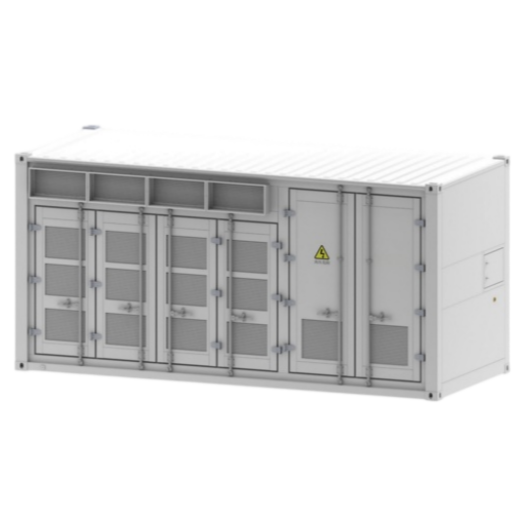
A dependable commercial battery earns its place through years of documented field performance, not just a promising datasheet. Fleet operators and facility managers rarely have the luxury of waiting to see if an unproven chemistry will hold up under daily cycling. What separates a trusted supplier is the willingness to share failure rates, thermal runaway test results, and third-party certification reports before you sign anything. Absent that transparency, you’re essentially funding someone else’s R&D with your own equipment and downtime.
The difference also shows up in the small, unglamorous details: a BMS that logs cell-level imbalances instead of merely cutting out, venting paths that actually direct gas away from occupied spaces, and terminal designs that survive repeated torque checks. A costly experiment tends to look impressive in a lab brochure but crumbles when exposed to real-world temperature swings, harmonic loads, and maintenance crews who don’t treat the battery like laboratory glassware. Real dependability is less about headline energy density and more about how the system behaves three years in, with dust on the enclosure and no vendor rep on-site.
Inside the Business Case: Peak Demand Charges, Backup Power, and Revenue Stacking
Most facility managers already know that electricity bills are rarely about total consumption alone. The real sting often comes from peak demand charges—those sharp, momentary spikes in usage that utilities track and bill for months afterward. A commercial building that spikes at 400 kW for fifteen minutes during a hot afternoon may pay a demand charge that dwarfs the actual energy cost of that interval. This is where on-site battery storage starts to make fiscal sense. By discharging stored energy during those high-demand windows, a business can shave the peak and see immediate line-item reductions. The logic is straightforward, but the savings are only realized when the battery is controlled with enough precision to anticipate and react to load changes in real time.
Backup power adds another layer of value that pure demand-charge management doesn't capture. A grid outage doesn't just halt operations; it can destroy inventory, disrupt data centers, or leave customers stranded. Diesel generators are the old standby, but they require fuel delivery, regular testing, and can fail precisely when needed. A battery system paired with solar can provide seamless switchover in milliseconds—often before computers even flicker. The business case strengthens when you consider that backup power isn't just an insurance policy; it's a usable asset. Instead of sitting idle, the same battery that protects against outages can be earning its keep daily by performing peak shaving. That dual role changes the math from a sunk cost to an operational upgrade.
Revenue stacking is where the real creativity enters. Beyond demand charge reduction and backup resilience, a battery can participate in utility demand response programs, frequency regulation markets, or even sell stored solar energy back during high-price windows. Some commercial operators layer three or four income streams onto the same hardware. For example, a grocery chain might use its battery to avoid peak charges in the afternoon, enroll in a utility incentive program that pays for allowing remote discharge during grid emergencies, and still maintain enough reserve capacity to cover its refrigerated stock if the grid fails. The challenge is that each revenue stream comes with its own operational constraints and dispatch rules. A poorly sequenced strategy can cannibalize savings from one program while chasing another. The operators who succeed are those who treat the battery not as a static piece of equipment but as a dynamic financial instrument requiring continuous tuning.
The Shift Toward Modular, High-Density Systems in Industrial Facilities
Industrial sites are moving away from sprawling, custom-built layouts toward factory-assembled modules that stack more processing capacity into a smaller footprint. This isn't just about saving floor space; it shortens onsite construction windows and lets operators add capacity without tearing down existing lines. Pre-wired, pre-piped skids arrive ready to connect, reducing the coordination overhead that usually slows expansion projects.
High-density configurations also force a rethink of maintenance and thermal management. With equipment packed tighter, access corridors, cable routing, and cooling air paths have to be designed into the module from day one. Some plants now standardize on vertical racking and shared utility spines so a single module swap can replace several legacy subsystems during a scheduled shutdown.
The operational payoff shows up in scaling. Instead of commissioning a new building, a facility can bring additional production cells online in phases, matching capital outlay to demand. That kind of incremental expansion was harder to justify with older low-density layouts, where every capacity bump meant significant civil work and longer downtime.
Real-World Deployments That Show Where C&I Storage Earns Its Keep
A plastics injection molding plant outside Columbus, Ohio installed a 500 kW / 1 MWh behind-the-meter battery specifically to blunt the afternoon shift’s power spike. During the first year, demand charges fell 34 percent, but plant operators were just as surprised by the ride-through benefits: voltage sags that used to fault out CNC controls now pass unnoticed because the battery responds in under 200 milliseconds. That kind of double duty—shaving costly peaks while quietly cleaning up power quality—shows up again and again in C&I settings.
Cold storage warehouses in Texas have a tougher problem: ammonia compressors cycle hard when outdoor temperatures climb, often stacking their biggest loads right into the four-hour late-afternoon peak window. One operator paired a 1.2 MWh system with smarter sequencing, pre-cooling freezer rooms before 3 p.m. and letting the battery absorb the gap. The result wasn’t dramatic on paper—28 percent lower grid imports during peak hours—but in a business with net margins under 5 percent, that shift moved the facility from marginal to clearly profitable during summer billing months.
A chain of roadside convenience stores took a different tack, deploying modular 60 kW batteries at sites with fast EV chargers. The chargers alone could otherwise push a store into a much higher demand tier, triggering local transformer upgrade quotes that reached six figures. By buffering the charger load with a battery, the chain kept each store within its existing service size and gained enough backup power to keep refrigerated cases and payment systems alive during the short outages that plague rural substations. It’s not a headline-grabbing use case—until you realize the alternative was a five-year payback on underground cable work versus eighteen months on batteries.
Choosing a System That Aligns with Utility Tariffs, Space Constraints, and Growth Plans
Most commercial and industrial sites don't start with a blank slate — they come with an existing utility rate structure, a fixed physical footprint, and a realistic sense of where the business might be in five years. A storage system that ignores any of these three factors can quickly become an expensive liability. For instance, a demand-charge-heavy tariff rewards systems that shave short, intense peaks, while a time-of-use tariff favors longer discharge windows. If the hardware can't match that discharge duration, the savings on paper never show up on the bill.
Space is rarely discussed until the day of installation, but it quietly rules out many otherwise perfect options. Indoor-rated cabinets need ventilation clearances and fire-rated rooms; outdoor containers need setback distances, drainage, and sometimes noise buffers for nearby residences. A cramped electrical room might force a shift from a modular rack design to a wall-mounted unit, or vice versa. Matching the physical form factor to the actual available square footage — not just the rated footprint on a spec sheet — prevents costly change orders and delays.
Growth plans add another layer of pressure. A facility that expects to add EV charging, a second production line, or a rooftop solar array within three years should choose a system that can scale in both power and energy without replacing the central inverter or re-engineering the entire switchgear. Look for modular battery blocks, field-upgradable firmware, and a control platform that can accept new inputs later. Buying just enough for today's load may feel frugal, but if it locks out a planned expansion, the real cost shows up as a second full project in under a decade.
FAQ
C&I ESS typically ranges from around 30 kW to several megawatts, installed behind the meter at factories, warehouses, office parks, or retail centers. Unlike utility-scale systems that feed the grid, these units primarily serve the host facility—shaving peak demand, shifting loads, or providing backup—while still being able to participate in demand response or grid services where regulations allow.
The economics have shifted. Falling lithium-ion prices, volatile electricity rates, and new incentive programs have shortened payback periods to 3–7 years in many markets. Beyond bill savings, storage gives facilities resilience against outages and a hedge against time-of-use rate hikes, which is often more valuable than a simple ROI calculation suggests.
Lithium iron phosphate (LFP) has become the default for most commercial projects due to its safety profile, long cycle life, and declining cost. Nickel-manganese-cobalt (NMC) still appears in some compact designs. Meanwhile, sodium-ion and zinc-based chemistries are moving from pilots to early commercial deployments, offering lower fire risk and better cold-weather performance for specific niches.
Peak shaving is the workhorse application—discharging during the facility's highest demand intervals to reduce demand charges. Load shifting moves cheap off-peak energy to expensive periods. Backup power for critical loads, solar self-consumption optimization, and participation in frequency regulation or capacity markets round out the main uses.
Start with 12–24 months of interval meter data to identify peak demand patterns and load variability. Then define the primary goal: demand charge reduction, resilience duration, or solar integration. The system should be sized to cover the target peak load for the desired discharge duration, typically 2–4 hours, while leaving headroom for future load growth or EV charging additions.
UL 9540 (system level), UL 9540A (thermal runaway propagation test), and IEEE 1547 for grid interconnection are baseline requirements in North America. Also check for NFPA 855 compliance for installation spacing, and ask for third-party test reports. Fire suppression, gas venting, and remote monitoring with automatic shutdown should be standard features, not add-ons.
Leading systems typically combine modular cabinet design, integrated thermal management, and cloud-based controls. Names like Tesla's Powerpack, Sungrow's ST series, BYD's Cube, and specialized platforms from Stem or Enel X often appear in shortlists, though the best choice depends on local service support, software flexibility, and total cost per warranted cycle.
Expect tighter integration with solar and EV charging infrastructure, increased use of AI-driven energy management to monetize storage across multiple value streams, and modular designs that allow incremental capacity expansion. Long-duration storage beyond four hours will become more common as costs fall, and virtual power plant aggregation will let smaller commercial systems earn grid services revenue.
Conclusion
For large power users, C&I energy storage has moved from optional to operational necessity. Sharp peak demand charges and outage risks now push facilities to seek batteries that are not merely add-ons but core infrastructure. A dependable commercial battery stands apart from a costly experiment through proven cycle life, transparent thermal management, and safety certifications that match real operational duty cycles—not just lab specs. The business case has also matured: systems earn their keep by shaving demand charges, providing backup power during grid disturbances, and stacking revenue from frequency regulation or capacity programs where markets allow.
This shift is visible in the move toward modular, high-density designs that fit tight industrial footprints without sacrificing capacity. Real-world deployments in cold storage warehouses, manufacturing plants, and EV fleet depots show the technology paying back in three to five years, often faster where time-of-use spreads are wide. Choosing among the top systems requires aligning inverter and battery architecture with local utility tariffs, available square footage, and future load growth. Rather than chasing the largest capacity, the most effective C&I ESS matches charge/discharge rates to the facility's actual load profile, leaving headroom for expansion and avoiding stranded investment. Top performers on any shortlist demonstrate this fit with documented field data, not just brochure promises.
Contact Us
Contact Person: Manager Leng
Email: [email protected]
Tel/WhatsApp: 8613764878967
Website: https://www.unc-energy.com