

Smart Folding Carton Cutting Die Making Equipment Enhances Packaging Productivity
2026-08-20
Every packaging line eventually hits the same wall: a die that dulls too fast, a setup that eats into run time, and a cutting process that can’t keep pace with modern order volumes. But the latest smart folding carton cutting die making equipment from ADEWO changes that equation. By automating precision and reducing manual intervention, it helps packaging teams turn around jobs faster—without compromising on the clean, repeatable cuts that folding cartons demand. Here’s how this technology is redefining productivity.
Cutting dies that fit the first time
First-try die fit is less about luck and more about controlling the variables that usually get blamed later. We measure the actual strip thickness at five points across the width, map the camber, and set the cutting clearances from that data rather than from the mill's nominal spec.
Before any steel is machined, the die design goes through a dry run against a digital model of the press, including ram deflection under load. That catches misalignment between upper and lower plates before it becomes a gouge in the tool. Adjustable pilots are placed at the first station, not buried deep in the progression, so the strip registers correctly from the first hit.
Once the die is assembled, we run a single short strip and compare cut edges under magnification. If a burr shows up uneven, the offending station is corrected on the spot, and the change is written back into the CAD model. That loop closes the gap between the drawing and the press floor, so the next time the same die is set up, it still fits without persuasion.
Shorter runs without the usual retooling delay
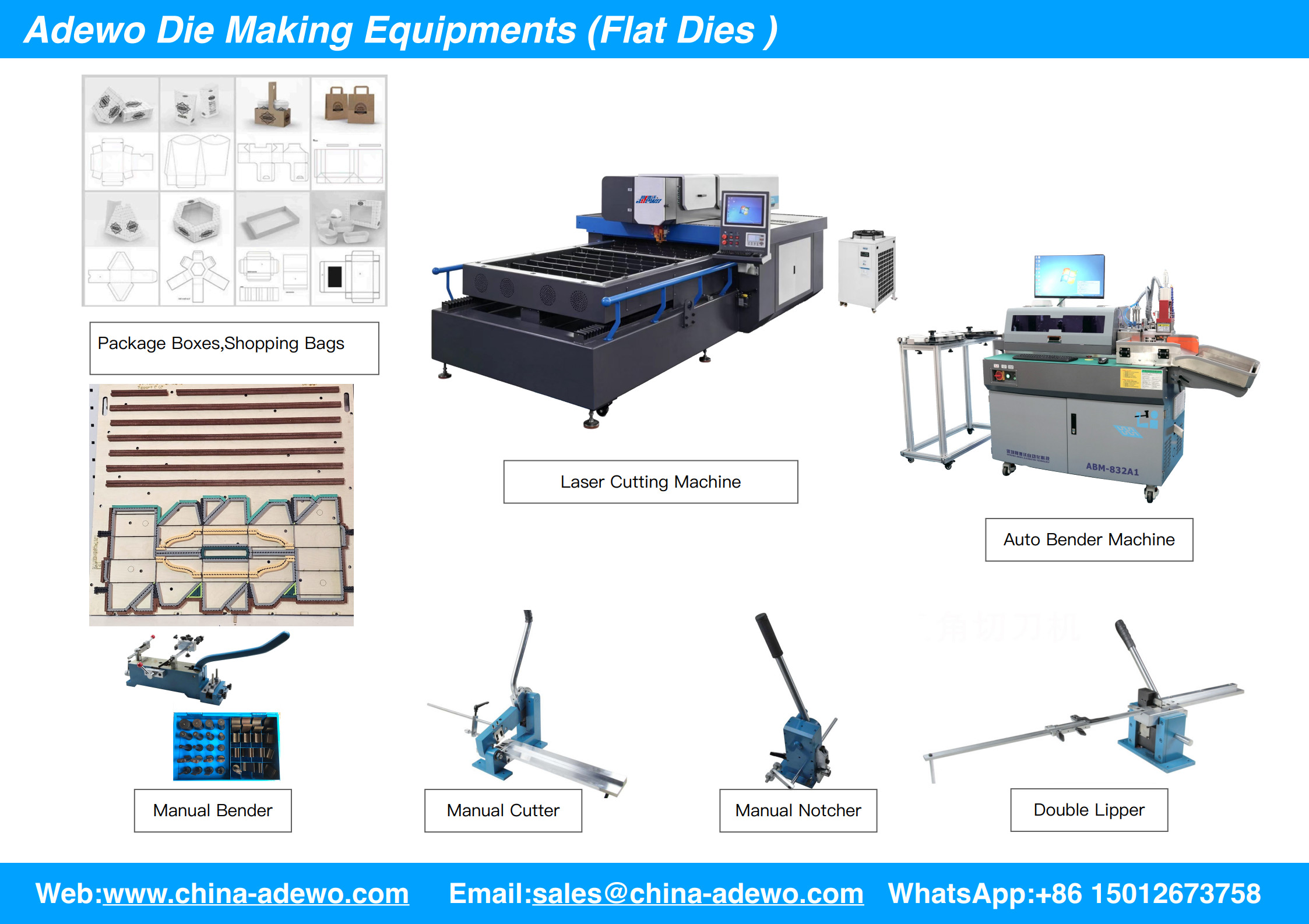
The real bottleneck in short-run production has never been the machining or printing itself—it’s the pause between jobs. A press that sits idle while operators swap dies, re-level plates, or re-zero fixtures eats into margins faster than any material cost. The shift here is toward setups that treat changeover as part of the run, not a break in it. Tooling docks into pre-aligned receivers, offsets load from a stored profile, and the first piece comes off within minutes instead of hours.
That changes how you schedule. Instead of batching similar jobs to justify a long setup, you can sequence work by actual due date. A run of 200 units and a run of 12 units carry nearly the same overhead, which means small custom orders stop being a penalty. The floor starts behaving less like a fixed line and more like a queue that adapts on the fly.
What gets overlooked is how much of the old delay was just habit. People walked to retrieve tools, filled out setup sheets by hand, waited for a supervisor to sign off. When the machine remembers its own settings and the tooling is already staged at the cell, most of those steps simply disappear. The result isn't just faster changeover—it's a shorter run that actually stays profitable.
Less scrap from smarter nesting
Every sheet of material carries hidden cost, and every leftover scrap is money quietly thrown away. Smarter nesting doesn't simply squeeze parts closer together—it reads the geometry of each piece, the grain direction, the cutting kerf, and the machine's own limits, then arranges them so the unused space shrinks to almost nothing. The result isn't just a tighter layout, but a different way of thinking about waste: not as an inevitable byproduct, but as a design flaw waiting to be solved.
The difference shows up fastest on the floor. Operators stop fighting with awkward leftovers that can't be reused, and the bin of offcuts stops filling up by noon. Because the nesting logic accounts for real-world constraints, it often finds arrangements a human would never consider—rotating a part by three degrees, interlocking curved edges, or mixing orders on the same sheet to use what would otherwise be scrapped. What used to be wasted material becomes finished parts, and the savings compound with every job.
In practice, smarter nesting turns raw material efficiency into a competitive edge. A shop that once accepted fifteen percent waste can push that number down to five or less, not by working harder, but by letting the algorithm do the heavy lifting. The scrap that remains is small, predictable, and often recyclable without regret—proof that good planning costs nothing, but poor nesting keeps costing long after the cut is made.
Design changes land on the die instantly
When an engineer tweaks a layout, that revision does not sit in a queue. It lands on the silicon die right away, removing the usual lag between a draft and its physical validation. You see the result of a routing change, a layer shift, or a gate swap without waiting for a fresh mask set.
This immediacy shortens the feedback loop that used to eat days. Teams can run multiple what-if scenarios on the same substrate and compare outcomes side by side, letting the die itself become the working canvas instead of a static target.
Line speed stays high with self-correcting pressure
The conveyor system doesn't wait for manual tweaks when load shifts mid-run. Sensors read the tension across the belt and a compact regulator adjusts the roller pressure within milliseconds, keeping the line moving at full rated speed without jams or slippage.
What makes this different from older setups is that the correction happens in tiny increments rather than one big jump. The pressure never overshoots, so the belt surface doesn't wear unevenly and the product spacing stays tight even on long hauls.
Operators can leave the line unattended for longer stretches because the self-correcting loop handles variance from temperature swings or mixed carton sizes on its own. The result is a steady throughput that doesn't dip every time the workload changes.
One operator, multiple jobs, zero guesswork
Running three machines at once used to mean keeping three sets of mental notes. Now the interface lays out every job on one screen, each with its own clear status. You don't have to remember which setting goes where—the next step is always lit up.
Switching from a cutting cycle to a finishing pass takes a single tap, not a manual reread. The system already knows the tool offsets, feed rates, and material specs from the previous run. Even if a job hasn't been touched in weeks, the operator walks up and starts immediately, because there's nothing left to recall.
When guesswork disappears, so do the small hesitations that eat up a shift. One person can keep several stations moving without pausing to double-check charts or ask a supervisor. The work flows because the machine speaks plainly.
FAQ
It produces cutting and creasing dies used to shape folded cartons, combining automated tool positioning, laser cutting, and software-driven adjustments to replace much of the manual bench work.
It cuts setup time sharply, reduces manual fitting and trial-and-error, lowers misregistration between cutting and creasing rules, and lets a single operator handle tasks that previously required several skilled technicians.
Food and beverage, pharmaceuticals, cosmetics, consumer electronics, and e-commerce packaging see the biggest gains because they need consistent carton quality, fast design turnover, and shorter lead times.
Look for automatic rule bending and insertion, CAD/CAM file compatibility, laser positioning guides, real-time process feedback, tool wear monitoring, and remote diagnostics instead of basic motorized tables.
Yes, quick job recall and programmable rule placement make changeovers much faster, so short runs and revised carton designs no longer carry the heavy time penalty they did with manual die boards.
Regular cleaning of cutting heads and guide rails, checking pneumatic fittings, calibrating optical sensors, updating control software, and replacing worn bending pins or blades before they affect accuracy.
Usually not difficult for someone with basic die making experience, but the learning curve shifts from manual dexterity to understanding file import, job parameters, and interpreting system prompts, with vendor-led training helping most shops transition in a few weeks.
It catches rule placement errors, blade dullness, or material misalignment as they happen, so corrections are made before a full die board is scrapped, cutting both material waste and rework time.
Conclusion
Traditional die-making for folding cartons has always been a slow, error-prone process, but smart equipment changes that equation. Cutting dies are now produced to fit perfectly on the first attempt, eliminating the back-and-forth adjustments that used to eat up hours. This matters most when running shorter jobs: the usual retooling delay disappears, so a packaging line can switch from one carton style to another without losing momentum. At the same time, intelligent nesting algorithms arrange layouts to squeeze more blanks from each sheet, cutting scrap rates noticeably. Even when a customer tweaks a design, the updated geometry lands directly on the die file, so there is no waiting for a new physical sample.
On the floor, the benefits keep stacking up. Self-correcting pressure systems monitor cutting force in real time and adjust automatically, which keeps line speed high without operators constantly fiddling with settings. That reliability means one operator can manage multiple die-making or cutting jobs at once, with the machine handling the fine-tuning. The result is a leaner, faster packaging workflow where die production no longer acts as a bottleneck. Instead of treating die-making as a separate, uncertain craft step, smart folding carton equipment turns it into a predictable, responsive part of the packaging operation—boosting overall productivity without adding headcount.
Contact Us
Contact Person: KAELYN LEE
Email: [email protected]
Tel/WhatsApp: +86 15012673758
Website: https://www.china-adewo.com