

Silicone Water Bottle Original Manufacturer A Complete Sourcing Guide for Brands
2026-10-18
The hunt for a dependable silicone water bottle original manufacturer rarely ends with a simple Google search. Between vague supplier directories and unverified factory claims, brands often waste months chasing false leads. That’s where Qunhao changes the game — but this guide isn’t just about one name; it’s about every critical factor you need to evaluate before committing to a production partner.
Why 'Factory Direct' Pricing Often Hides a Middleman
Walk into any trade show or scroll through a B2B marketplace, and the phrase "factory direct" gets tossed around like confetti. The promise is simple: no middleman, no markup, just you and the manufacturer shaking hands over a pallet of goods. But peel back the label, and you'll often find a different story. Many so-called factories are actually trading companies with a rented showroom and a well-rehearsed pitch. They buy from real factories, slap on a "direct" badge, and collect a margin that would make a traditional distributor blush.
The confusion runs deeper than just mislabeling. Even when you do reach an actual factory, the person quoting your price might not work for the production floor. They could be an in-house export agent, a commissioned sales rep, or a separate export department that operates like an independent broker. Each of those layers adds cost, even if it never appears on an invoice. Some factories also pad their "direct" quotes to cover the overhead of maintaining sales teams, showrooms, and international trade compliance offices—expenses that have nothing to do with the production line itself.
The real tell often hides in the details: different departments, inconsistent pricing, or a warehouse address that doesn't match the factory location you were told about. A genuine factory-direct deal should let you talk to the floor manager, see live production, and negotiate based on actual material and labor costs. If you're instead routed through a polished sales office that never gets its hands dirty, you're probably paying for a middleman wearing a factory's name tag.
Silicone Grade Tests That Separate Genuine Suppliers from Claimants
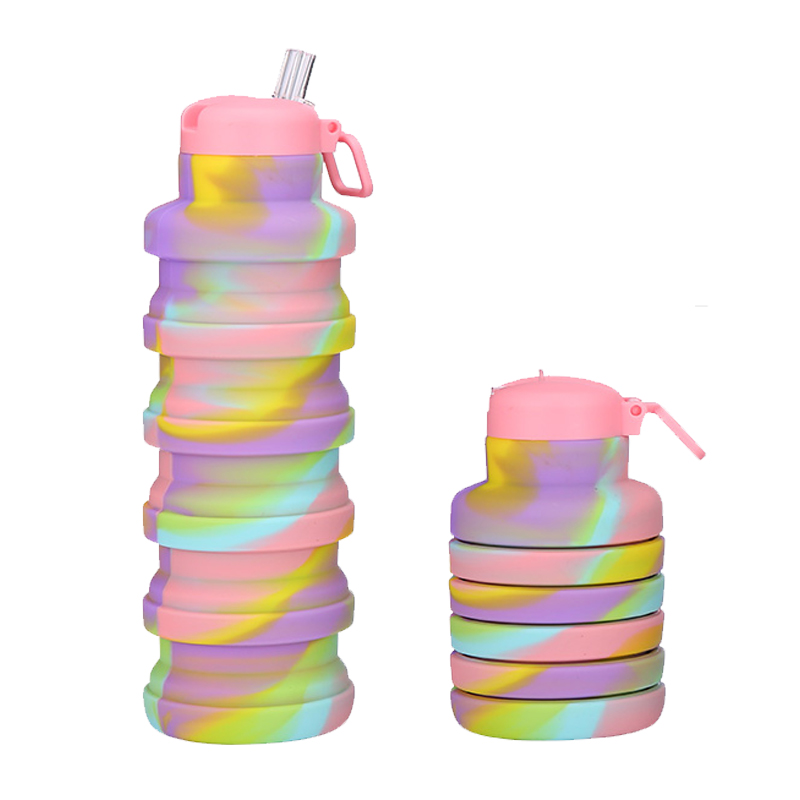
A quick durometer check often does more than any marketing claim. Genuine suppliers can provide a Shore A reading within a narrow tolerance, say 40±5 for food-grade seals, while vague answers like “it’s soft enough” signal a middleman who has never touched a testing lab. Pair that with specific gravity: pure silicone typically sits around 1.10 to 1.25 g/cm³. If the sample feels heavy or sinks faster than expected in a water-alcohol solution, you’re likely holding a blend loaded with cheap fillers.
Tensile and elongation numbers expose the real material story. High-quality food or medical silicone consistently breaks at 8–10 MPa with elongation above 400% before tearing. Ask for a tear strength value too; anything under 20 kN/m for a 50 Shore A sheet means the supplier is cutting corners on base polymer. Better yet, request a compression set test at 175°C for 22 hours. A result under 15% shows the material keeps its shape under heat and repeated use, which no fake supplier can fake with a glossy datasheet.
The fastest separator, though, is post-cure volatiles. Raw silicone can hold residual cyclic siloxanes or volatile organic compounds. A legitimate supplier will offer a volatiles test showing less than 0.5% weight loss after 4 hours at 200°C, or better, an FDA 21 CFR 177.2600 or LFGB certificate with a batch number you can verify. If the seller dodges a simple “which exact grade and batch is this?” question, that’s the only test you need.
Mold Design Choices That Make or Break Your Product's Finish
Gate placement doesn't just affect flow—it controls where the plastic first touches steel and how that initial contact gets hidden or highlighted. A gate tucked into a rib or boss leaves a small witness mark that's easy to overlook, while an edge gate on a visible flat surface forces a secondary trimming step that can scar the part. Submarine or tunnel gates let the mold auto-degate during ejection, but if the gate size is wrong, you'll see blush, jetting, or a dull halo around the entry point.
Venting is the quiet detail that separates a glossy show surface from a cloudy one. Without enough vent channels at the end of fill, trapped air compresses, superheats, and burns the resin—leaving dark streaks or a rough, chalky texture. On high-polish tools, vents need to be deep enough to relieve gas but shallow enough not to flash. Many moldmakers also add a slight texture or matte finish in non-visible areas to hide vent witness lines, while keeping the A-side mirror-polished.
Steel finish and draft often get decided too late. If you plan a VDI 24 texture but only draft the wall at 0.5°, the texture will drag and turn white when the part ejects. Deep textures need an extra degree or more per side, plus careful polishing direction—polish lines should follow the draw, not run across it. Even with perfect draft, a tool that isn't stress-relieved after rough cutting can warp after heat treat, leaving sink marks or inconsistent gloss that no amount of polishing will fix.
How to Read a Factory Audit Report Like a Production Pro
Most people flip straight to the final score and call it a day. That's a rookie move. A production pro knows the audit report is a layered document, and the real story hides in the corrective action requests, the photos of the production floor, and the way non-conformities are worded. Start by scanning the summary, then immediately cross-check it against the detailed findings. If the summary says "minor issues found," but the findings list three major non-conformities, someone is softening the blow. Trust the details, not the executive gloss.
Next, look at the audit scope and methodology. Was it announced or unannounced? How many days did the auditor spend on site? Which production lines were sampled? A three-day audit with random line selection tells you far more than a half-day walkthrough of a prepped showroom. Pay attention to the auditor's credentials too. An audit from a recognized third party carries weight, but even then, the specific clauses cited should map to your accepted quality standards, not some generic checklist. If the report references standards you don't recognize, ask why.
Finally, treat the report as a live document. The best production pros read the corrective action plan with a critical eye. Are the proposed fixes specific, with assigned owners and deadlines? Or do they read like vague promises to "improve quality control"? A factory that lists concrete steps, like recalibrating a specific machine or retraining a particular shift, is one that actually understands its own gaps. If the plan is full of buzzwords and no timelines, that's a red flag bigger than any single defect percentage.
Minimum Order Quantities: What They Actually Signal About a Manufacturer
Minimum order quantities are rarely just a number pulled from thin air. They often tell you whether a supplier actually runs a production line or is simply brokering orders to smaller workshops. A factory that has invested in tooling, raw material purchasing, and line scheduling will typically set an MOQ that covers those fixed costs, while a trading company may offer a suspiciously low MOQ because they are aggregating orders from multiple buyers or selling off excess stock. Pay attention to how the MOQ changes when you ask for customization—true manufacturers will usually raise it to justify resetting a line, whereas middlemen might keep it flat because they have no real control over production.
The MOQ also offers a candid look at a manufacturer's cash flow and client filtering strategy. High minimums are not always a sign of arrogance; they can mean the factory needs to secure enough revenue upfront to purchase materials in bulk and keep machines running without idle gaps. On the other hand, a supplier with very low minimums might be running a just-in-time operation with higher per-unit overhead, which you will end up paying for in the unit price. Some manufacturers deliberately set a high MOQ as a test of buyer seriousness—they would rather work with three committed clients ordering a thousand units each than chase fifty small inquiries that will never convert into repeat business.
Savvy buyers use MOQ as a diagnostic tool rather than a fixed obstacle. If a supposed factory quotes an MOQ of 50 pieces for a highly customized metal part, that is a red flag: either they are sourcing from a secondary market, using old molds without telling you, or simply reselling someone else's production. Conversely, an MOQ that is absurdly high for a simple commodity item might indicate a lack of flexible scheduling or an overreliance on a single large client. Asking a supplier under what conditions they would lower the MOQ—such as accepting a longer lead time, paying a deposit, or using stock materials—can reveal how much actual manufacturing control they have, not just how many units they claim to ship each month.
Packaging, Labeling, and Compliance Details Brands Forget Until It's Too Late
Plenty of founders spend weeks agonizing over matte versus gloss finishes, only to miss that the font size for the net quantity declaration falls below the legal minimum on the primary display panel. That one oversight can trigger a recall, not because the product is unsafe, but because the label was printed before anyone checked the regional rules for metric and imperial placement.
Another blind spot is multilingual requirements. A brand might print a beautiful single-language label, then realize that the distributor needs three languages on the same face, or that the allergy warning has to appear in a specific phrase that does not translate word-for-word. Reworking the dieline after the fact often means losing the barcode quiet zone or stacking the ingredients in a way that violates readability standards.
There is also the compliance detail nobody flags until a customs agent asks for it: the recycling symbol or disposal mark that applies only in one jurisdiction, the batch code that must be laser-etched rather than ink-jetted, the material identification code required for flexible packaging. These are not marketing decisions but they can hold a shipment at the border and eat the margin you planned for a product launch.
FAQ
Focus on factory certifications, in-house tooling capabilities, and whether they can share real production samples rather than just catalog photos. Ask about their silicone raw material suppliers and request documentation like FDA or LFGB compliance for food-grade silicone.
Request a video tour of the production floor, ask for business license details showing "manufacturing" as the scope, and check if they have their own mold-making and injection or compression molding equipment. Original manufacturers typically have no issue showing live production lines.
It depends on whether you need custom molds. If you use existing molds, MOQ can be as low as 500 to 1,000 pieces. For fully custom shapes and colors, expect MOQs around 3,000 to 5,000 pieces because new mold costs and machine setup time need to be spread across the order.
Beyond logo printing, consider custom color matching, embossed or debossed patterns, varied lid styles, and accessories like carry straps or carabiner clips. The most successful brands often differentiate through texture and finish rather than just logo placement.
After sample approval, production usually takes 25 to 40 days depending on order size and complexity. Custom mold development can add 15 to 25 days before production starts. Always confirm whether the factory handles packaging assembly or if that adds separate handling time.
Ask for in-process inspection photos or videos, a pre-shipment inspection report from a third party if possible, and clear specifications for weight, wall thickness, and lid fit. Also request a random sample from the actual production batch, not the pre-production sample.
Yes, mold fees, sample fees, packaging design adjustments, and shipping from the factory to the forwarder can all add up. Clarify whether the quoted unit price includes individual poly bags, hang tags, or barcodes, and get a breakdown of any one-time charges before signing.
Conclusion
Most brands assume a factory-direct price means they're skipping the middleman, but that's rarely the whole story. Many "manufacturers" quietly outsource to sub-suppliers while charging you a markup for the illusion. Ask for the actual production line address, not just a sales office, and verify it during an on-site audit. When you test silicone, don't settle for a vague "food grade" claim. Request batch-specific reports for LFGB or FDA standards, and watch how the supplier reacts to a request for independent lab testing. Genuine producers share data; claimants stall. Mold design is equally telling. A poorly planned parting line or gate placement leads to visible seams or weak spots around the lid threads. Push for mold-flow analysis and prototype photos before committing to tooling fees.
Factory audit reports are only useful if you look past the pass/fail circle. Focus on corrective action history, staff turnover, and whether the QC team reports to production or to a separate quality manager. Minimum order quantities reveal more than pricing strategy. A very low MOQ often signals stock clearance or a trading company, while an unusually high MOQ may mean the factory runs few changeovers and won't customize easily. The right number usually sits between those extremes and flexes with material ordering cycles. Finally, packaging and compliance details trip up brands at the last minute. Confirm crush-test requirements, country-of-origin marking, and whether the silicone passes migration tests for acidic drinks. Get those written into the purchase order, not just an email. That's how you move from sourcing hope to manufacturing control.
Contact Us
Contact Person: Cecilia
Email: [email protected]
Tel/WhatsApp: 8619057488653
Website: https://silwatbottle.com