

Shangri-La Sheer Shades Factory Crafting Custom Light Control for Modern Homes
2026-09-01
Most shades ask you to choose between a bright living space and a private one. Shangri-La sheer shades from ROLLERGY erase that trade-off. As the factory behind custom light control for modern homes, we build each order around your window dimensions, fabric preferences, and the exact mood you want. This guide breaks down how to get both soft daylight and seclusion without compromising on style.
How a Family-Run Factory Turned Sheer Fabric Into Precision Light Control
In the back of a converted textile mill, three generations of the same family still run their fingers along the warp threads before any machine is switched on. They started out making delicate voile curtains that let in too much glare, and over decades learned to treat the weave itself as a set of adjustable louvers. By varying yarn thickness, twist, and a proprietary heat-setting pass, the fabric now bends incoming sunlight at angles precise enough to replace mechanical blinds in office towers.
The real breakthrough came when the youngest family member, a materials engineer, mapped the fabric's pore geometry to a spectral light model. Instead of coating the surface, they began calibrating openness factor row by row during knitting. A sheer panel can now read 2% openness in one zone and 18% in another, all within a single seamless piece. It looks like ordinary gauze from across a room, but from the inside it shapes daylight into soft, even pools.
What keeps the operation from drifting toward full automation is the eye test. Every batch is held up against a north-facing window by someone who has done it for thirty years. Machines log the data, but the final call on whether the fabric feels right still belongs to the family. That blend of old tactile judgment and new photometric testing is how a sheer cloth became a precision instrument.
The Difference Between Off-the-Shelf Shades and Custom-Fitted Light Filters
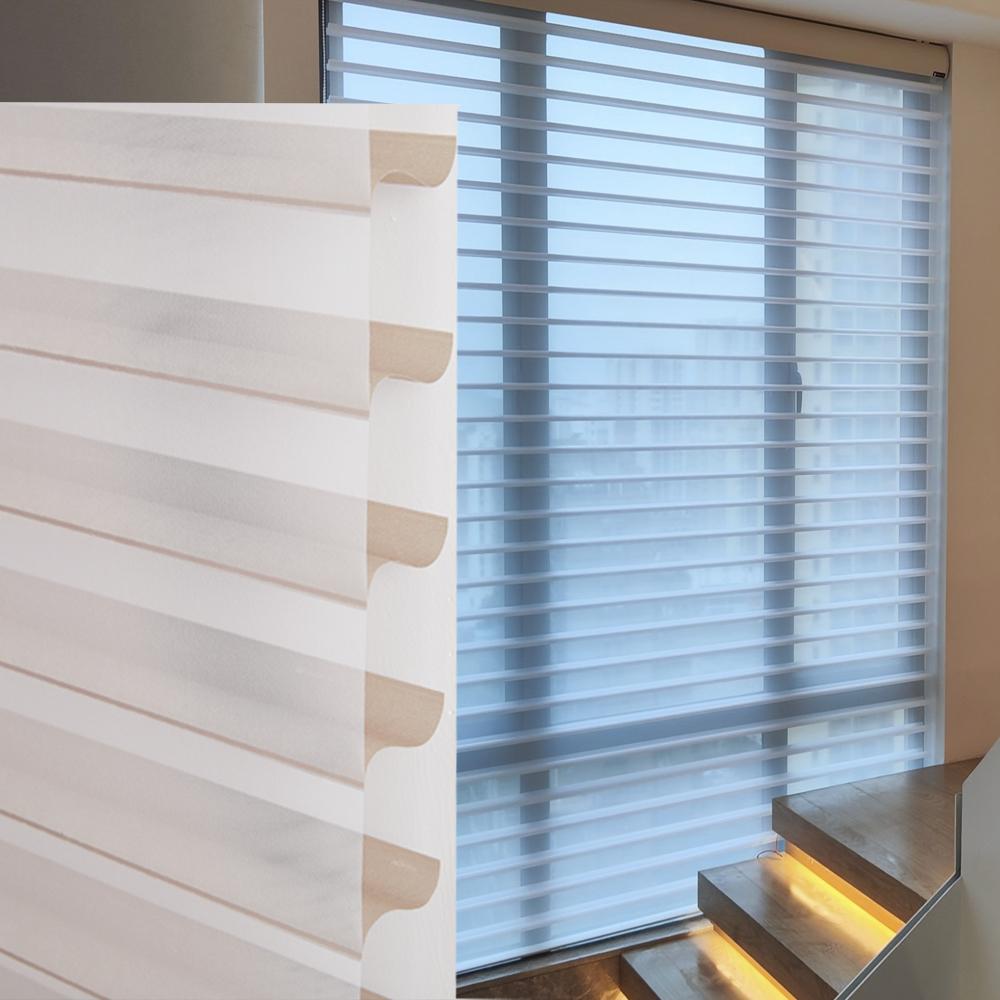
Off-the-shelf shades come in fixed sizes and shapes, which means they rarely match the exact dimensions of your windows. Even if you measure carefully, you might end up with gaps along the edges or fabric that bunches awkwardly. Custom-fitted light filters are cut to the precise measurements of each window frame, so they sit flush against the glass and leave no room for stray light to sneak in around the sides.
Another key difference shows up in material quality and long-term durability. Many ready-made options rely on thinner, less consistent fabrics that can fade or warp after a few months of daily sun exposure. A custom filter lets you choose from a wider range of weaves and densities, matched to how much light you actually want to block or soften. Since the fit is exact, there is also less stress on the edges, which helps the filter maintain its shape over time.
The installation experience is not the same either. Stock shades often require trimming or adding side channels to reduce light leaks, which adds time and can look messy from the inside. With a custom-fitted filter, the attachment system is designed around your window’s depth and frame style, so the result feels integrated rather than added on. You get a cleaner look from both inside and outside, plus better control over glare without darkening the room too much.
Inside Our Workshop: Where Modern Home Needs Shape Every Shade
The workbench still carries the faint scent of fresh-cut fabric and warm metal from this morning's run. Here, a shade isn't just measured and shipped; it gets walked through the same questions we ask in our own homes—how much light should slip through at 7 a.m., where the glare lands on a laptop screen, how the cord should fall within reach but out of a toddler's path. Each order starts as a conversation with a room, not a template.
Modern homes rarely ask for one perfect shade. They ask for a window seat that stays cool by noon, a bedroom that darkens enough for shift work, a kitchen where morning sun feels soft but not blinding. That's why our workshop keeps an odd collection of clips, weights, fabric swatches, and half-assembled brackets on the wall—not for show, but because the next idea usually starts from a problem a customer mentioned in passing. It's slower than pushing a button, and it's supposed to be.
Why Sheer Shades Are the Quiet Workhorse of Contemporary Interiors
In rooms where hard sunlight usually forces a choice between glare and darkness, sheer shades slip into the background and solve the problem without asking for attention. A single layer of loosely woven fabric held between two panes of glass—or floating in front of a window—filters the harshest rays while leaving the view intact. The result is a soft, even glow that makes walls feel taller and corners less severe, no dimmer switch required.
Their real strength shows up in rooms that get used every day. Sheer shades handle the slow fade of upholstery and wood floors better than bare glass, yet they don't smother the space the way blackout drapes can. You can set them to a gentle diffusion for reading, tilt them further to cut glare on a laptop, or open them fully when you want the outside to feel like part of the room. That simple range of adjustment quietly covers most of what a household asks from window coverings.
Maintenance rarely enters the conversation, which is exactly why they keep working in kitchens, hallways, and home offices. A quick pass with a feather duster or a low-suction vacuum keeps the fabric from collecting dust, and because the panels are often sealed or tightly woven, they don't trap allergens the way heavier layered curtains do. They don't need seasonal swapping, and they rarely fall out of style—no loud patterns, no fussy hardware, just a clean horizontal line that sits well with both millwork and exposed concrete.
Balancing Privacy and Sunlight Without Making Your Room Feel Dark
The trick to keeping your space bright while blocking prying eyes isn't about sacrificing one for the other—it's about rethinking how light moves through your windows. Start with sheer fabrics that have a subtle texture or a loose weave; they scatter daylight instead of swallowing it, so even when fully drawn, the room feels airy rather than boxed in. Layering a second, slightly denser panel on a separate rod lets you adjust privacy throughout the day without ever plunging into gloom.
Another overlooked approach is playing with height and placement. Mounting a curtain rod well above the window frame and extending it wider than the glass allows the fabric to stack mostly on the wall during the day, leaving the actual opening unobstructed. This way, you get full privacy at night but maximum sunlight in the afternoon—no tugging or re-tying needed. For stubborn sightlines from a neighbor's upper floor, consider bottom-up shades that cover the lower half while leaving the sky view and overhead light untouched.
Glass treatments offer a more permanent fix without dimming your interiors. A frosted or micro-etched film on the lower pane diffuses direct views but lets nearly all the visible light pass through, turning harsh glare into a soft, even glow. If you want flexibility, switchable privacy film—though pricier—goes from clear to opaque with a simple electrical current, giving you control without curtains at all. Whichever route you take, the goal is the same: make the light work harder, not block it out.
Small Details That Make a Custom Shade Last Years Longer
It’s rarely the fabric that fails first—it’s the stitching, the cord, or the little plastic piece nobody looks at. On custom shades that survive a decade of daily use, you’ll typically find double-needle hems along the bottom bar and reinforced corner tabs instead of a single pass of thread. That extra stitching isn’t cosmetic; it keeps the weight bar from slowly tearing through the hem when someone gives the shade a firmer tug than usual.
Another detail that gets overlooked is the edge treatment. Factory-cut edges often leave tiny frays that peel back over time, especially on solar or woven materials. A custom shop that takes the extra minute to apply a heat-sealed edge or a hidden binding along the side hems can add years before the material starts to look tired. It also prevents those hairline pulls that show up after the first few cleanings.
Hardware choices matter just as much as the shade itself. Nylon cord guides, stainless steel lift mechanisms, and brackets with a bit of adjustability let the shade settle without binding. When everything moves freely and nothing rubs against a sharp edge, the same shade can keep operating smoothly long after cheaper versions start to fray or jam.
FAQ
They use alternating sheer and solid fabric vanes, so you can shift the layers to soften daylight without completely losing the view. Most rollers only give you an all-or-nothing position, which feels much less flexible in a living space.
Absolutely. We regularly build shades for trapezoids, arches, and bay windows. The fabric vanes are cut to follow the window outline, and the headrail is fabricated to match the exact angle or curve.
Yes, we offer cordless lifts and wand controls that eliminate dangling cords. The sheer fabric is also woven tightly enough to resist everyday snags from paws or small hands.
You provide the precise window measurements or a physical template. From there, each shade is built to those dimensions with a tolerance of about one-eighth of an inch, so you don't have to settle for stock sizes.
Linen-look weaves and lightly textured fabrics in oatmeal, sand, and soft gray tend to pair well with wood tones. If you want a sharper contrast, semi-opaque whites and cool neutrals also work without feeling sterile.
Yes, we can fit motors inside the headrail and integrate them with common smart home platforms. That allows you to schedule the shades to adjust with daylight or control several windows from a single remote.
We keep dye-lot records for every project. When a designer orders for an entire home, we can hold fabric from the same batch and send swatch approvals before production, so there are no surprising color shifts between rooms.
Conclusion
What started as a small workshop has grown into a place where sheer fabric becomes something far more useful than decoration. The idea is simple: control light without losing the airy feel of a modern home. A family-run factory gives you something a mass-production line rarely can—a willingness to test, adjust, and listen. Over time, we learned that sheer shades aren't just a middle ground between curtains and blinds. They're a way to soften harsh afternoon sun, keep a room from feeling like a glass box, and still let enough daylight through to avoid switching on lamps at noon. That kind of precision comes from handling the fabric ourselves, cutting each shade to the millimeter, and understanding how light actually moves through a space. It's not a one-size-fits-all process, and it shouldn't be.
Off-the-shelf shades often leave gaps at the edges or sit too far from the glass, which turns what should be a light filter into a source of glare. Our workshop takes a different route. We measure the window, consider the room's orientation, and build the shade around how you actually live—whether that means a kitchen that needs early morning brightness or a bedroom that needs soft privacy in the evening. The result is a custom-fitted layer that balances visibility and seclusion without making the room feel cave-like. Small things matter more than people expect: reinforced seams, stable tension cords, and fabric that resists sagging after years of use. Those details are why a well-made sheer shade quietly becomes part of the house, doing its job without drawing attention to itself. That's the kind of workhorse modern interiors deserve.
Contact Us
Contact Person: Vivien Cheng
Email: [email protected]
Tel/WhatsApp: +86 13751758835
Website: https://www.rollergytech.com/