

Powder Valve Sourcing Essentials for Bulk Material Handling
2026-08-25
Sourcing powder valves for bulk material handling isn't just about picking a size and flange type—it's about preventing bridging, leakage, and costly downtime. Yet many spec sheets read the same, leaving engineers guessing. This post strips away the fluff and focuses on the three criteria that actually matter in the field, including a closer look at how AVM designs address real-world flow challenges.
Flow Behavior Should Narrow Your Valve Options Before Price Does
Too often, valve selection starts with a budget number and then works backward. The result is a control valve that technically fits the pipe but fights the process every time it moves. Flow behavior should be the first filter, not the last. A valve with the wrong inherent characteristic—say, linear when the system really needs equal percentage—will cause instability at low loads and sluggish response at high ones. That's not a price problem; it's a physics problem. Narrow the field by how the valve will actually behave across the expected flow range, then let cost weed out the rest.
Consider a steam heating coil with a control valve sized for full load. If the process runs at 20% capacity most of the time, a linear valve will barely crack open and cause hunting. An equal percentage valve gives fine control at that low opening because its gain increases as it opens. That difference doesn't show up on a spec sheet's price column, but it shows up in energy waste and worn-out actuators. Flow behavior is a functional requirement, not an optional upgrade. Once you've identified valves that can deliver the right Cv and characteristic over the required range, then price becomes a meaningful differentiator.
Some engineers treat valve selection like buying a commodity: get three quotes, pick the cheapest. But a valve that can't handle the turndown or pressure drop profile will cost more in maintenance and lost production within a year. Start instead by mapping the flow loop—what does the system demand at minimum, normal, and maximum conditions? Then ask which valve behavior matches that demand without excessive oversizing or constant throttling. Only after those options are on the table should price enter the conversation. A cheap valve that's always fighting the process is never a bargain.
Beyond Wetted Materials: Seals, Bearings, and Surface Finish
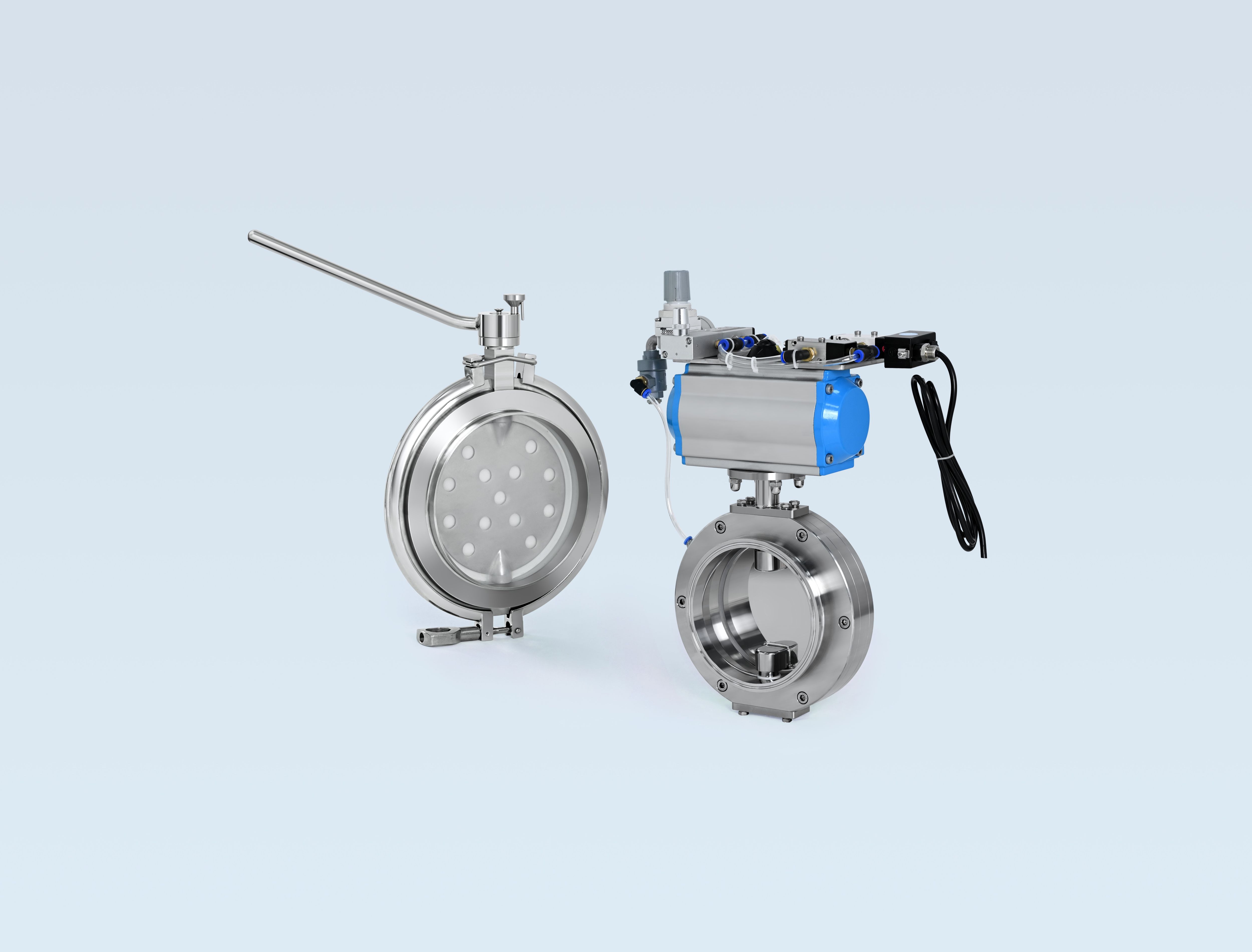
Pumps rarely fail because the casing gives way. The real story unfolds in the small, moving parts that must hold a line against pressure, rotation, and time. Seals sit at that boundary, typically tasked with keeping process fluid from leaking along the shaft. A well-chosen seal runs cool and quiet for years, but push it beyond its material limits or let solids chew at the faces, and a drip turns into a washdown. Bearings carry a different burden—they keep the shaft centered while absorbing radial and axial loads. When alignment drifts or lubrication thins, bearings lose their film and begin to sing, then grind, then seize.
Surface finish plays a quieter but no less critical role. Too rough a face on a seal chamber or shaft sleeve accelerates wear and shortens life, even if every dimension is perfect. Too smooth, and lubrication may not wet or spread properly, leaving bearings starved in the first minutes of operation. The practical target is deliberate texture: a finish that holds a micro-layer of lubricant while allowing seals to bed in without excessive initial leakage. Machinists and rebuild shops often speak of “breaking the glaze” on a sleeve or polishing only where the seal lip rides.
What ties these elements together is the understanding that no single component works in isolation. A pump with superb bearings but mediocre seal faces will still fail at the gland. A mirror-polished shaft with the wrong seal material will still leak. Field experience keeps pointing back to the same lesson: match the finish to the duty, confirm bearing clearances under load, and treat the seal as a system rather than a replaceable ring. That is where long service life actually comes from—not from a thicker casing or a bigger motor, but from the details that live just beyond the wetted path.
Clearance and Deflection in Rotary Valves Under Load
When a rotary valve operates under differential pressure, the rotor and housing both deform slightly. The size of the running clearance changes across the face of the valve, not uniformly. This uneven deflection is often greatest near the inlet and outlet edges where pressure gradients are steepest, so leakage rates cannot be predicted from the cold, unpressurized clearance alone.
Thermal expansion adds another layer. A valve assembled tight at room temperature may bind once the process fluid heats the rotor faster than the casing, or if the housing grows more than the rotor. Conversely, a valve set with generous clearance to avoid binding will show higher slip when cold. Matching thermal growth rates between the rotor and housing, or using materials with similar coefficients, keeps deflection within a manageable band without sacrificing seal integrity.
Field measurements often show that deflection under load shifts the rotor's axis relative to the housing bore. This can produce edge loading on the blade tips and accelerate wear in a narrow contact patch. To compensate, some designs pre-offset the rotor or use flexible tip seals that can follow the deflected profile. Without such measures, the valve's effective clearance at operating pressure can be twice the static value, which directly affects metering accuracy and backflow.
Actuation Speed, Torque, and Fail-Safe Positioning
Actuation speed in valve automation is rarely a single number pulled from a catalog. It shifts depending on supply pressure, cylinder volume, spring characteristics, and even the orientation of the actuator relative to gravity. A valve that closes in two seconds on a bench test may take three seconds once installed with longer tubing runs or a smaller solenoid pilot. Experienced engineers learn to measure speed under the same conditions the valve will actually see, then build in enough margin that the process flow does not hammer against a seat that is still moving.
Torque, by contrast, is often misunderstood as a fixed requirement. In reality, breakaway torque—the force needed to unseat a valve from a fully closed or open position—can be two to three times higher than the torque needed to keep it moving mid-stroke. Oversizing an actuator for breakaway can lead to excessive speed and water hammer if the stroke length is short, while undersizing for mid-stroke friction can cause the actuator to stall on a partially open valve. A better practice is to look at the entire torque curve, not just the maximum, and to match the actuator's output curve so that it rides safely above the valve's demand at every degree of rotation.
Fail-safe positioning adds another layer of judgment. Spring-return actuators are common, but the spring itself only stores a finite amount of energy, and that energy is affected by temperature, age, and the number of cycles. If a process cannot tolerate a partially closed valve on loss of air, the spring must be sized for worst-case breakaway, not just average running load. For less critical services, a battery-backed electric actuator or a double-acting cylinder with a reserve accumulator can offer a different balance between speed, torque, and a controlled shutdown. The key is to define what "fail-safe" means for that specific valve—closed, open, or locked in last position—and then verify the actuator can deliver that position every time the control signal disappears, not just during a planned test.
Maintenance Without Line Shutdown: Access That Actually Works
The phrase “maintenance without line shutdown” often triggers skeptical looks from plant managers who have been burned by promised hot-swap capabilities that turned into emergency downtime. Real access that works starts with a simple premise: the equipment was never designed to be serviced while running, so you must add the missing layer of isolation and bypass architecture yourself. Instead of trusting a single valve or breaker, install double block-and-bleed arrangements, dedicated maintenance bypass loops, and physical lockout points that let a technician reach the component without pressurizing or energizing downstream processes.
What separates successful no-shutdown maintenance from clever marketing is the pre-engineering of the access route. For example, on a critical pump skid, a properly sized recirculation line with a calibrated flow meter allows you to valve off the main pump, prove the bypass flow, then disassemble the pump while the process continues at reduced but acceptable throughput. The key detail is not the bypass itself—it’s the sequence of valves, pressure gauges, and bleed ports that let you confirm zero energy state before a single bolt is turned. Without that proof, “access that works” is just a gamble with someone else’s production targets.
Finally, treat maintenance access as a system, not a feature. Walk down every line with a technician and ask: if this fails tomorrow, how do we remove it without stopping the plant? The answers will reveal missing isolation valves, undersized bypass lines, or control logic that trips the whole train when one sensor is disconnected. Add manual override switches and local pressure indicators so the operator and the mechanic see the same reality. The goal is not to make maintenance effortless—there will still be cramped spaces and stubborn fittings—but to remove the one thing that makes every shutdown expensive: the assumption that the process must stop for humans to work safely inside it.
Verifying Dust-Tight Shutoff Before Installation
Check the valve seating surfaces under bright light before the unit leaves the pallet. Look for hairline gaps, trapped grit, or uneven wear along the sealing edge, as these are the most common reasons a dust-tight shutoff fails during the first live run. Run a gloved finger across the seat and blade contact area; any snag or rough patch means the shutoff will leak fines under pressure. Do not rely on the factory test tag alone—shipping vibration and warehouse handling frequently knock alignment out of spec.
Cycle the gate or damper fully open and closed at least three times while listening for a clean, solid stop. A soft thud, a metallic scrape, or a change in resistance midway through the stroke points to a bent blade, a shifted actuator mount, or debris wedged in the frame. If the unit has a pneumatic or electric actuator, disconnect it and stroke the valve by hand first. This isolates mechanical binding from tuning issues and lets you feel whether the blade seats squarely against the stop bar.
Finally, perform a low-pressure leak test using a shop vacuum or compressed air no stronger than 5 psi. Blank off one side, apply suction or pressure to the other, and hold a thin strip of tissue or a smoke pencil around the closed blade perimeter. Any movement or wisp of smoke reveals a leak path that will only get worse once the system is under negative or positive process pressure. Only after the valve passes this test should it be bolted into the line.
FAQ
Rotary airlocks and slide gates tend to hold up better when the powder is abrasive. Look for hardened internals, replaceable wear liners, and maybe a purge port to keep fines out of bearings. Butterfly valves can work but usually need softer seals replaced more often.
Start with bulk density, particle size, moisture content, and whether it fluidizes or packs. Cohesive powders often call for a full-bore slide gate or pinch valve so there's no dead space. Free-flowing granules can be fine with a butterfly or diverters, but bridging risk changes that.
Inflatable seals or double-flap designs help prevent leakage on fine, dusty powders. For rotary valves, rotor-to-housing clearance and shaft seals with air purge are critical. Metal-to-metal seats rarely seal well once fines get into the gap.
If you switch between products or handle food/pharma powders, choose valves with tool-free disassembly, polished surfaces, and no internal threads or crevices. Even in industrial settings, quick access panels reduce downtime during batch changes.
It depends whether the valve sits under a hopper, in a pneumatic conveying line, or at a vessel outlet. For dilute-phase conveying, a valve rated for 15 psi may be marginal. For pressure differentials across the valve, specify both static and transient pressure, not just line pressure.
Ask for references with similar powders, test data on blade or rotor wear, and lead times for replacement parts. A lower upfront price often hides frequent seal or rotor replacement costs. Get details on materials like chrome carbide, ceramic coatings, or urethane liners.
Mostly the process. Powder characteristics influence whether you need fast shutoff, gentle handling, or fail-safe position. For sticky powders, a rack-and-pinion actuator with more torque margin can help. For explosive dust, pair the valve with an ATEX-rated actuator and position feedback.
Conclusion
Sourcing a powder valve starts with how the material actually moves, not with a price sheet. A free-flowing granule and a cohesive, floodable fine powder demand different internal geometries, rotor styles, and inlet configurations. If flow behavior is ignored early, even an expensive valve will bridge, flush, or wear out prematurely. Once the valve type is narrowed by flow characteristics, look past the wetted surfaces. Seals, bearings, and surface finish often determine whether a valve survives abrasive or sticky service—elastomer choices, hard coatings, and purge-ready bearing arrangements matter as much as the body material. For rotary valves, clearance and deflection under load are not trivia; a rotor that flexes under differential pressure or head load will bind, leak air, or shear product, so verify shaft deflection and tip clearances at the actual operating pressure, not just at rest.
Actuation cannot be an afterthought. Speed and torque must match the powder's shear sensitivity and the valve's sealing requirements, and fail-safe positioning should reflect what happens on loss of power or air—does the valve fail open, closed, or hold? Maintenance access is equally critical: a valve that cannot be inspected or have its seals replaced without breaking the line is a hidden cost. Look for designs with removable end plates, split housings, or accessible rotor tips. Finally, before installation, demand proof of dust-tight shutoff. A bench test or a documented leakage rate under realistic pressure differentials is more reliable than a catalog claim. These six factors—flow behavior, non-wetted component selection, rotary clearance and deflection, actuation logic, service access, and verified shutoff—separate a valve that runs quietly for years from one that becomes a recurring headache.
Contact Us
Contact Person: Ananda
Email: [email protected]
Tel/WhatsApp: 8619016718200
Website: https://www.wzaomi.com