

Piezo Ceramic: Top Choices for High-Performance Applications
2026-10-29
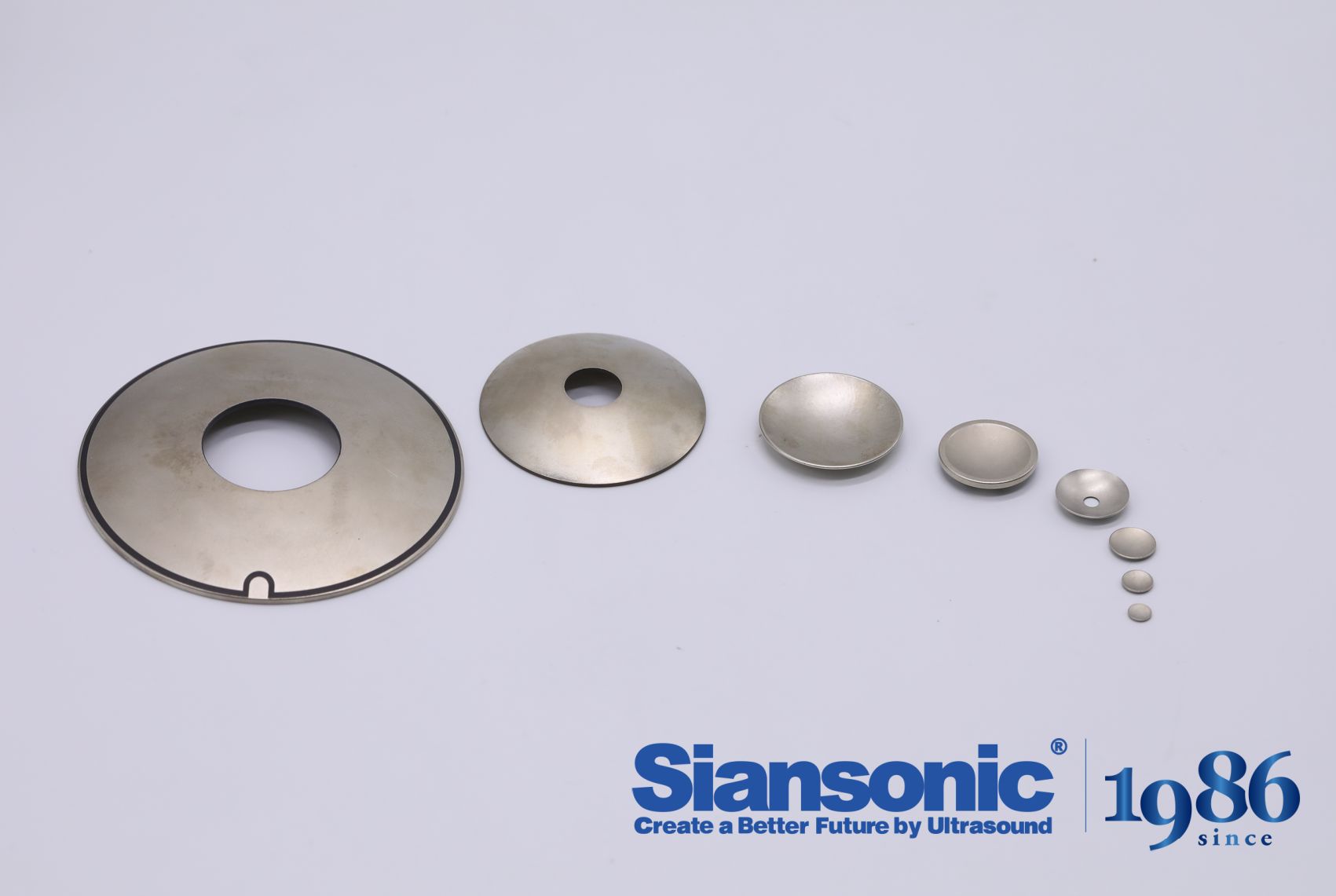
Piezo ceramics are the silent workhorses behind many high-performance systems, but not all formulations are created equal. The right material can mean the difference between a transducer that sings with precision and one that falls flat under load. In this article, we break down the top choices for demanding applications—from ultrasonic cleaning to precision actuation—and highlight the properties that actually matter. With Siansonic's hands-on expertise as a reference, you'll see why material selection is rarely about a single spec, but about balancing trade-offs for real-world reliability.
Choosing Piezo Ceramics That Won't Quit Under Pressure
Piezo ceramics often fail not because of a single overload, but from the slow accumulation of micro-cracks under repeated stress. When you push a material to its limits cycle after cycle, the grain boundaries start to fatigue long before any visible damage appears. That's why the first thing to check isn't the headline strength number—it's how the ceramic behaves near its depolarization threshold. A part that holds 90% of its charge after ten million cycles is worth far more than one that looks tougher on a static datasheet.
Look beyond generic PZT grades. Hard-doped formulations, for instance, trade a bit of raw sensitivity for dramatically better stability under compressive load. If your application involves continuous mechanical preload or high-frequency actuation, a soft ceramic will gradually lose its polarization and drift out of spec. Ask suppliers for aging rate curves under your actual stress profile—not just room-temperature numbers. The right choice often has a slightly lower d33 coefficient but a flatter long-term response.
Finally, consider the electrode interface. Even a robust ceramic will quit early if the silver or nickel layer delaminates under cyclic strain. Specify a bonding method that matches your thermal expansion mismatch, and test prototypes with real-world mounting conditions. Sometimes the difference between a sensor that lasts five years and one that fails in five months comes down to how well the ceramic is mechanically decoupled from its housing.
The Hidden Trade-offs Behind High Coupling Coefficients
Pursuing a coupling coefficient close to unity might seem like the obvious route to better energy transfer, yet the physical reality is more nuanced. Tight magnetic coupling forces the core to handle nearly all the flux, leaving little leakage to soften transient voltage spikes. As a result, switching devices can see sharper edges and higher peak stresses, which quietly eats into reliability margins even when waveforms look clean on paper.
Another overlooked consequence appears in resonant converters. When k approaches 1, the effective leakage inductance collapses, shifting the resonant point and shrinking the control window. What was once a forgiving, tunable network becomes a narrow, almost brittle system where component drift or load changes push operation into hard-switching territory. Designers then compensate with larger snubbers or derated silicon, trading size and cost for stability.
Thermal behavior also shifts in ways datasheets rarely highlight. A high coupling coefficient increases flux density in the shared magnetic path, which can push ferrite materials closer to saturation under transient conditions. Core losses rise nonlinearly, and hot spots migrate toward the center leg where heat removal is weakest. In practice, a slightly looser coupling often buys better thermal headroom and softer failure modes, making it the wiser choice for long-term field performance.
Thin Films, Thick Films, or Bulk? Matching Form to Function
Choosing between a thin film, a thick film, and a bulk form is rarely a matter of simple preference. The physical dimension of a material changes how it behaves under stress, heat, electric fields, and light, so the same chemical composition can serve entirely different purposes depending on its thickness. A metal oxide that works as a transparent conductor at a few hundred nanometers might be useless as a structural component, while a centimeter-thick piezoelectric block can deliver force that a submicron layer cannot.
Thin films, typically below one micrometer, excel when surface or interface phenomena dominate: optical interference, barrier protection, catalytic activity, and semiconducting junctions all benefit from precise, often vacuum-deposited layers. Thick films, spanning a few micrometers to tens of micrometers, occupy a middle ground. They are usually applied by screen printing or tape casting and tolerate more roughness and porosity, which makes them common in sensors, heaters, and low-cost ceramic components. The added thickness provides enough material volume for measurable electrical or mechanical response, but not so much that internal stresses become unmanageable during firing or curing.
Bulk materials, from millimeters upward, are the default choice when the function requires load bearing, large thermal mass, or three-dimensional shaping. A turbine blade, a lens, or a battery electrode cannot be reduced to a film without sacrificing the very property that makes it work. That said, cost and fabrication constraints often blur the boundary: a thick film may replace a bulk part in a consumer device because it can be printed directly onto a circuit board, and a thin film may replace a thick film when miniaturization outweighs raw performance. Matching form to function means first identifying the length scale at which the critical physical process operates, then selecting the simplest manufacturing route that preserves that process.
Driving Piezo Ceramics: Why Your Amplifier Matters More Than You Think
Piezo elements look deceptively simple—two wires, a chunk of ceramic, and you expect motion. Hook them up to a basic op-amp or a cheap bench supply and you'll get a wiggle, sure, but that's like steering a sports car with a rope. The real story is in how the amplifier handles capacitance, resonance, and the nasty flyback voltages that piezo loads throw back. Most generic amplifiers struggle because they treat the piezo as a resistive speaker, not as the complex reactive load it truly is.
A well-matched piezo driver earns its keep in three places: bandwidth, slew rate, and recovery. Piezo ceramics can demand abrupt current spikes—especially when you're pushing sharp steps or high-frequency waveforms for precision positioning or ultrasonic actuation. An underpowered amp will sag, ring, or even clip asymmetrically, which translates into mechanical distortion you can't fix in software. On the flip side, a driver with a high slew rate and a stable compensation network lets the ceramic snap to position without overshoot, preserving both speed and linearity.
Then there's the less glamorous side: heat and protection. Continuous driving at resonance can pump reactive energy back into the output stage. Without a proper snubber or flyback clamping, that energy becomes heat or, worse, a blown channel. Next time you're fighting poor repeatability or a piezo that 'just won't hold position,' don't blame the ceramic first—look at what's driving it. The amplifier isn't an accessory; it's half the transducer system.
When Piezo Stacks Outperform Single Plates in High-Force Jobs
Single piezoelectric plates, especially when driven in bending mode, can deliver useful stroke but quickly run out of force when asked to push against a real load. The thin ceramic disc or rectangle flexes under modest back-pressure, and its effective displacement collapses because the bending stiffness is low. In a high-force job, such as clamping a precision fixture or driving a valve needle against line pressure, a single plate simply cannot maintain the required position. A piezo stack, by contrast, works in the d33 axial mode, squeezing along its length with the full cross-section of the ceramic column. That gives it a blocking force orders of magnitude higher than a comparable single plate, often in the kilonewton range, while still holding sub-micron positioning accuracy.
The structural difference explains the advantage. A stack is built from dozens or hundreds of thin piezo layers, each only tens of microns thick, with internal electrodes alternating. The same drive voltage is applied to every layer, so the small expansion of each layer adds up, but the stack remains mechanically a solid ceramic bar. Because it does not rely on bending, it avoids the stress concentrations and low stiffness that limit single plates. A single plate can be made thicker to resist more force, but then the displacement becomes too small. The stack sidesteps that trade-off: you gain both force and usable stroke without resorting to lever amplifiers or flexure mechanisms that introduce backlash and compliance. In heavy-duty precision tasks such as active vibration isolation for semiconductor tools or exact fuel metering in injectors, this direct push capability matters more than raw displacement.
Engineers usually turn to stacks after a single plate prototype fails to hold position under load or shows unacceptable drift from external reaction forces. In wafer-stage leveling, for example, the actuator must support a sizable portion of the stage mass while making nanometer-level adjustments; a bending plate would sag and lose resolution. In high-speed valve actuation, the stack’s high resonant frequency and stiffness allow it to open and close against hundreds of bar pressure without the mechanical delay of a flexure-amplified single plate. The rule of thumb is practical: if the application specifies a force above roughly a few tens of newtons, or if the actuator has to push against a stiff load without lost motion, a stack will almost always outperform a single plate despite the higher cost and more complex drive electronics.
Aging and Depolarization: The Silent Performance Killers
Most performance drops never announce themselves. Aging works at the material level, gradually thickening passivation layers, loosening contact points, and raising internal resistance. A system can still deliver nominal output while its true headroom shrinks week by week. By the time the drop becomes visible in routine checks, the underlying degradation has usually been underway for months.
Depolarization adds a second quiet failure mode. It destabilizes the electrochemical balance that keeps voltage and current delivery steady. Small shifts in electrode potential may look like noise or minor drift, but they accumulate into slower response times, lower conversion efficiency, and inconsistent readings. Operators often blame operating conditions or sensor calibration when the real culprit is the gradual loss of polarization control.
The dangerous part is how these two forces feed each other. Aging makes depolarization easier to trigger, and frequent depolarization accelerates structural fatigue. Together they create a feedback loop that erodes performance long before any hard failure occurs. Catching them early requires monitoring subtle trends—impedance growth, open-circuit voltage shifts, and polarization recovery time—not just waiting for a fault code.
FAQ
For actuator stacks and positioning stages, soft PZT materials like PZT-5A and PZT-5H are usually the first pick. They offer high piezoelectric charge coefficients (d33 around 400-700 pC/N), large strain per volt, and relatively low mechanical quality factors, which suits dynamic operation. If you need higher force or lower heat generation, PZT-8 can be a safer compromise.
Hard PZT grades, such as PZT-4 and PZT-8, are typically preferred for high-power ultrasonic welding or cleaning. They have higher mechanical quality factors (Qm often above 500), lower dielectric losses, and can sustain larger drive voltages without excessive self-heating. Soft PZT may give more displacement but will overheat quickly under continuous high-amplitude drive.
Lead-free options like potassium sodium niobate (KNN) and bismuth sodium titanate (BNT) have improved a lot, but they still usually trail PZT in sensitivity and temperature stability. For moderate-temperature sensing or consumer devices, they can work well. For extreme pressures, high temperatures, or safety-critical measurement, lead-based PZT remains the more robust choice.
Check the Curie temperature and the maximum recommended operating temperature. PZT-8 and some bismuth titanate-based ceramics can handle 200°C or more, but you must derate performance as temperature rises. Also watch for depolarization: a material may lose its piezoelectric response permanently if you exceed roughly half the Curie temperature under bias.
Usually not optimally. Sensing favors high g33 (voltage output per stress) and stable permittivity, while actuation favors high d33 and high strain capability. Some PZT formulations like PZT-5J balance both reasonably, but you often get better system performance by choosing separate materials for each function rather than forcing one grade to do both.
The main failure modes are depoling, mechanical fracture, and silver migration or electrode delamination. Depoling occurs from excessive temperature, high reverse electric fields, or long-term mechanical stress. Fracture often starts at microcracks from rapid thermal cycling or over-tightening in a stack. Use gradual preloading, avoid tensile stress, and keep drive signals below the coercive field to extend service life.
Screen-printed silver is common and works fine for many applications, but it can migrate under high DC fields in humid conditions. For high-field or high-humidity environments, sputtered nickel or gold electrodes are better. The electrode must also withstand the poling temperature and not diffuse into the ceramic, which can degrade the piezoelectric properties at the interface.
For certain high-end applications, yes. Relaxor single crystals like PMN-PT can give d33 values above 1500 pC/N and much higher strain than PZT, making them excellent for medical ultrasound transducers and precision micropositioners. However, they are more fragile, temperature-sensitive, and costly. If your device can tolerate those trade-offs, the performance gain is substantial.
Conclusion
Selecting a piezo ceramic for demanding applications is not just about finding a material with the highest coupling coefficient or strain output. The real challenge is endurance. A component that performs brilliantly on a bench test can crack or delaminate under repeated mechanical stress. High coupling coefficients, while attractive in a datasheet, often bring trade-offs such as lower mechanical quality factors, increased self-heating, and reduced stability under sustained load. Experienced designers look beyond peak numbers and evaluate how the ceramic behaves across temperature swings, duty cycles, and preload conditions. Form factor adds another layer, since thin films offer precise, low-voltage actuation but limited displacement, thick films bridge some gaps but still cannot match the force output of bulk ceramics. Choosing the right architecture means matching the physical constraints of the application rather than just the headline specifications.
Driving electronics are often the overlooked variable. A mediocre amplifier can distort the very waveform a piezo needs to hold position or deliver clean pulses, leading to ringing, overshoot, and even premature depolarization. For high-force applications, piezo stacks, layered assemblies of many thin elements, usually outperform single plates because they combine moderate voltage requirements with substantial displacement and blocking force. Yet stacks face their own aging and depolarization risks, especially when operated near their Curie temperature or under high reverse fields. These silent killers erode stroke and force over time, often without obvious warning signs. The top choice for high-performance work is rarely a single miracle material. It is a system-level decision that balances ceramic composition, physical form, drive electronics, and realistic lifetime expectations under real operating stress.
Contact Us
Contact Person: Ivy Zhang
Email: [email protected]
Tel/WhatsApp: +86 1081502288
Website: https://www.siansonic.com/