

Modular Buildings Factory Turns Precision Manufacturing Into Faster Construction
2026-11-19
Construction has long accepted delays, rework, and weather as unavoidable costs. But inside a modular buildings factory, that assumption is falling apart. Precision manufacturing is replacing guesswork, and components are produced with tolerances more common to automotive lines than job sites. This article looks at how that shift is cutting schedules without cutting corners — and why GETO is pushing the model further.
Inside a Factory Where Bad Weather Never Halts the Build
The snow is piling up fast outside the loading docks, but nobody on the floor has looked at a weather report since six this morning. A roof module the length of a city bus rolls past on air casters, dry and warm, while a crew bolts down flashing along its edge. The only real nod to the season is the layer of grit near the bay doors, tracked in by forklifts during the morning shift.
Most of the work that normally stalls on a jobsite moves indoors here. Walls arrive as framed panels, ductwork is laid into ceiling cassettes before they leave the floor, and window openings get their gaskets seated under even lighting instead of a race against rain. It changes the rhythm of a project: inspections happen on schedule, sealants cure at predictable temperatures, and a Tuesday forecast stops being something that can push a finish date into the following week.
Tight Saw Cuts and the End of On-Site Guesswork
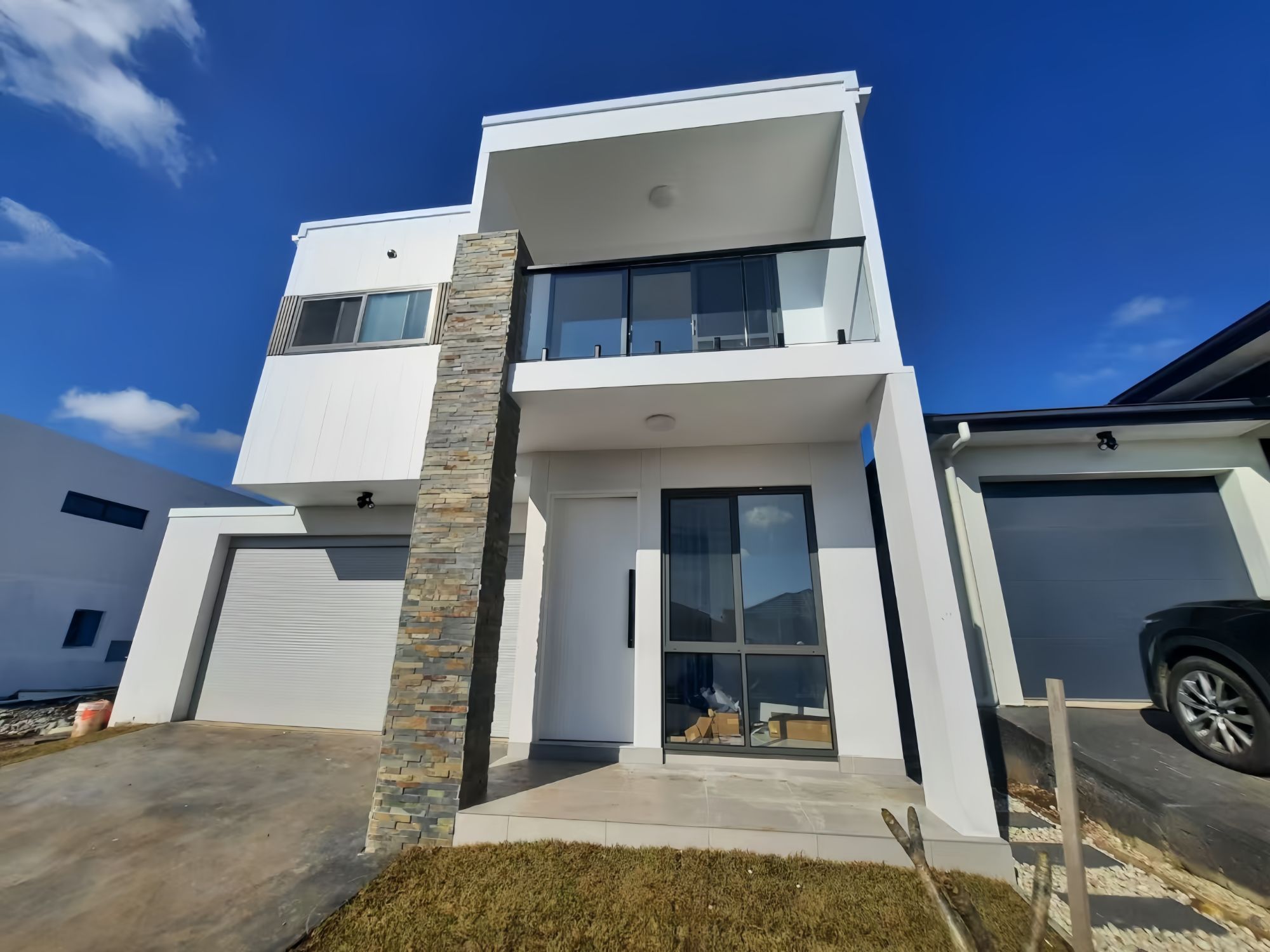
A saw cut that lands within a fraction of a millimeter of the layout line changes how people work. Instead of marking a board, cutting slightly wide, and then trimming or sanding to fit, the first pass becomes the final pass. That precision rarely comes from a single high-end tool. It comes from a combination of a stable work surface, a sharp blade with the right tooth geometry, and clamps or guides that keep the material from shifting at the last moment. Once those conditions are consistent, the kerf stops being a variable and starts behaving like a known quantity.
When cuts are that predictable, on-site guesswork fades. Nobody has to hold a piece up to the gap, squint, and decide whether to shave off another hair. Measurements become direct instead of padded with extra allowance, and offcuts are no longer left long just in case. The result is less noise, fewer trips back to the saw, and joints that close up without persuasion. It also means less dependence on a single experienced hand who knows how to fudge a bad cut into an acceptable fit. The process itself carries the accuracy, so the outcome stays consistent even when the crew changes.
Parallel Assembly That Shrinks the Project Timeline
Most schedules don't slip because the work is hard; they slip because the work waits. Parallel assembly attacks that idle time by splitting the build into independent modules that can be fabricated, tested, and pre-commissioned away from the critical path. Instead of a single crew moving from foundation to structure to cladding, separate teams take ownership of each chunk, and the timeline stops resembling a relay race.
What makes this approach hold up is the early decision to freeze interfaces. Once connection points, loads, and tolerances are locked, two or three assembly fronts can move without constantly re-checking each other. The result is less downtime between trades, fewer bottlenecks around shared equipment, and a completion date that shifts from best-case hope to a defensible plan.
That said, the real savings show up at integration. When modules arrive pre-tested, the final phase becomes alignment rather than discovery. Teams spend days on fit-up and verification instead of weeks chasing issues that would have surfaced one at a time in a linear schedule.
From Digital Models to Finished Modules Without Drift
When a digital model becomes the only definition a module is built against, the usual handoffs lose their power to introduce small shifts. Every boundary, hole pattern and mounting face is pulled from the same geometry the design team signed off on, so the gap between what was drawn and what gets machined stops growing with each department the file passes through.
Drift most often comes from reinterpreting dimensions or adjusting for perceived tolerances long after the model has been released. Here, those fixes are not allowed to live outside the master file. Any change is folded back into the digital twin first, and the production path reads that updated state directly, which keeps downstream operations aligned with the same coordinate system instead of compensating for earlier stages.
The result is a module that arrives at assembly closer to its virtual counterpart than to a hand-corrected approximation. Inspection data can be overlaid on the original model to show exactly where material was added or removed, and that comparison becomes the acceptance record. Finishing a module no longer means reconciling two versions of the product; it means confirming one version survived the process intact.
Why Fewer Site Visits Now Mean Faster Handoffs
A lighter schedule of on-site walkthroughs used to raise concerns about missed details, but the opposite is happening in teams that have shifted their rhythm. When a visit is no longer the default checkpoint, decisions get made from current site data instead of waiting for someone to arrive with a clipboard. Handoffs stop being tied to physical presence and start moving as soon as the relevant photos, measurements, and notes land in the shared workspace.
That change also trims the silent gaps between project stages. In the past, a handoff often stalled because one party wanted a final look at the site before signing off. Now that fewer visits are required, the handoff packet carries more weight, so people invest in making it clear the first time. The result is a shorter review loop, fewer rescheduled walkthroughs, and a cleaner transfer from one owner to the next.
The Production Mindset Changing How Buildings Come Together
For decades, construction has leaned on the idea that every project is a one-off, shaped by site conditions, weather, and a rotating cast of subcontractors. That assumption is quietly losing ground. A production mindset treats a building less like a custom sculpture and more like a product with repeatable parts, clear assembly sequences, and measurable cycle times. The shift doesn't mean every structure looks the same; it means the people delivering it stop reinventing the process on every floor.
When teams adopt this lens, planning starts earlier and cuts across disciplines. Mechanical, electrical, structural, and envelope decisions get coordinated before anyone pours concrete, because the goal is to de-risk assembly rather than fix conflicts in the field. Components arrive with installation logic already embedded, and crews move through spaces in a sequence that resembles a factory line without losing the flexibility a site demands.
The result shows up in fewer surprises, shorter schedules, and less material wasted on rework. It also changes accountability. If a module doesn't fit, the problem is traced to a drawing, a handoff, or a tolerance decision, not blamed on the weather or a generic labor shortage. That clarity is what makes the production mindset more than a buzzword. It turns the messy, unpredictable work of building into something that can actually be improved over time.
FAQ
Instead of treating each module as a one-off site project, the factory runs it as a controlled production line. Components are cut, assembled, and checked with tolerances that would be hard to maintain outdoors. That shift is what lets precision manufacturing feed directly into shorter site schedules.
When parts fit the first time, crews don't burn days correcting gaps, shimming, or reworking connections. The factory's repeatable measurements mean on-site assembly becomes more like final installation than traditional building, which removes a lot of waiting and rework.
Weather, trade stacking, and material storage problems mostly disappear. The factory can run parallel tracks, keep materials dry, and inspect at fixed stations, so weather or site congestion doesn't stall the same way it would on an open site.
Projects with repeating layouts, like hotels, apartments, schools, and healthcare units, get the biggest gains. The repetition lets the factory tune jigs, workflows, and quality checks, which makes each successive module faster and more consistent.
Not necessarily. Many factories use digital models to adapt panel sizes, openings, and services per module. While highly standardized parts help speed, the assembly can still be reconfigured within the factory's process, so design teams aren't stuck with a single box.
Quality control becomes stepwise and documented. Teams inspect structure, plumbing, electrical, and finishes at dedicated stations before the module leaves the line. That catches defects earlier than site inspections typically can, so fewer issues reach the final build.
Site labor shifts from building everything from raw materials to installing completed modules and making connections. The work is shorter, more predictable, and less dependent on having many different trades working in the same space at once.
No, it scales to mid-rise and even high-rise if the structure is designed for module stacking and transport. The key isn't height itself; it's planning the connections, lifting, and tolerances early so the factory precision isn't lost.
Conclusion
Inside the plant, a rainy Tuesday moves at the same pace as a clear one. Roof panels still ride the line, glazing units snap into place, and the saw operator follows a cut list that leaves almost no room for on-site improvisation. With work pulled out of open-air job sites, weather stops being a schedule variable; the sequence is set by stations rather than by clouds. Digital models feed directly into cutting and framing equipment, so the old ritual of re-measuring a half-built room disappears. A wall drawn in the morning is assembled by afternoon with the same dimensions, and tight saw cuts remove the guesswork that used to be solved with shims and field adjustments.
Because modules are built in parallel while foundations are poured elsewhere, the overall timeline shortens without stacking trades into one muddy corner. Finished bathroom pods are checked before they ever reach the site, which cuts down the number of visits that normally happen around a rough shell and speeds up handoffs. The deeper shift is in thinking: teams start treating the building as a set of assemblies that must fit the first time, not as a pile of materials to be corrected outdoors. Precision becomes a daily habit, and the payoff shows up in fewer delays, less rework, and a faster, cleaner build.
Contact Us
Contact Person: Quanhui Nian
Email: [email protected]
Tel/WhatsApp: 8618070545691
Website: https://www.getoglobal.com/