

Mesh Office Chair Company Shares What to Look for Before Buying
2026-11-02
Shopping for a mesh office chair seems easy until you're comparing lumbar support, mesh tension, and warranty details you never thought about. The team at OFCJNS has heard from too many buyers who overlooked a few crucial checks and ended up with back pain or a chair that sagged within months. So they've shared the exact things to look for before you buy—the factors that actually make a difference in daily comfort and durability, not just the marketing jargon.
Mesh Softness Fools People, Tension Doesn't
You can press your thumb into a mesh seat and feel the give, then assume it will cradle you for hours. Most people make that mistake once. The real test of any chair isn't how plush the surface feels under your fingers, but whether the underlying tension keeps your spine aligned when you stop thinking about posture.
A tightly strung mesh with slightly less initial softness often outperforms a pillowy rival after the first forty minutes. That's because softness fades as the material warms and stretches, while calibrated tension stays constant. What felt like a cloud at minute ten can become a hammock at hour two, forcing your lower back to do the work the chair should have been doing.
Next time you compare chairs, stop poking the mesh. Sit still for five minutes and notice whether the surface pushes back evenly along your thighs and lumbar. If it does, you've found tension that tells the truth. Softness just lies to your fingertips.
Lumbar Support Gives Out Faster Than You'd Think
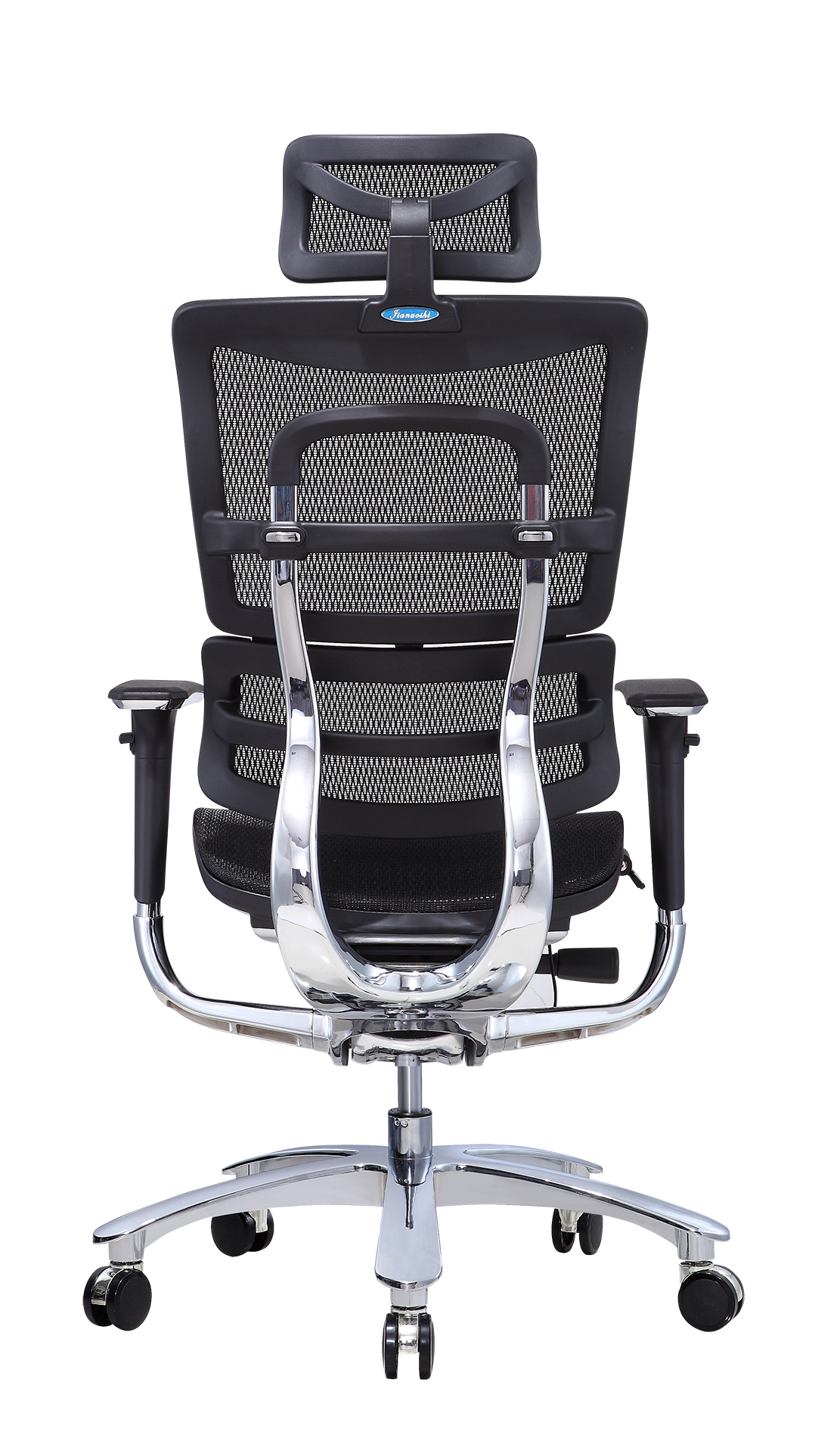
Most lumbar supports aren't built to last, and the sag shows up sooner than expected. A foam pad that felt firm in the showroom can start flattening within a few months of daily use, leaving your lower back without the push it needs. The breakdown is rarely dramatic—just a gradual loss of shape that you notice when the chair no longer feels like it's holding you up.
What gets overlooked is how much the mechanism matters. Adjustable lumbar systems with plastic ratchets or thin cables often develop play, so the support drifts backward every time you lean into it. Even high-density foam compressed behind mesh will soften unevenly, creating a dead zone right where the spine needs contact. Once that happens, cranking the dial higher doesn't restore the original curve; it just pushes a weaker surface into your back.
If you want lumbar support that survives, look past the marketing and check how the support is anchored. A fixed frame with layered foam tends to hold its shape longer than an inflatable bladder or a sliding pad. Pay attention to the warranty wording, too—if it only covers the gas lift and casters, the lumbar component is probably not expected to last.
Armrests Shouldn't Need a User Manual
The moment you sit down, your arm should know where to go. If a chair's armrests demand diagrams, arrows, or a few trial-and-error pokes, something's already wrong.
Good design doesn't explain itself; it just works. An armrest that tilts, slides, or locks in ways you have to decode isn't a feature. It's a small failure, repeated every time you sit. The best armrests are invisible in the best way: they support without asking for attention.
Think about the chairs you forget you're sitting in. The armrests are probably simple, sturdy, and exactly where your elbows expect them. That's the whole point. A user manual for an armrest is a confession that the object hasn't done its job.
The Recline Creak Test You Can't Skip
A recliner that groans every time you shift your weight isn't just annoying—it's often the first sign of loose bolts, dry joints, or a frame under stress. The recline creak test is simple: put the chair through its full range of motion slowly, pausing at three or four angles while you rock gently side to side. Listen for anything beyond the soft sound of fabric stretching. A sharp creak, a metallic ping, or a rhythmic squeak each points to a different problem area.
Do this in a quiet room, without music or TV masking the noise. Press down on the armrests, the seat center, and the footrest while the chair is both upright and fully reclined. Use your fingertips to trace along the frame where joints meet—sometimes you can feel a slight vibration that matches the sound. Pay special attention to the mechanism under the footrest and the pivot points near the backrest hinges. Those are the two spots most likely to develop wear first.
If you catch a creak early, a dab of silicone lubricant on metal-to-metal contact points or a quick tightening of accessible bolts often silences it before real damage sets in. Skip the test, and that small noise gradually becomes a wobble, then a crack, and eventually a broken recliner that costs more to fix than replace. Five minutes of listening now can save you from a loud, expensive failure later.
Seat Depth Decides If You Sit or Squirm
A chair might look perfectly fine in a showroom, but once you actually sit down, the first thing your body notices is how far back the seat pan extends. Too shallow and your thighs lose support, forcing your legs to do extra work just to stay balanced. Too deep and the front edge digs into the back of your knees, cutting off circulation and making you shift every few seconds. That constant fidgeting isn't a sign of restlessness—it's your body trying to tell you the seat depth is wrong.
The ideal seat depth leaves a gap of about two to three fingers between the edge of the seat and the back of your knees. This small space allows blood to flow freely while still giving enough support under your thighs. When this measurement is off, even an expensive ergonomic chair becomes a torture device. Some people try to fix a deep seat by adding a lumbar pillow or sitting forward, but that often just trades one discomfort for another.
Before buying any chair, test the depth with your own body, not just the spec sheet. Sit all the way back, keep your feet flat on the floor, and check how much pressure you feel behind your knees. If you find yourself perching on the front edge or slouching to escape the pressure, the seat depth is wrong. That restless squirming is a direct result of a dimension most people never think to measure.
Casters Are the First Thing to Fail
Most people never think about casters until a cart starts wobbling or a chair refuses to roll. That squeaky, sticky wheel isn't just an annoyance—it's usually the first sign that a caster has given up. The reason is simple: casters absorb constant abuse from floor debris, uneven surfaces, and everyday impacts that heavier components never have to face. A single strand of hair or a tiny piece of gravel can jam a wheel and force the entire unit to drag instead of glide.
Material choice plays a bigger role than many realize. Hard plastic wheels may seem durable, but they crack under repeated loads and slide poorly on smooth floors. Softer rubber or polyurethane treads grip better, yet they wear down faster in high-traffic areas. When the tread flattens or the bearing seizes, the caster stops swiveling properly, and suddenly a simple push turns into a wrestling match. Replacement often gets postponed because the failure looks too small to matter—until a workbench lurches or a dolly tips mid-transport.
Regular inspection sounds boring, but a quick visual check can save you from bigger headaches. Look for flattened spots, hair wrapped around the axle, or a swivel that only wants to turn one direction. If a caster requires a running start to move, it has already failed in function even if it still looks round. Swapping out a worn set before it damages the floor or the equipment frame keeps the whole setup safer and cheaper in the long run.
FAQ
Start with the frame. A sturdy base and smooth-rolling casters matter more than flashy extras. If the chair wobbles or the mesh feels thin at first touch, keep looking.
Ask about the weave density and whether it is reinforced around the seat edges. Cheaper mesh sags within months, but a tighter, thicker knit with some give usually keeps its shape for years.
It can be. Look for adjustable lumbar that moves both up and down and in and out. Fixed support often hits the wrong spot for taller or shorter users, leaving your lower back unsupported after long hours.
Seat depth and armrest height get used constantly. If you cannot slide the seat pan to fit your thighs or drop the armrests low enough to slide under a desk, the chair will fight you all day.
The difference is usually in the frame materials and the mesh tension system. Higher-priced chairs often use glass-filled nylon bases and recline mechanisms that let you fine-tune resistance, not just a basic tilt lock.
Yes, especially if you work in a shared space. Lift the chair and shake it gently. Any rattling or squeaking now will only get worse as bolts loosen and plastic parts rub together.
The return policy and warranty length. A chair can feel fine for ten minutes in a showroom but cause back pain after a full week. Make sure you can return it or have parts replaced without a hassle.
Conclusion
A quick sit in a showroom rarely tells you much because mesh softness can be deceptive. What feels plush at first may lack the firm tension needed to support your lower back over an eight-hour day, so ask about tension adjustment rather than just pressing the fabric. Lumbar support is another silent failure point: many chairs start out promising but the mechanism wears down faster than expected, leaving you with a flat or misaligned backrest within months. Look for a lumbar piece that moves independently and doesn't rely on flimsy plastic clips. Armrests are just as telling—if you need more than a few seconds to figure out how to raise, lower, or swivel them, that's a red flag. Good armrests should adjust smoothly with one hand and stay locked without wobbling.
Then there's the recline creak test you really shouldn't skip. Lean back slowly and listen for grinding or clicking; a quiet, progressive tilt usually means better internal parts, while noise often signals cheap bushings that will only get louder. Seat depth matters more than most people realize. Too deep and you'll perch on the edge, too shallow and your thighs get no support, so check whether the seat pan slides forward and back to match your leg length. Finally, casters are the first component to fail on nearly every mesh chair. If the wheels feel sticky on carpet or hard floor, or if the stems wobble when you lift the chair, expect to replace them within a year. Solid dual-wheel casters with metal stems are worth the extra cost.
Contact Us
Contact Person: Diff Wang
Email: [email protected]
Tel/WhatsApp: +8613650281199
Website: https://www.ofcmeshchair.com/