

IMS Core Network Company Insights for Reliable Voice over LTE and 5G Services
2026-08-13
Voice isn't just another app—it's the foundation of mobile trust. Yet as networks evolve from LTE to 5G, delivering crystal-clear calls without dropped connections remains a silent struggle for many operators. That's where the right IMS core network partner makes all the difference. In this blog, we unpack the core dynamics shaping reliable VoLTE and VoNR services, drawing on real insights from IPLOOK's experience in powering seamless voice across generations.
Why VoLTE Calls Still Drop Despite Mature LTE Networks
It is tempting to assume that a mature LTE network should handle voice without a hitch, but VoLTE operates under much stricter constraints than standard data traffic. While a slow webpage can simply retry a lost packet, a voice call cannot tolerate more than a tiny fraction of packet loss, jitter, or delay. The IP Multimedia Subsystem (IMS) core and dedicated radio bearers are supposed to prioritize voice, yet real-world congestion, fluctuating signal quality, and occasional scheduling conflicts still push voice packets into queues or drop them altogether. Once the guaranteed bit rate cannot be maintained even briefly, the call controller tears down the session, often without any visible warning to the user.
Handover remains one of the weakest links. VoLTE calls must be transferred seamlessly between cells, and sometimes between 4G and legacy 2G/3G networks using SRVCC or eSRVCC. Each handover involves multiple signaling exchanges across the radio access network, the core, and the IMS. If the target cell is congested, if the timing advance is slightly off, or if the serving and target eNodeBs have mismatched feature sets, the handover can fail. In a moving vehicle or along a route with patchy coverage, these rapid and repeated handover attempts increase the chance that one of them goes wrong, and a single failed handover is enough to end the call.
Terminal behavior and carrier-specific configurations add another layer of unpredictability. Not every phone handles VoLTE the same way; differences in chipset firmware, power-saving algorithms, and radio resource management can cause one device to hold a call in a weak signal area while another drops it. Inter-operator VoLTE interconnection is also not universally seamless, especially for calls that traverse multiple IMS domains or fall back to circuit-switched networks. Combine these factors with real-world obstacles like buildings, elevators, and uplink interference, and it becomes clear why a supposedly mature technology still produces dropped calls with surprising regularity.
What 5G Standalone Means for Your IMS Voice Architecture
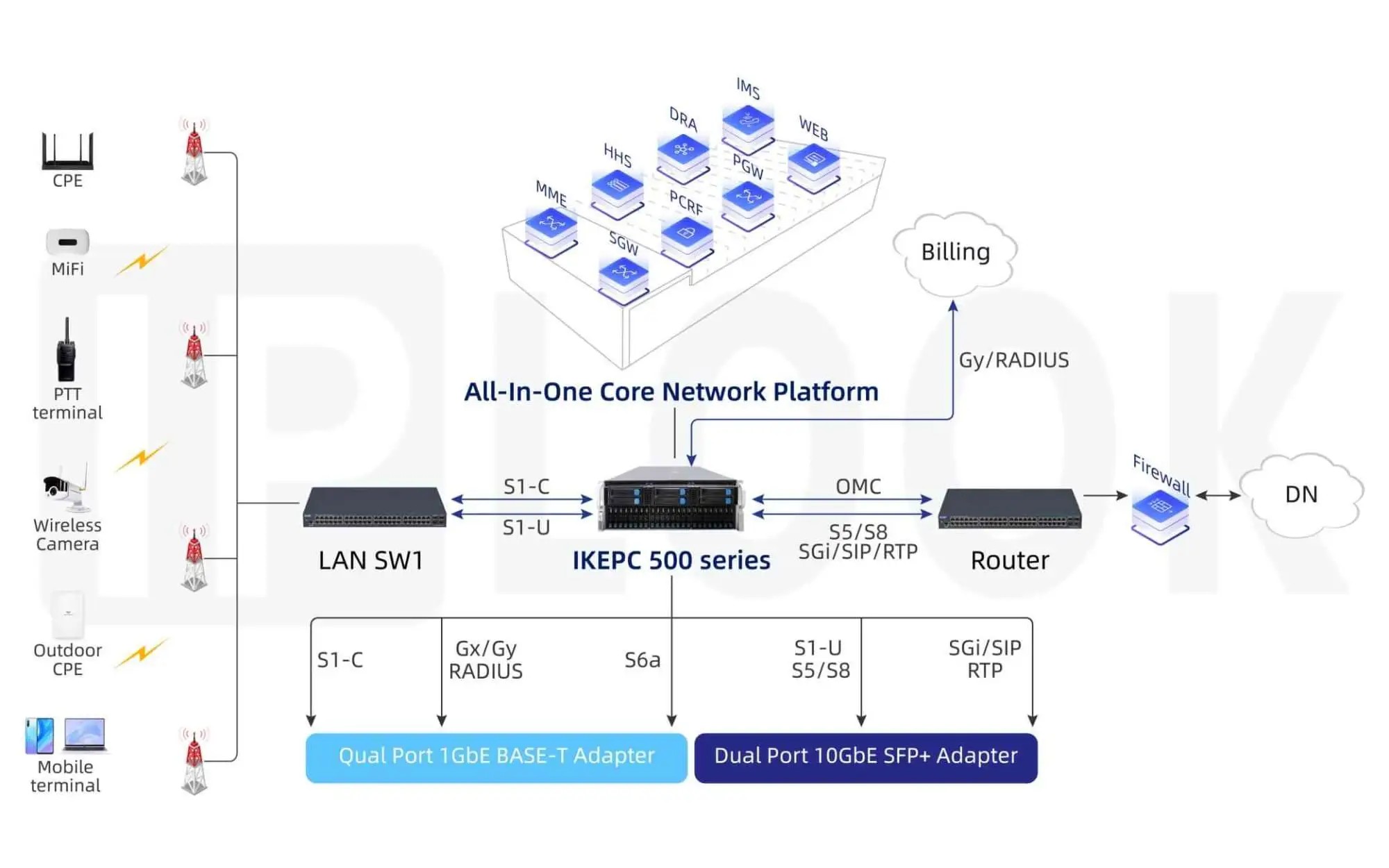
Moving to 5G Standalone pulls the LTE anchor out from under voice services. In non-standalone setups, IMS still leans on the 4G packet core for call control and media, but SA forces a cleaner split: the 5G core now handles registration, session management, and QoS end to end, while IMS remains the application brain. That shift touches every interface between the core and the IMS layer, especially around policy control, charging, and emergency call routing.
The practical impact hits hardest in the IMS nodes that talk to the 5G core. You need support for the new service-based interfaces, proper handling of 5G location data, and updated procedures for things like EPS Fallback when a user moves outside 5G coverage mid-call. Without these, voice calls can silently drop or lose quality, even though data sessions look fine.
Architecturally, SA also invites a rethink of how IMS is deployed. Running IMS elements as cloud-native functions that can share the same orchestration and slicing framework as the 5G core makes it easier to isolate voice traffic, meet latency budgets, and scale voice capacity without dragging in legacy hardware assumptions. For many operators, that is where the real work begins.
Building Redundancy Into the IMS Core Without Breaking the Budget
When planning redundancy for the IMS core, many operators assume it requires duplicating every network element and doubling capital expenditure. In reality, a more surgical approach can deliver carrier-grade availability while keeping costs in check. Start by identifying which functions are truly stateful — such as the Home Subscriber Server (HSS) and Call Session Control Functions (CSCFs) — and focus redundancy investments there. Stateless components, like DNS/ENUM servers or media resource functions, can often be protected with lightweight load balancing and fast restart mechanisms instead of full 1+1 hardware duplication.
Another budget-conscious tactic is to leverage pooled architectures rather than dedicated backup nodes. For example, deploying multiple virtualized P-CSCFs behind a front-end load balancer allows the pool to absorb a node failure without any single idle standby. This N+1 or even N+0.5 redundancy model keeps spare capacity minimal while preserving service continuity. Similarly, geo-redundancy for the HSS can be implemented with an active-standby database replicated asynchronously, avoiding the cost of a fully synchronized active-active pair unless regulatory requirements demand it.
Finally, consider using software-based fault detection and automated healing instead of expensive hardware-level redundancy. Modern IMS platforms can restart a failed process or migrate a virtual machine to another host in seconds, often faster than an operator would notice a dropped session. Pair this with rigorous capacity planning to ensure each remaining node can handle a temporary traffic spike, and you get the resilience of a redundant core without the traditional price tag.
How Emergency Calling Requirements Shape IMS Design
Emergency calling imposes stringent demands on IMS architecture, far beyond ordinary voice. The network must guarantee that every emergency call can be routed even when the caller lacks credentials, has no active subscription, or is out of the home area. This pushes IMS to adopt special session handling for anonymous and unauthenticated emergency registrations, with dedicated P-CSCF and E-CSCF elements that bypass normal service logic. Location acquisition becomes a core design constraint: the network has to determine the caller's physical position before routing, often via LRF interfaces to external location servers, which in turn influences how SIP headers and message flows are standardized.
These requirements also force IMS to maintain reliability during access network congestion or failure. Designers build in fallback procedures that allow emergency sessions to use circuit-switched fallback or alternative radio access, ensuring calls still complete. The need for precise callback handling and law enforcement traceability shapes the data model for emergency registration, including temporary identities and retention of location records. Over time, this has led to a separation between normal call setup and emergency call setup in IMS cores, with distinct priority markings, pre-emption capabilities, and transport resource reservation behaviors that would not exist otherwise.
Lessons From Operators Who Migrated to VoNR Too Early
A handful of operators found out the hard way that flipping on VoNR before the underlying 5G coverage could support it created a messy fallback loop. Subscribers in fringe areas were bounced between NR and LTE mid-call, and the constant inter-RAT handovers did more damage to battery life and call stability than any promised latency gain could offset. The takeaway was blunt: if you cannot guarantee a certain minimum RSRP across the majority of your footprint, you are better off leaving voice on EPS fallback until the RF layer actually earns it.
Device readiness turned out to be another silent killer. Even where the network was solid, early VoNR migrations exposed a long tail of handsets that either lacked the right carrier aggregation combos or shipped with buggy IMS stacks. Call setup times spiked, and support teams became the first line of defence for a problem that marketing had already sold as solved. Some operators had to quietly push out whitelist-based restrictions, blacklisting entire chipset families until vendors patched their software.
There was also a cost dimension that rarely made it into the original business case. Running VoNR in parallel with fallback circuits and maintaining dual registration meant extra signaling load, more complex capacity planning, and a longer tail of inter-vendor testing. The operators that pulled back and delayed full VoNR until coverage, devices, and core network features matured usually ended up with a cleaner launch and fewer angry callers.
The Overlooked Link Between IMS Latency and Call Setup Time
A call that takes an extra second to connect rarely gets traced back to the IP Multimedia Subsystem in a meaningful way. Engineers tend to look at access network conditions, codec negotiation, or even device processing first, while IMS latency stays in the background—tolerated but not fully measured. Yet the path from initial INVITE to the first ringing tone runs almost entirely through IMS nodes. Any pause in the Serving-CSCF's interaction with the Home Subscriber Server, or a slight delay in DNS resolution for ENUM lookups, moves directly into the user's perceived setup time. The problem is that these delays are often small enough to ignore individually but large enough to matter in aggregate.
What makes the link especially deceptive is that IMS latency does not behave like a fixed tax on every call. A subscriber who registers successfully may still face slow session establishment because the call setup sequence triggers authentication vectors, policy decisions, or application server chaining that the registration path never touched. A fifteen-millisecond delay in one diameter transaction might look harmless in a lab trace, but when it appears alongside three other transactions in the same setup flow, the final call setup time jumps well beyond the sum of its parts. Until teams start measuring IMS hop-by-hop contribution rather than just end-to-end results, call setup issues will keep getting blamed on the radio or the device.
FAQ
It acts as the architectural backbone that converts voice and multimedia sessions into IP-based flows, allowing operators to deliver call control, media handling, and service interworking independently of the underlying radio access. Without it, VoLTE and VoNR would lack the session management needed for consistent call setup and handover.
Reliability often comes down to redundancy design, software maturity, and real-world deployment scale. Vendors that have survived multiple technology migrations and operate large, geographically distributed installations tend to offer better fault isolation, faster recovery, and proven interoperability with existing SS7 and legacy telephony systems.
It uses policy and charging rules to prioritize voice packets over best-effort data, enforces quality-of-service parameters end to end, and can trigger media adaptation or fallback to lower bitrate codecs. This keeps jitter and packet loss under control even when data traffic spikes.
A 5G-ready IMS core must support service-based interfaces, tighter integration with the 5G core's network functions, and features like EPS fallback and voice over New Radio. It also needs to handle more granular network slicing and low-latency call signaling for advanced services beyond basic voice calls.
The key is adherence to 3GPP specifications combined with vendor willingness to participate in joint testing. Operators should verify that the IMS can interwork with different radio access networks, eNodeB/gNodeB suppliers, and legacy circuit-switched equipment without requiring proprietary extensions that lock them into one ecosystem.
Beyond licensing and hardware, costs often appear in ongoing integration with billing, lawful intercept, and emergency services, as well as in capacity planning for signaling storms. Poorly dimensioned systems may need costly upgrades when subscriber density grows or when new services like RCS or mission-critical push-to-talk are added.
They maintain session continuity through techniques like single radio voice call continuity and inter-RAT handover procedures. The IMS remains the anchor for the call, so when a device moves from 5G to LTE or vice versa, the session is transferred without dropping, as long as the core and radio networks coordinate their bearer resources effectively.
Expect deeper automation through AI-assisted fault prediction, containerized network functions for faster scaling, and tighter coupling with edge computing to reduce media latency. Also watch for standards work on immersive voice and video calling that will push IMS beyond traditional telephony into richer communication services.
Conclusion
VoLTE call drops on mature LTE networks rarely point to radio failure. Most often, the trouble hides inside the IMS core: session border controllers drifting from tested configs, DNS or ENUM queries timing out under load, or a missing media path failover that nobody notices until a fiber cut. When operators move to 5G Standalone, these gaps widen because VoNR leans on the same IMS fabric but with tighter latency budgets and less tolerance for signaling retries. Several teams that pushed VoNR early found emergency call fallback became their biggest headache: a 5G call that should stay on VoNR suddenly drops to legacy CS, and location or callback data gets lost along the way. Redundancy does not have to mean duplicating every site. A pragmatic approach uses N+1 pools for critical control functions, paired with automated failover drills rather than paper-based resilience claims.
Emergency calling shapes IMS design more than any commercial feature. Regulators demand accurate location, callback capability, and priority routing even during congestion, which forces operators to treat E911 or 112 as a separate service path instead of a normal call with extra header. The overlooked link between IMS latency and call setup time shows up in everyday complaints: users hear silence after pressing dial, or a call takes four seconds to ring back. Each extra DNS lookup, each unnecessary media anchor, each unoptimized diameter exchange adds tens or hundreds of milliseconds. Lessons from early VoNR migrations suggest the winning move is not adding more nodes, but simplifying the call flow and monitoring real latency from device to IMS, not just uptime dashboards. Reliable voice over LTE and 5G ultimately depends on boring, disciplined IMS operations rather than expensive boxes.
Contact Us
Contact Person: Shimmy
Email: [email protected]
Tel/WhatsApp: 85253392231
Website: https://www.iplook.com