

Ground Mount Solar Systems in China: Top Suppliers and Sellers
2026-08-16
China isn’t just the world’s solar factory—it’s also the proving ground for ground mount systems that must endure everything from coastal typhoons to high-altitude frost. Yet, finding suppliers who truly understand these demands is harder than it looks. We’ve cut through the clutter to highlight the top ground mount solar suppliers and sellers in China, and one name keeps surfacing in field reports: Topfencesolar. If you’re sourcing for a project that can’t afford weak links, this list is your starting point.
The Engineering Behind China's Ground Mount Dominance
Instead of pouring concrete foundations for every column, Chinese ground-mount projects lean on driven steel piles—often C-channel or H-beam sections—installed with hydraulic hammers at rates exceeding 300 piles per day per rig. The structures use pre-galvanized cold-formed rails and purlins with optimized profiles that shave metal weight while keeping deflection limits tight. This foundation approach removes curing time, handles slopes up to 25 degrees without regrading, and leaves the land relatively undisturbed, a practical advantage for agricultural and brownfield sites.
Interchangeability sits at the core of the engineering approach. Mounting brackets allow field adjustment of tilt angle in one-degree increments, and telescoping legs absorb height differences across uneven terrain without custom fabrication. The same base components are reused across provinces with different wind and snow loads by swapping only the pile depth or adding diagonal bracing. Quality control yards pre-assemble subassemblies, so unskilled crews can bolt sections together with torque wrenches instead of welding on site, which cuts installation time sharply and lowers error rates.
Corrosion protection gets tailored to the microclimate rather than applied uniformly. Coastal farms receive thicker zinc coatings or zinc-aluminum-magnesium alloy layers; desert sites use UV-stable polymer washers and sand-resistant bearing housings. Engineers often verify pull-out capacity with on-site static load tests on a sample of piles, adjusting embedment depth in real time. This field-feedback loop, backed by a domestic steel ecosystem that turns out coated coil within days, lets contractors open new sites faster than most international competitors can finalize foundation drawings.
Supplier Profiles That Actually Matter
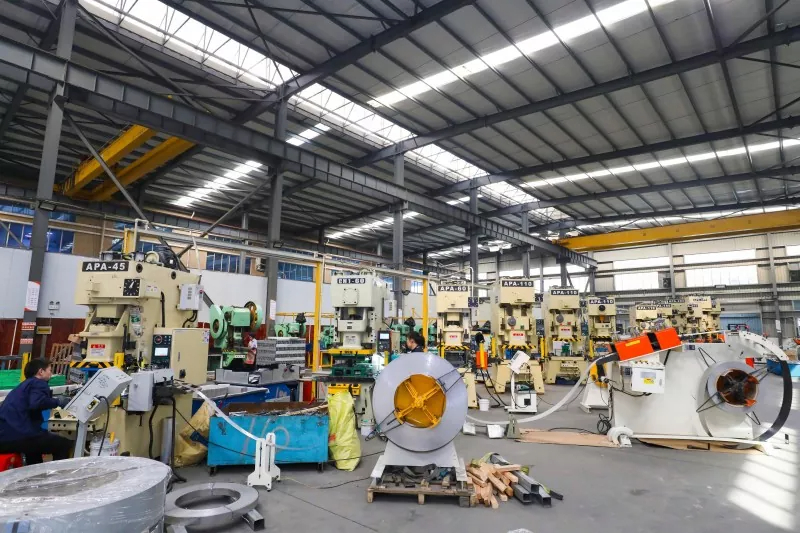
Most supplier profiles read like a wall of certifications that no one ever checks. The ones that actually matter strip away the noise and answer three questions upfront: how fast can they recover when something breaks, which of their past clients would pick up the phone for a reference, and what does their production floor look like at 4 p.m. on a Friday. If a profile can't tell you that, it's just marketing copy with a logo attached.
Look for evidence of problem-solving under pressure, not just capacity charts. A supplier that lists a 48-hour turnaround but never mentions what happened during a port strike or a material shortage hasn't been tested. The profiles worth your time include specific, dated examples—like how they rerouted a shipment through a different customs broker to avoid a three-week delay. That's the difference between a vendor who follows a script and one who can improvise when your order is on the line.
Also pay attention to what's missing. Profiles that skip over defect rates, batch traceability, or employee turnover are hiding the metrics that predict late deliveries. A genuine supplier profile doesn't need to brag; it needs to give you enough unpolished detail that you can picture yourself walking the floor unannounced and not finding any surprises.
Where to Find the Best Ground Mount Deals
Skip the big-box retailers and call local solar installers directly. Many of them end up with extra ground mount rails, clamps, and bases after finishing large projects, and they're often happy to offload that leftover inventory at a steep discount just to free up warehouse space. You can also check with equipment rental yards or auction houses that handle commercial solar farm teardowns and upgrades — perfectly usable racking gets pulled out and sold for pennies on the dollar.
Another approach is to reach out to smaller manufacturers or regional distributors and ask about overstock, discontinued models, or cosmetic blemishes. These units rarely get listed anywhere prominent because the companies don't want to undercut their own retail channels, but a quick phone call or email can unlock prices you won't see advertised. Timing matters too: late fall and winter tend to be slower for ground mount sales, so vendors are more willing to negotiate and bundle shipping.
Avoiding Common Pitfalls When Buying from China
Most sourcing disasters start long before payment. Request a factory audit that checks not just equipment but how the floor is organized, how workers handle materials, and whether the sample you approved matches the line that will actually run your order. If a supplier refuses a video walkthrough or deflects with glossy catalogs, treat that as a red flag you can act on—not a negotiation point.
Define tolerances and packaging standards in writing, then put a third-party inspection on the calendar before the goods leave the factory. Too many buyers only discover a 12% defect rate after their container has already sailed. Also clarify who pays for rework or disposal when the batch fails, because vague phrases like "we will solve any problem" rarely survive contact with a customs hold.
Real Project Data: What Installers Need to Know
Most installers spend their first few years relying on manufacturer spec sheets and lab-tested performance curves. Those numbers look great in a brochure, but they rarely survive contact with an actual roof. Real project data tells a different story: how the system behaves when the afternoon haze rolls in, when tree shading shifts across the array, or when the inverter throttles back because the attic ventilation is worse than the design assumed. If you're not collecting and reviewing data from your own completed jobs, you're essentially guessing on every new quote.
Start simple. Pull the monitoring portal for any system you installed six or twelve months ago. Compare the modeled monthly yield against what really happened. You'll start to notice patterns — certain panel orientations overperform in your local climate, certain inverter brands clip less during summer peaks, certain roof types cause unexpected heat losses. That's the kind of ground truth no datasheet will ever give you. Build a small spreadsheet, log it job by job, and within a year you'll have a reference library that lets you bid with confidence instead of crossing your fingers.
One more thing: share the honest data with your customers, not just the good months. When a system underperforms in December because of a record cloudy streak, explain it with their actual production numbers. Homeowners respect an installer who talks about real output and real variability. That transparency builds referrals faster than any polished marketing claim, and it keeps you from overpromising on the next job.
The Next Wave of Ground Mount Technology
Ground mount systems have quietly shifted from rigid racking toward adaptive structures that read the land rather than fight it. The next wave isn't about adding more steel; it's about letting arrays move with slope changes, variable soil conditions, and even seasonal frost heave without sacrificing tilt accuracy.
A growing number of projects now pair terrain-following single-axis trackers with bifacial modules, squeezing extra yield from albedo on uneven ground that earlier designs would have flattened or rebuilt. This has opened up parcels once dismissed as too costly.
At the same time, foundation methods are diversifying: screw piles, ground screws, and low-impact ballasted bases are replacing mass concrete in many regions, driven as much by decommissioning concerns as by upfront cost. The result is a more modular, less invasive footprint that appeals to landowners and permitting authorities alike.
FAQ
Companies like Trina Solar, JinkoSolar, LONGi, JA Solar, and Sungrow are frequently mentioned for utility-scale ground mount projects. They offer high-efficiency panels, robust mounting structures, and integrated inverter solutions.
They typically combine aggressive pricing with rapid production scaling, and many suppliers have in-house R&D for bifacial modules and trackers. That mix often shortens project payback periods for developers.
Look beyond sticker price. Compare panel degradation rates, warranty terms, bankability, local service networks, and whether the supplier can provide complete system design support rather than just components.
Fixed-tilt galvanized steel structures are the most common, but several top suppliers also offer single-axis and dual-axis tracking systems. Some provide custom designs for high wind or snow loads.
Yes, many suppliers test for salt mist, sand abrasion, and extreme temperature cycles. For example, LONGi and JA Solar have panels certified for high irradiance and temperature conditions in the Middle East and North Africa.
Typical product warranties run 12 to 15 years, with linear power warranties of 25 to 30 years. It is important to confirm the warranty is backed by an insurer or a local entity that can actually handle claims.
There is a clear move toward higher-wattage panels above 600W, more bifacial adoption, and suppliers offering full EPC partnerships. Domestic policy changes have also pushed suppliers to compete harder on quality rather than just volume.
Usually top-tier suppliers work through distributors or require minimum order quantities. Smaller buyers can still access their products through authorized regional partners, which often simplifies logistics and after-sales support.
Conclusion
China’s ground mount solar sector has moved far beyond low-cost manufacturing. The engineering behind many of these systems now incorporates wind tunnel data, site-specific foundation designs, and corrosion-resistant alloys that rival European and US offerings at a fraction of the price. Top suppliers like Antaisolar, Grace Solar, and Mibet Energy have built their reputations on large-scale utility projects in Xinjiang, Qinghai, and Inner Mongolia, where racking must withstand extreme temperature swings and high wind loads. Rather than simply listing products, the most useful supplier profiles focus on actual track record: who has delivered 500 MW in a single year, who owns their galvanizing line, and whose engineers speak the language of geotechnical reports. This level of detail matters more than glossy catalogs or trade show booths.
When sourcing from China, the best deals rarely come from the lowest initial quote. Installers who dig into real project data find that a slightly higher-priced system from a vendor with proven pile-driving tolerances and on-time delivery saves money over the project’s life. Common pitfalls include mismatched steel grades, vague warranty terms that don’t specify coating thickness, and suppliers that subcontract production without telling you. Asking for third-party test reports for wind uplift and soil pull-out, then verifying those reports against actual installations in similar terrain, separates reliable partners from opportunistic ones. Looking ahead, the next wave is already visible: pre-assembled modular racking, integrated tracking algorithms that account for bifacial gain, and aluminum alloys with recycled content aimed at lowering embedded carbon. For developers willing to look beyond price tags, China’s ground mount suppliers offer an unmatched combination of engineering depth, manufacturing scale, and rapid iteration that is quietly reshaping utility-scale solar economics.
Contact Us
Contact Person: Nancy
Email: [email protected]
Tel/WhatsApp: +86-13365923720
Website: https://www.topfencesolar.com/