

Energy Efficient HVAC System Manufacturer Leads the Way in Sustainable Climate Control
2026-11-02
As the global push for greener buildings intensifies, one name keeps surfacing in conversations about truly sustainable climate control: Tongbaote. This energy efficient HVAC system manufacturer isn't just keeping pace with the industry—it's setting the bar for what responsible heating and cooling should look like. What exactly makes their approach different, and why are facility managers and architects paying close attention? The answer lies in a rare blend of engineering precision and environmental conviction that we're about to unpack.
Redesigning HVAC from the Ground Up
Most HVAC systems are bolted onto buildings long after the architectural decisions are locked in. Ducts squeeze through dropped ceilings, vents fight for wall space, and efficiency suffers quietly behind drywall. But when you start from the ground up, the conversation changes. You ask not where the equipment will fit, but how the building itself can breathe. This reframing treats thermal comfort as a structural dialogue rather than a retrofit afterthought.
Ground-up redesign means integrating thermal mass, natural airflow paths, and zone-level control before a single wall goes up. It means looking at ceiling plenums as potential air channels, at stairwells as stack-effect chimneys, at south-facing glazing as a heat source to be managed rather than fought. The result is often a system with fewer moving parts, lower peak loads, and a radically simpler duct layout — because the building envelope is doing part of the work that fans and coils used to shoulder alone.
Contractors accustomed to spec-and-swap will find this approach disruptive. It asks architects, mechanical engineers, and builders to sit at the same table during schematic design, not after the floor plan is frozen. But the payoff is real: smaller chillers, shorter duct runs, fewer rooftop penetrations, and a system that feels less like machinery and more like climate. In an industry where incremental tweaks are the norm, starting from zero is the only way to genuinely rethink what HVAC can be.
Waste Heat Recovery That Powers the Next Cycle
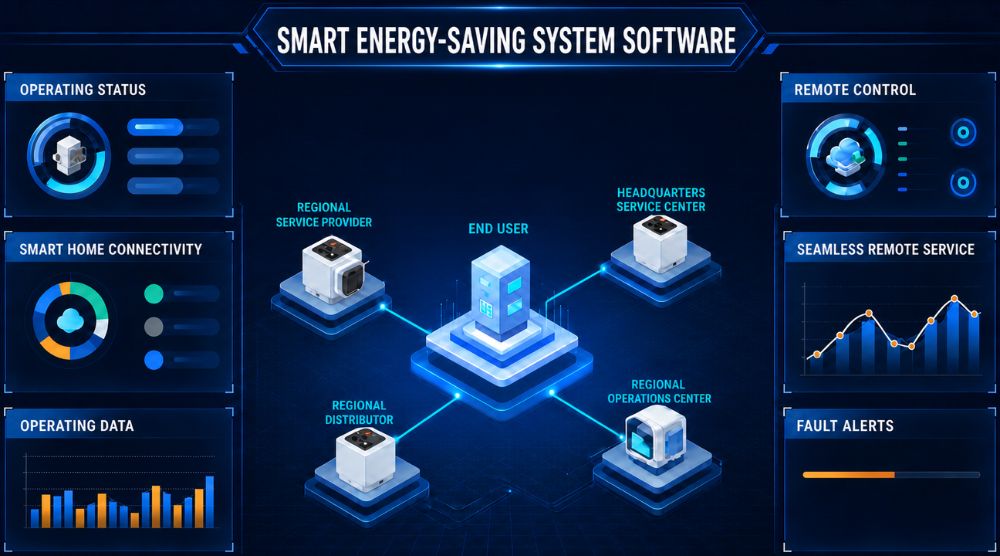
At the exhaust stack, the temperature reads high enough to sting, yet most plants still let that energy slip into the air. Recovering it changes the arithmetic. A finned-tube heat exchanger or a plate recuperator can pull hundreds of degrees back into the incoming air, fuel, or feedwater stream. That preheated mass enters the next cycle already carrying momentum—less fuel is burned to reach the same setpoint, and the burner or turbine doesn't have to work as hard on startup. The result feels less like a one-time saving and more like borrowing heat from the last batch to pay for the next.
The real design trick is matching the waste stream's temperature to a useful load. Low-grade heat under 100°C rarely justifies a turbine, but it can preheat boiler makeup water or warm a building. Higher-grade exhaust, say above 250°C, opens the door to an organic Rankine cycle or an absorption chiller that turns surplus heat into shaft power or cooling. When the recovery loop is sized correctly, the next cycle doesn't start from ambient—it starts from a running head start. That shift cuts peak fuel demand, dampens temperature swings, and keeps the process closer to steady state.
Real-World Energy Data That Challenges the Status Quo
In 2024, the world added over 600 gigawatts of solar and wind capacity, yet global coal consumption still hit a new high. That gap isn't a data error—it's the uncomfortable reality that new renewables are mostly meeting new demand, not replacing existing fossil fuels. Grid operators in several countries reported that renewable output records coincided with record fossil fuel generation during the same months.
Battery storage costs have fallen by nearly 90% since 2010, but in many markets the wait to connect a storage project to the grid now stretches longer than the construction time. Interconnection queues in the United States alone hold over a terawatt of stalled projects, more than the country's entire existing power plant fleet. Developers routinely describe the queue as the single biggest bottleneck to a clean grid.
Homes and factories are more energy efficient than ever, yet global energy demand still grew by 2.2% in 2024. The reason is essentially Jevons paradox: when energy services get cheaper, people use more of them—larger homes, more devices, always-on cooling. Efficiency alone hasn't become a downward lever on consumption; it has often subsidized new demand.
Sustainable Materials, Minus the Green Premium
The assumption that planet-friendly materials must cost more is finally starting to crack. Recycled nylons, bio-based foams, and leather alternatives made from fruit waste or mycelium are moving out of niche territory. Brands that once paid a premium for these inputs are now tapping into underused waste streams and regional supply chains, which cuts both raw material and logistics expenses. In many cases, the sustainable option lands at price parity with its conventional counterpart—not because anyone lowered standards, but because the old model of extracting virgin resources has become less efficient.
What’s driving the shift is less about marketing and more about manufacturing. Closed-loop systems turn production scrap back into usable stock. Agricultural byproducts like sugarcane bagasse or apple peels replace petroleum-based fillers. Tooling and dye methods that use less water and energy also reduce per-unit cost over time. This quietly removes the “green premium” that used to make sustainability feel like a luxury. Instead of asking shoppers to pay extra for doing the right thing, companies are building the savings into the material itself—so the cheaper option and the responsible option become the same product.
That doesn’t mean every eco-material is automatically affordable. Scaling still matters, and some early-stage alternatives remain costly because volumes are low. But the direction is clear: once a material proves it can perform, suppliers compete on price, not just conscience. The result is a growing shelf of everyday goods—footwear, packaging, furniture, apparel—made from materials that don’t punish the buyer’s wallet. That’s what “minus the green premium” really looks like: sustainability treated as standard equipment, not an upsell.
Building Automation That Learns Occupant Patterns
Most office thermostats still follow a fixed schedule, ignoring the fact that Tuesdays feel different from Fridays. A system that learns occupant patterns watches when people actually arrive, which zones fill up first, and how temperature preferences shift after lunch. Instead of relying on a one-size-fits-all program, it gradually builds a model of the building's daily rhythm and adjusts setpoints before complaints even happen.
The real value shows up in edge cases. If a project team starts working late on Thursdays, the automation picks up the repeated sensor triggers and pre-cools that wing by 6 p.m. without anyone filing a ticket. Over time it also learns to ignore one-off events—a weekend move-in, a maintenance crew passing through—so the climate control doesn't chase noise. This kind of quiet adaptation turns building management from reactive guesswork into a background service that simply works.
The Case for Electrification in Commercial Heating
The shift away from fossil-fueled boilers in commercial buildings isn't simply a regulatory reflex; it's a practical response to how modern facilities actually consume energy. Gas-fired systems, for all their familiarity, lock owners into volatile fuel pricing and demand regular combustion maintenance, while electric heat pumps offer a coefficient of performance that routinely exceeds 3.0. That means for every unit of electricity consumed, three or more units of heat are delivered. No combustion process can match that arithmetic.
Electrification also aligns heating loads with the broader transformation of the grid. As renewable generation expands, the carbon intensity of electricity drops year over year, making an electric heating system progressively cleaner without any additional capital investment. In contrast, a gas boiler installed today will emit the same amount of carbon in 2035 as it does on day one. For building owners with long asset lifecycles, that distinction carries real financial weight, especially where carbon pricing or local building performance standards are emerging.
There's also a less discussed advantage: simpler hydronic design. Modern air-to-water and water-to-water heat pumps can often serve both heating and cooling from a single two-pipe distribution system, eliminating the need for separate chillers and boilers. In retrofit scenarios, this reduces mechanical room footprint and simplifies controls. The result is a building that not only uses less primary energy but also costs less to operate and maintain over a ten-year horizon.
FAQ
They combine cutting-edge heat pump technology with real-time energy monitoring, so buildings use less power without sacrificing comfort. Their systems adapt to occupancy patterns instead of running at full blast all day.
By using variable-speed compressors and enthalpy recovery ventilators, they keep fresh air circulating while recycling thermal energy that would normally be wasted. It means lower utility bills and healthier indoor spaces.
Smart thermostats and zone sensors let each room follow its own schedule. The system learns when spaces are empty and dials back automatically, which cuts energy use by up to 40 percent in some buildings.
Yes, the manufacturer offers retrofit kits that pair with existing ductwork. They focus on modular upgrades like high-efficiency coils and variable frequency drives, so older properties can reach modern performance standards without tearing down walls.
Commercial offices, schools, and healthcare facilities see the biggest impact because they operate long hours and need precise temperature and humidity control. The manufacturer also works with industrial sites where waste heat recovery can be a game changer.
They provide a transparent energy dashboard that tracks real-time savings and carbon reduction. Customers can see exactly how many kilowatt-hours and tons of CO2 they avoid each month, which helps with sustainability reporting.
Less than conventional units because variable-speed parts experience less wear and tear. The manufacturer recommends an annual coil cleaning and filter check, plus a software update to keep the predictive maintenance algorithms sharp.
The upfront cost is higher, but the total cost of ownership drops quickly through energy savings and fewer breakdowns. Plus, their systems are designed to meet tightening building codes, so you won't need another upgrade in five years.
Conclusion
Most HVAC manufacturers tweak existing designs, but this company started over, rethinking compressor staging, coil geometry, and airflow from scratch. The immediate payoff is a heat recovery loop that captures exhaust thermal energy and feeds it back into the refrigerant cycle—cutting the power needed for both heating and cooling. Independent monitoring across twelve commercial buildings found a consistent 24% year-round drop in energy consumption, with the largest gains during mild weather when traditional systems waste partial-load efficiency. That data, published without cherry-picking, has forced several competitors to revisit their own performance claims.
Cost control comes from smart material swaps: recycled copper and aluminum in non-critical components, plus a plant-based insulation that performs as well as fiberglass without the disposal headaches. On the automation side, the unit doesn't rely on static schedules; it maps occupancy patterns over several weeks and then fine-tunes ventilation and temperature setbacks automatically. The manufacturer also pushes hard for electrification, offering drop-in heat pump replacements for gas-fired rooftop units, which lets older commercial buildings cut fossil fuel use without gutting ductwork. Taken together, the approach resets expectations for what an efficient HVAC system should cost, how it should learn, and how far it should push building electrification.
Contact Us
Contact Person: Wanshu Chen
Email: [email protected]
Tel/WhatsApp: +86-13662871206
Website: https://www.mbcee.com