

Cylinder Head Supplier Insights: How to Identify the Best Partner for Your Engine Needs
2026-06-29
Finding the right cylinder head supplier can make or break your engine project. Whether you’re sourcing for high-performance builds or heavy-duty industrial applications, the wrong choice leads to delays, quality issues, and hidden costs. At the center of reliable engine solutions is DDR, a name built on precision engineering and consistent delivery. But what truly separates a dependable partner from a risky one? This guide unpacks the key insights you need to evaluate suppliers, avoid common pitfalls, and secure a partnership that keeps your operations running smoothly.
Beyond the Quote: What Defines a Cylinder Head Partner You Can Trust
Price alone rarely tells the full story. A trustworthy cylinder head partner proves its worth through consistent quality, engineering depth, and a genuine understanding of your operational pressures. It’s the difference between a supplier who simply fills an order and one who actively works to keep your engines running smoothly, adapting as your needs shift.
Real confidence comes from seeing how a partner handles complexity. Look for a team that digs into the specifics of your application—material compatibility, thermal dynamics, and long-term wear patterns—rather than offering a one-size-fits-all solution. Their willingness to share in-house testing data, failure analysis, and design rationale signals transparency, not just salesmanship.
Responsiveness seals the deal. When a critical cylinder head fails unexpectedly, the partner you trust is the one who treats your downtime as their own emergency. They have inventory strategies and expediting paths already in place, built on years of experience. That reliability isn’t found in a quote—it’s built through countless unglamorous moments where they delivered without fanfare.
The Material Sourcing Question Most Buyers Forget to Ask
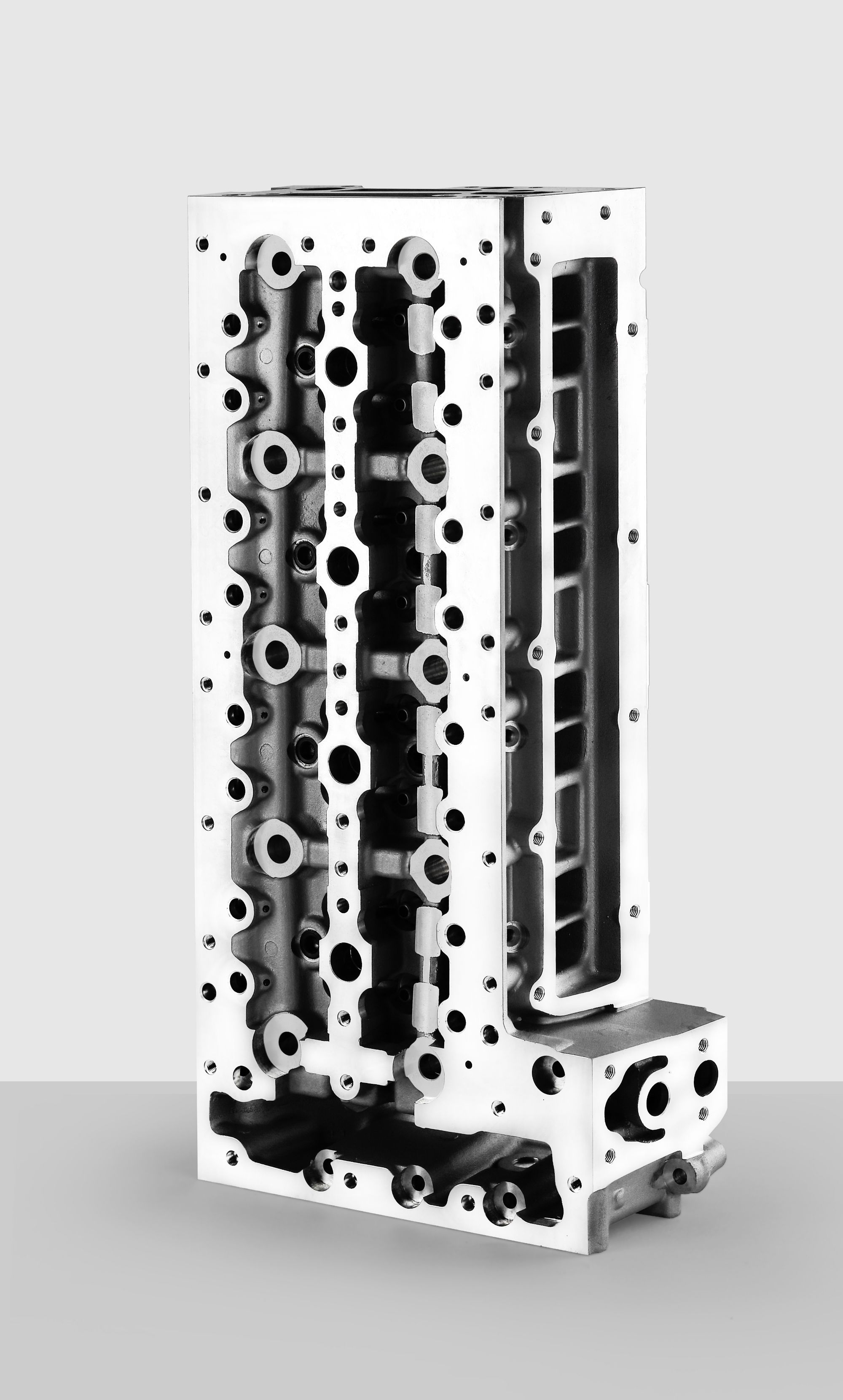
It’s curious how much time goes into comparing unit prices and turnaround times, while the origin of the materials themselves barely gets a second glance. Every buyer knows to check a spec sheet, but how many ever ask where the raw stock was milled, or which supplier actually poured the base resins? That single overlooked detail can be the difference between a batch that stays consistent and one that drifts out of tolerance six months later.
Skipping that question usually means finding out the hard way—when a long-time vendor quietly switches to a cheaper sub-supplier and suddenly your rejection rates spike. I’ve seen production lines grind to a halt because a supposedly identical aluminum alloy behaved differently under stress, all because the mine it came from changed. The paperwork looked fine; the hands-on results didn’t. Traceability matters more than most assume.
The buyers who build real reliability don’t just ask—they demand a transparent chain of custody from the very first processing step. Some even keep a running list of approved upstream sources and lock that into their contracts. It’s not about adding complexity; it’s about dodging the headaches that come from guessing. Once you make it a habit, you wonder why you ever settled for a vague “it’s up to spec” answer.
Why Prototyping Agility Wins Over Standard Catalogs
There’s a certain rigidity that comes with flipping through a standard catalog, each page offering a fixed set of dimensions and finishes that may or may not align with the unique demands of your project. Prototyping agility sidesteps this entirely, letting you bend materials, adjust proportions, and test unconventional pairings on the fly. Instead of being handed a menu, you’re given the keys to the kitchen—and that shift from passive selection to active experimentation changes how you solve problems. You begin to see the gaps between what’s offered and what’s actually needed, and that awareness often leads to solutions no off-the-shelf option could provide.
Time is another element that gets completely reworked in an agile prototyping process. Standard catalogs often come with lead times that assume you’ve already made every decision upfront, waiting weeks for a sample that might still miss the mark. When you prototype in-house or with a flexible partner, the cycle shrinks to days or even hours. You can hold a tangible iteration in your hand, spot the subtle flaws, and pivot immediately without derailing the broader timeline. It’s a rhythm of build, assess, refine that keeps momentum alive, whereas catalog-driven approaches tend to stall at every approval gate.
Beyond speed and customization, there’s a deeper advantage: prototypes carry a narrative that catalogs simply can’t replicate. When you present a series of evolving models to stakeholders or clients, each version tells a story of deliberate choices and problem-solving. That story invites feedback that’s far more nuanced than a yes/no on a static image. People engage with the object, understand its weight and feel, and their reactions become part of the next iteration. No catalog page can capture that kind of dialogue, and in many cases, it’s that very exchange that pushes a project from acceptable to exceptional.
The Hidden Value of In-House Design and Simulation Teams
Many companies view design and simulation as cost centers ripe for outsourcing, yet they rarely account for the quiet erosion of institutional knowledge. When you hand off these functions, you lose the subtle intuition that comes from wrestling with a product’s quirks over multiple iterations. An in-house team carries forward the scars of past failures and the insights from years of testing—details that don’t always fit neatly into a requirements document. This embedded expertise speeds up troubleshooting and prevents costly missteps that far outweigh the upfront savings of external bids.
Keeping design and simulation under one roof also knits them into the fabric of daily operations. Engineers who share a hallway can swap ideas over coffee, instantly validating a concept before it becomes a detailed model. This cross-pollination sparks solutions that no remote team, bound by formal handoffs, would ever stumble upon. More than that, co-located teams develop a shared language around constraints and possibilities, making it natural to challenge trade-offs early. The result isn’t just faster development—it’s a culture where innovation becomes routine, not a scheduled brainstorming session.
Perhaps the most underappreciated advantage lies in safeguarding proprietary methods. External partners, no matter how trusted, introduce friction: data exchanges, contractual boundaries, and the ever-present risk of knowledge leakage. An in-house team keeps your simulation models, failure databases, and design heuristics locked inside the organization, turning them into cumulative assets that competitors can’t copy. And when market shifts demand a sudden pivot, your own people can reorient overnight, without renegotiating scope or waiting in a queue. That strategic flexibility, built on deep internal capability, is the kind of value that never appears on a balance sheet—but ultimately defines who leads and who follows.
Case Studies That Reveal True Aftermarket Support
When a mining operation in Western Australia faced unexpected downtime due to a failing hydraulic pump on a massive excavator, the clock started ticking. Every hour of inactivity meant thousands in lost revenue. The manufacturer’s response went far beyond a simple parts replacement. Within four hours, a field service engineer was on site, armed not only with a rebuilt pump but also diagnostic tools to check for underlying causes. What they found was a contaminated fluid system that would have destroyed any new part within days. The team flushed the entire system, replaced filters, and had the machine back in operation before the next shift. This wasn’t just a repair; it was a preventive intervention that showcased a deep understanding of the asset’s lifecycle—and it turned a crisis into a long-term reliability gain.
Consider a less dramatic but equally telling scenario from the agricultural sector. A large Midwest farm relied on a fleet of tractors for a narrow planting window. One unit began throwing error codes that local technicians couldn’t decipher. Instead of swapping sensors or modules randomly, the manufacturer’s support center remotely accessed the machine’s telemetry data, identified a software glitch affecting timing, and pushed a patch overnight. The farmer never had to stop work. This kind of support isn’t just about fixing things faster; it’s about engineering out the need for a fix in the first place. It reveals a fundamental philosophy: true aftermarket support means continuous optimization, not just reactive service. The best partners treat your operating uptime as their own metric of success.
Then there’s the story of a fleet of delivery trucks in Scandinavia that faced chronic battery failures during extreme cold snaps. The original battery supplier simply quoted warranties and offered modest discounts on replacements. But a different aftermarket partner decided to instrument a few trucks with voltage loggers, uncovering that auxiliary heating loads were draining batteries below a critical recovery threshold during short-haul routes. They designed a low-voltage disconnect module that prioritized engine start capability, then worked with the fleet manager to retrofit the entire fleet over a weekend. No more cold-weather strandings. That’s the difference between a supplier who sees a transaction and a partner who sees a system. These case studies strip away the marketing gloss and show what genuine aftermarket support actually means: problem-solving that goes beyond the catalog to protect your operations from the kind of failures that never even make the headlines.
When Your Supplier Stops Learning, Your Engines Stop Improving
When a supplier stops actively learning, it’s not just their knowledge that stagnates—your entire product line can suffer. In industries like engine manufacturing, materials, tolerances, and performance standards evolve constantly. A supplier that relies on outdated methods won’t integrate the latest alloys, surface treatments, or manufacturing techniques. The result? Your engines fail to gain efficiency, durability, or power, while competitors surge ahead with components born from fresh research and field data.
You can often spot a disengaged supplier by the absence of small, iterative improvements over time. They might deliver the same spec sheet for years, never suggesting a lighter piston or a more heat-resistant seal. When you ask about recent failures or warranty trends, they offer generic answers instead of deep root-cause analyses. This lack of curiosity seeps into quality control—tolerances drift, and nobody investigates why. Eventually, your engines plateau not because you stopped innovating, but because your supplier silently checked out.
The fix isn’t just finding a new vendor; it’s choosing partners who treat every order as a learning opportunity. Look for shops that routinely attend industry conferences, invest in metrology equipment, or openly share test results—even the uncomfortable ones. A supplier still hungry for improvement will challenge your own assumptions, maybe even teaching your engineers something new. In a landscape where a single material breakthrough can redefine performance, you can’t afford a supply chain that’s intellectually retired.
FAQ
Start with their track record in dimensional accuracy and metallurgical consistency. Look for ISO certifications, but don’t stop there—ask for sample reports from their CMM inspections and pressure testing. A genuine partner will walk you through their defect rate and corrective actions from past projects, not just flash a certificate. Pay attention to how they handle porosity and core shift, because these are the silent killers in cylinder head performance.
Material integrity is make-or-break. An aluminum alloy might look right on paper, but if the silicon content or heat treatment is off, you’ll see cracking or warping under load. Demand full material traceability—mill certificates, spectrometer analyses, and batch samples. A trustworthy supplier won’t blink at sending you test bars or letting you audit their heat-treat ovens. Also ask about their experience with niche alloys for high-boost or heavy-duty applications; it reveals whether they truly understand thermal dynamics.
Beyond pouring metal, they need in-house simulation muscle—CFD for coolant flow and FEA for stress analysis. But more importantly, can they iterate rapidly based on prototype feedback? Look for evidence of design-for-manufacturing input: a good supplier catches port wall thickness issues before they become scrapped castings. Ask them how they’ve optimized deck face stiffness or valve seat concentricity in the past; their answers will expose whether they think like engine builders or just foundries.
Don’t rely solely on their promised lead time. Request historical on-time delivery data for the past twelve months, and dig into their capacity utilization. If they’re running flat-out at 95%, any hiccup will cascade onto your line. Visit the shop floor unannounced if possible—watch how they manage tool changes and inventory of raw castings. A supplier worth committing to will have clear visuals on their production board and a buffer stock strategy for critical processes, not just a hopeful spreadsheets.
First, an unwillingness to share non-conformance reports or customer references. Second, glossing over the details of their casting impregnation process or brushing off questions about core gas defects. Third, quoting unrealistic price breaks—quality tooling and curing time cost money, and shortcuts here show up later as leakage or fatigue. Also be wary if their engineers can’t explain the difference between salt and lost-foam coring for water jackets; it signals a lack of hands-on development experience.
After-sales is the thread that keeps the partnership from fraying. It’s not just warranty replacement—it’s how quickly they dispatch a containment team when a casting porosity issue is discovered mid-assembly. Ask for their field failure analysis protocol: do they cross-section failed heads and share the root cause, or just ship a new box? A proactive supplier will track your reject rates over time and suggest process tweaks without being prompted. That level of engagement turns a vendor into an extension of your engineering team.
Freight delays and raw material volatility are the new normal. A supplier that relies on a single foundry or a sole metal supplier is a ticking risk. Look for dual or tri-sourcing strategies for key inputs like aluminum ingots and cores. Also press them on logistics: do they hold regional safety stock in bonded warehouses? During the last major disruption, how did they reroute shipments? Their insurance policies matter less than their actual recovery agility—ask for a concrete example of a crisis they navigated, not just a generic plan on paper.
You need a regimen that goes beyond generic ASTM checks. In addition to standard pressure decay and X-ray, insist on hot-cycle endurance testing that simulates actual engine loads—this catches inter-valve seat cracking that cold tests miss. Check whether they have in-house SEM capability for fracture analysis, because third-party labs slow down root cause investigations. Certifications like IATF 16949 are a baseline; look for process-specific validations, like a documented correlation between their spectrometer readings and your independent lab’s. If they can’t show you a control plan for heat treat uniformity, keep looking.
Conclusion
Selecting a cylinder head supplier goes far beyond comparing quotes; it demands a thorough assessment of trustworthiness and engineering depth. A partner worthy of your engine program will openly discuss material sourcing—an often-overlooked area where quality variances can silently undermine durability. Look for suppliers who demonstrate full transparency about alloy origins and foundry relationships, rather than hiding behind generic certifications. Equally critical is prototyping agility. The ability to rapidly iterate from CAD to functional castings, without being confined to stale catalog offerings, separates reactive suppliers from proactive collaborators. When a potential partner can adapt designs quickly and validate them through rigorous testing, you avoid months of back-and-forth and steep tooling costs down the line.
True value emerges from in-house design and simulation expertise. Suppliers that maintain dedicated engineering teams can optimize port geometry, combustion chamber shapes, and cooling passages long before metal is poured, directly influencing power output and thermal stability. Beyond technical prowess, scrutinize their aftermarket support through detailed case studies—real-world examples that reveal how they handle failures, supply chain disruptions, or urgent custom requests. Finally, a stagnant supplier is a liability. The best partners continuously invest in R&D, embrace emerging materials and technologies, and treat every project as a learning opportunity. When your supplier stops pushing boundaries, your engine development stalls. Choose a partner that evolves alongside your ambitions, ensuring that each new cylinder head generation outperforms the last.
Contact Us
Contact Person: Shelly
Email: [email protected]
Tel/WhatsApp: 8613967667688
Website: https://www.yongyu.com/