

Custom Mixer Truck Washing Machine Solutions That Reduce Downtime
2026-11-19
Every minute a mixer truck sits idle at the wash bay is a minute lost on the road. Traditional cleaning setups often demand too much labor, water, and time—turning routine maintenance into a costly bottleneck. That’s why Sinou engineers custom mixer truck washing machines around your actual fleet size, yard layout, and production schedule. The goal is simple: cut wash cycles down to what truly matters, free up drivers and crews, and keep concrete residue from hardening into tomorrow’s delays. In this post, we look at how tailored washing systems from Sinou can reduce downtime without forcing your operation into a one-size-fits-all box.
Why Standard Wash Systems Slow Down Concrete Fleets
Most standard wash setups are built around light mud and loose debris, not the stubborn paste that concrete leaves behind. Drivers often have to stop, climb out, and spend extra minutes spraying the same areas over and over while the mix starts to set in corners and around chutes. That manual work stacks up quickly across a fleet.
The real slowdown shows up at the end of the day. When a truck has to wait for a bay to open or a previous wash cycle to finish, idle engines and parked mixers start eating into the next shift. Standard nozzles also lack the pressure pattern needed to strip the film off fins and hoppers, so crews resort to brushes and scrapers just to get an acceptable clean.
Over a week, those extra minutes per truck create a bottleneck that dispatch can't schedule around. A wash system that doesn't match the actual residue profile of a concrete fleet forces longer dwell times, repeated rinses, and more labor on the pad. That's why the delay isn't really a single wash problem—it becomes a daily operating drain.
Building the Wash Bay Around Your Truck Configurations
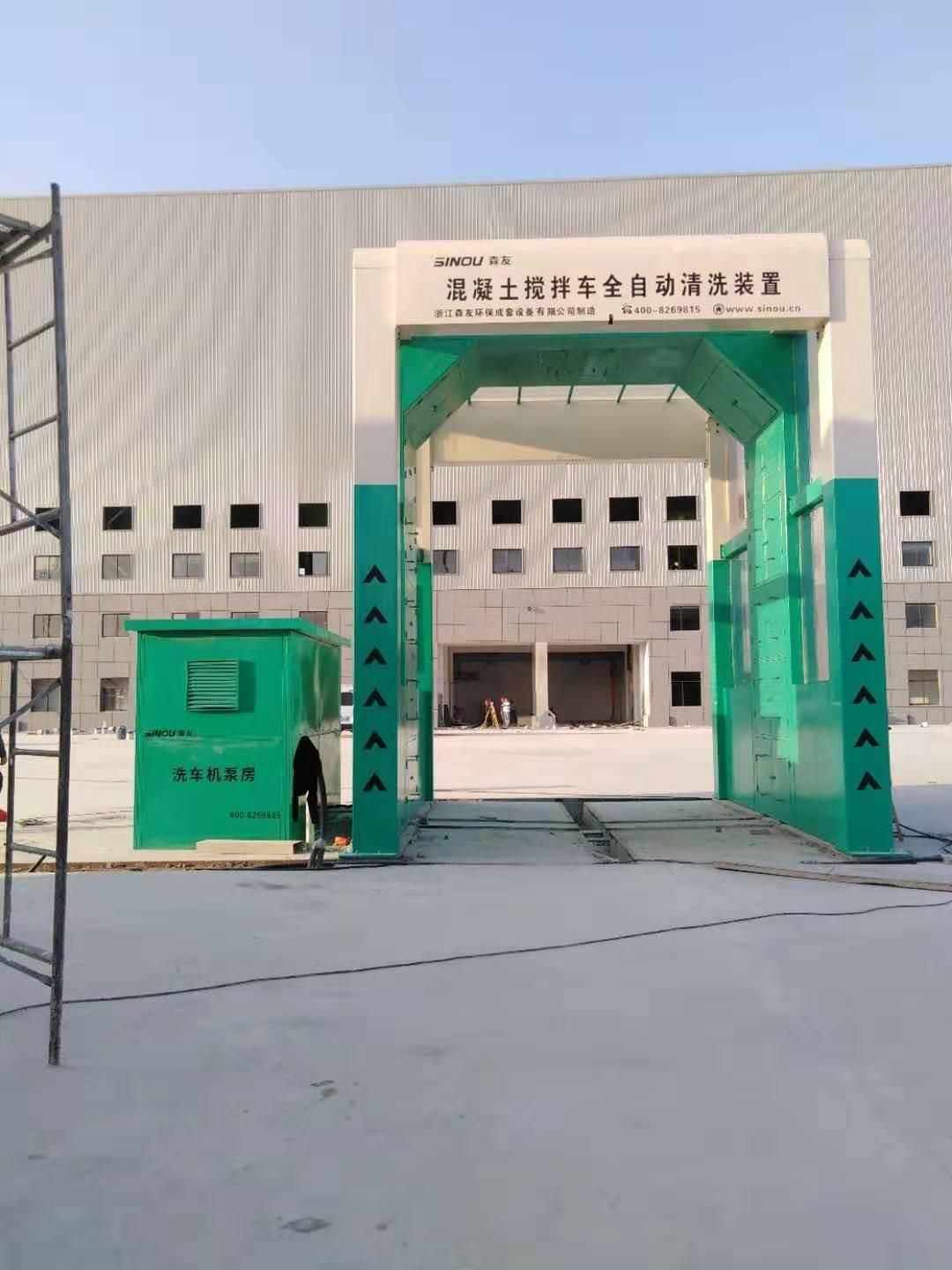
A wash bay that works for one truck may be a constant headache for another. Start with the full length from front bumper to the end of any trailer or tail lift, then add at least three to four feet of walking space at both ends. If your fleet includes day cabs and sleeper cabs with different wheelbases, mark the longest configuration on the floor before the plumbing goes in. That simple layout check prevents a driver from having to climb over wet grating or angle the truck just to reach the hose reel.
Height matters just as much as length, especially with roof fairings, exhaust stacks, and service bodies. Run the overhead boom or fixed spray bar high enough to clear your tallest unit, but keep nozzles aimed downward where they can actually hit the cab roof, hood, and mirrors. For trucks with underbody toolboxes, hydraulic tanks, or fender extensions, place floor-level nozzles wider than the widest rear axle track so the spray pattern doesn't simply fire into the side of a fuel tank.
Drain placement should follow where water actually falls, not just the center of the slab. A long-nose conventional truck sheds water behind the front axle and again near the rear drive axles, while a cabover with a flat frame often pools water under the cab mounts. Slope the floor toward a trench or slot drain that runs along the driver's side rather than the middle, and keep hose reels, chemical racks, and brush stations mounted away from the main spray path so nothing gets soaked before the next shift.
Automated Cycles That Fit Between Pour Schedules
Between scheduled pours, the control system scans for open slots in the batch queue and fills them with short, self-contained routines. Rather than running on a fixed timer, it reads the upcoming pour windows and selects only the cycles that can finish before the next load is due.
A narrow gap may trigger a recirculation pass or a brief rinse of the delivery line, while a longer pause can allow a calibration check on moisture probes or a slow mixer drum rotation to keep the material workable. Every action carries a hard stop time, so the line returns to ready status without delaying the next truck.
Operators can reorder the priority of these in-between routines, but the default logic favors work that reduces wear or preserves mix quality without touching the critical path. Across a full day of pours, those small automated windows add up to steadier batch timing and fewer forced interruptions.
Cutting Drum Cleanout Time Without Extra Labor
Cutting drum cleanout doesn't always mean adding more hands. A simple shift in how the mixer is positioned or how the discharge chute is angled after each batch can let gravity do most of the work. Instead of stopping to scrape the drum walls by hand, the operator can tilt the drum slightly and let leftover concrete slide toward the discharge opening while the drum keeps turning at a low speed. This little change often removes the need for a second person standing by with a shovel or hose.
Another approach is to time the last bit of water or admixture so it arrives right before the drum empties. When the mix is slightly wetter at the end, the residual material releases from the wall and fins more easily. That means less hardened buildup at the end of the shift, and the next morning starts with a drum that barely needs any scraping. For crews already stretched thin, this method fits into the existing pour routine without asking anyone to stay late or take on another task.
A short dry spin after the final discharge also helps. By running the drum empty for thirty to sixty seconds while it is still warm, the remaining film dries and flakes off instead of sticking. The flakes can then be knocked out with a few light taps or a quick rinse, often done by the driver during normal equipment checks. It is not a faster manual cleanout; it is a smarter one that uses the machine's own motion to reduce the time spent with a chipping hammer or water lance.
Keeping Water and Waste Handling Contained On-Site
Managing water and waste without letting anything leave the site sounds straightforward, but most setups quietly leak at the edges. A rinse pad that drains into a nearby ditch, a washdown hose that sends soapy water under the fence, or a storage area where a slow drip goes unnoticed for weeks — these are the small failures that turn into compliance headaches. The better approach starts with treating every drop as if it already belongs to someone else's property. That means grading work zones inward, sealing joints in containment walls, and checking that every drain actually leads to a tank or lined basin rather than the nearest storm grate.
On the waste side, the real test is not how much you can collect but how clearly you can separate it. Mixing wash water with used oil or letting a pile of spent abrasive sit uncovered during a rainstorm creates a larger, harder-to-handle mess. On-site containment works best when each waste stream has its own labeled station, its own lid or cover, and its own scheduled pickup. The crews who use these stations every day are the ones who will notice a cracked bund or a sagging tarp before it becomes a release, so keeping the containment routine simple enough to follow without a checklist matters more than adding extra layers of paperwork.
Regular pressure testing of underground lines and visual checks of above-ground storage are not glamorous tasks, but they catch the slow leaks that surveys and spreadsheets miss. A simple rule helps: if a visitor walking the site cannot easily tell where process water ends up or where a particular waste is supposed to go, the containment plan is not done yet. The goal is not just to pass an inspection, but to make the site's boundaries — and what stays inside them — obvious to anyone who works there.
What a Low-Maintenance Installation Looks Like in Practice
A genuinely low-maintenance setup often gets mistaken for something basic, but the real distinction is in how few moving parts demand your attention once things are running. Think of a wall-mounted heat pump with an easily accessible filter you can slide out and rinse without needing to fetch a screwdriver. The outdoor unit sits on a simple concrete pad, not buried behind shrubs, so leaves and debris don't collect around the fins. Drains slope naturally, wiring is neatly labeled, and the control panel doesn't require decoding a manual every time the season shifts.
In daily use, the difference shows up as quiet predictability. There's no rattling from loose brackets, no water stain creeping down the wall because a drain line was angled the wrong way. Filters pop out with one hand, and the system's own diagnostics tell you what actually needs replacing instead of triggering a vague warning light. Parts like fan motors and capacitors are positioned so you can swap them with basic tools, not a specialized service kit. Even the paint job on exterior lines is chosen to resist UV cracking, so five years later you're not dealing with peeling flakes around the connections.
Compare that to installations where the installer cut corners to save a day of labor. There, the unit hums against an uneven wall, the filter is tucked behind a cabinet, and the drain hose empties onto the walkway. Every fix becomes a small project. The real low-maintenance example isn't about doing nothing—it's about everything being in the right place from the start, so the routine tasks stay routine and the surprises stay rare.
FAQ
Standard units often force a fleet to adapt around fixed spray positions and wash cycles. A custom design starts with your truck dimensions, drum mouth placement, and yard layout, so the nozzles, pressures, and cycle lengths match how your trucks actually return from a pour. That usually means less repositioning and fewer missed spots on the chute, hopper, and drum exterior.
It depends on the current process. If drivers are hand-washing with a pressure washer after every load, an automated or semi-automated system can bring that from ten or fifteen minutes down to roughly two to four minutes per truck. Over a fleet running dozens of trips a day, that adds up to more available hours without extending driver shifts.
They can handle normal return residue well, especially with the right combination of high-volume rinsing, rotating brushes or spray rings, and cleaning agents designed for cement. For heavily hardened buildup, the goal should be prevention: frequent washing right after discharge stops the layers from forming. Occasional manual touch-up may still be needed in extreme corners, but far less than with a generic setup.
Look for a closed-loop or semi-closed-loop design that captures wash water, separates sand and cement fines, and returns clarified water to the rinse stage. That cuts fresh water use and avoids creating a slurry pond near the yard. The best layouts place settling tanks or a compact separator close to the wash bay so sludge removal is a quick, contained task rather than a site-wide cleanup.
A custom system usually shifts maintenance from daily cleaning labor to periodic equipment checks. Nozzles need inspection for clogs, pumps need scheduled servicing, and any sensors or rotating parts should be greased and calibrated. If the water treatment side is included, sludge tanks need emptying at intervals that depend on fleet size. Overall it is lighter than the labor cost of manual washing, but it is not zero-maintenance.
Most installations can be staged. The wash pad or drive-through bay may be built in one area while trucks keep moving through existing wash spots. Then the equipment, plumbing, and controls are tied in during a short cutover window. A good provider will plan around your peak pour times and may schedule final commissioning for the slowest part of the week.
A typical project might take anywhere from eight to sixteen weeks, depending on site conditions, permitting, water treatment requirements, and how much civil work is needed. Simple upgrades to an existing wash bay can be faster. The design phase usually takes more time than the physical install because that is where the custom part is worked out.
Conclusion
Fleet managers dealing with mixer trucks quickly learn that off-the-shelf wash systems create more bottlenecks than they solve. A single fixed spray bar rarely reaches every drum angle on a varied lineup of front-discharge and rear-discharge units, so drivers end up hand-rinsing chutes, hoppers, and fins while the next truck idles outside. Custom wash bay layouts reverse that pattern by matching nozzle positions, platform heights, and clearance zones to the actual axle configurations and drum sizes in your fleet. When the wash cycles are also programmed to fit the gaps between pour schedules, trucks move through in the same rhythm as batching and delivery instead of stacking up at the end of the day.
The real downtime savings come from automating the stubborn parts of drum cleanout. High-volume spray heads and angled rinsing lances knock out hardened residue along the fins and discharge areas without a second worker climbing onto the truck. At the same time, contained water recycling and sediment handling keep the wash area running without waiting on vacuum trucks or off-site disposal. A low-maintenance installation shows up in practical details: accessible strainers, sloped floors that shed solids, and controls that need little daily attention. The result is a wash bay that quietly fits the fleet's schedule rather than forcing the schedule to bend around it. Over a month of pours, those recovered minutes turn into extra loads instead of yard congestion.
Contact Us
Contact Person: HaiYan
Email: [email protected]
Tel/WhatsApp: +86 18957325588
Website: https://www.senyoubeton.com/