
Custom Glass Bottle Filling Machine Solutions for Your Production Line
2026-11-16
Glass bottles come in countless shapes, sizes, and neck finishes—so why settle for a one-size-fits-all filling line? If your production involves viscous sauces, foamy beverages, or fragile containers, off-the-shelf equipment often creates more slowdowns than it solves. That’s where custom engineering makes a measurable difference. At Wanying Machinery, we specialize in designing glass bottle filling machines tailored to your exact throughput, product characteristics, and floor layout. In this post, we’ll break down what to look for in a custom solution and how the right configuration can eliminate common bottlenecks from day one.
Glass Bottle Fillers That Handle Odd Shapes Without Shims
Most filling lines grind to a halt the moment a bottle strays from the standard cylinder—think flasks with sloped shoulders, square-sided decanters, or jars with off-center necks. The usual fix is a drawer full of shims, each one a fragile workaround that shifts under vibration and demands constant babysitting. These fillers take a different route: the nozzle carriage floats on a self-centering guide that reads the container's actual geometry, not a preset ideal. The result is a fill height that stays dead-on even when the glass itself is slightly warped or handmade.
Instead of shimming the bottle into submission, the machine adapts on the fly. Contact-free sensors map the rim profile in milliseconds, then adjust the fill tube angle and depth before the valve opens. That means odd-shaped bottles—hexagonal honey jars, oval olive oil cruets, asymmetric cosmetic vessels—run through the same line without changeover tools. Operators stop hunting for the right shim and start trusting the equipment. In plants where every minute of downtime bleeds margin, that shift is worth more than any spec sheet can promise.
The real advantage shows up in mixed-batch production. Running three different bottle shapes back-to-back used to mean either separate lines or a pile of custom fixtures. Now the filler recognizes each container as it enters the fill zone, sets its own parameters, and keeps pace with the conveyor. No shims means no lost shims, no worn-out shims, and no operator leaning into the guard to nudge a bottle square. It's the kind of quiet reliability that only comes from designing out the problem instead of shimming around it.
Carbonation Loss Prevention on High-Speed Lines
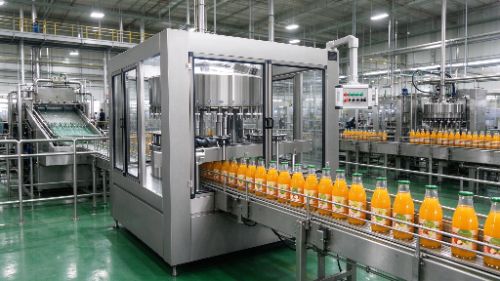
On high-speed filling lines, the biggest threat to carbonation is pressure drop across the filler valves. Isobarometric systems address this by keeping the bowl and bottle under matched counterpressure during the entire fill cycle. A common mistake is letting the snift valve open too fast after the fill, which causes a sudden pressure release and vigorous breakout. Gradual snifting with multiple small vent stages keeps dissolved CO2 in solution long enough for the closure to seat properly.
Product temperature is another lever that many plants overlook. Running the filler bowl at the lowest practical temperature, typically just above freezing for beer or CSDs, increases CO2 solubility and creates a larger margin against turbulence-induced loss. The transfer line from the carbo cooler to the filler should be short and free of sharp elbows, and any booster pump must be selected for low shear. A mass flow meter placed immediately before the filler can track real-time carbonation and alert operators before drift becomes a quality problem.
Valve design also plays a decisive role. Long-tube fillers with vent tubes reduce agitation compared to short-tube designs because the product enters below the liquid surface earlier. For PET lines, maintaining a stable preform temperature and using base purge during the fill can displace air without stripping CO2. Finally, regular audits of filler seals and snift orifices catch wear that otherwise shows up as unexplained carbonation loss on only a few heads.
No-Drip Nozzles for Sticky Sauces and Syrups
Thick barbecue sauce, honey, and chocolate syrup all share a common pain: they cling to the inside of a standard cap and then ooze out after you've already set the bottle down. These nozzles fix that by pairing a wide, self-sealing opening with a silicone valve that snaps shut the moment pressure drops. The result is a clean pour every time, whether you're drizzling caramel over a dessert or adding molasses to a marinade.
What makes the design work so well for high-viscosity liquids is the short, straight channel. There's no narrow neck or sharp bend where syrup can pool and dry into a crust. Instead, the valve sits flush with the tip, so any residual product stays inside the bottle where it belongs. You can invert the bottle, squeeze with a steady hand, and release without a single strand of sugar trailing behind.
Cleanup is just as straightforward. Most of these nozzles twist apart for rinsing, and the food-grade silicone resists staining and odor absorption from strongly flavored syrups. If your kitchen already has a collection of squeeze bottles, swapping to a no-drip nozzle is often a quick retrofit rather than a whole new set.
Washdown-Ready Frames That Survive Harsh Chemicals
In food processing and pharmaceutical facilities, equipment gets blasted daily with aggressive cleaning agents—chlorine, caustic soda, peracetic acid. Standard coated frames start peeling within months, exposing the metal underneath and creating contamination risks. Washdown-ready frames take a different approach: they’re built from solid stainless steel or fully sealed aluminum, with every seam welded smooth so there’s nowhere for corrosive residue to hide. The surface finish matters too—an electropolished or glass-bead blasted texture resists chemical adhesion far better than a simple painted coating.
The real difference shows up over time. Instead of rust blooms around bolt holes or flaking paint near the base, these frames keep their structural integrity and clean appearance even after thousands of washdown cycles. Drainage is designed in, not added on: sloped surfaces and open channel profiles let water and chemicals run off quickly, preventing puddling that could degrade seals or harbor bacteria. For maintenance teams, that means fewer replacements, less downtime, and no hidden corrosion behind covers or inside tube ends.
Specifying a washdown-ready frame isn’t just about material choice—it’s about accepting that harsh chemicals will always be part of the operation. Look for frames with IP69K-rated components, continuous welds, and no exposed threads. The best ones survive not just a year of sanitizing cycles, but a decade, with the same smooth, pit-free surface they had on day one.
Touchscreen Recipes for 50+ Bottle SKUs
Managing a lineup of fifty-plus bottled beverages used to mean juggling manuals or guessing dilution levels. The touchscreen flips that entirely. Every SKU gets its own on-screen profile, showing the exact mix ratio, pour speed, and serving temperature without digging through binders.
Operators can scroll or search by bottle label, color, or category, then tap to load a recipe. Adjustments like extra fizz, lighter sweetness, or a half-size cup are pulled into the same screen, so the next pour already knows what changed.
Because the system stores all recipe data locally, switching among 50+ SKUs doesn't slow down service. A new bottle can be added in under a minute, and the interface flags any mismatched barcode before the drink is made.
Pre-Owned Machine Refits That Feel Brand New
When a machine rolls off our refurbishment line, it carries none of the tired hesitation you might expect from secondhand equipment. Instead, every bearing, belt, and control panel has been stripped down, inspected, and rebuilt to tolerances that often exceed original factory specs. The result is a workhorse that starts on the first crank, holds its calibration through long shifts, and looks clean enough to sit in a showroom.
We don't just swap out worn parts and call it a day. Each refit begins with a full teardown, followed by ultrasonic cleaning, precision machining of critical surfaces, and a fresh coat of industrial enamel that resists chips and coolant stains. Then we run the machine through a 40-point performance checklist, documenting vibrations, temperatures, and repeatability before it ever reaches your floor. That kind of rigor is why our pre-owned units routinely outlast cheaper new imports.
For shops that need reliable throughput without the new-machine price tag, this approach changes the math. You get a machine that's been proven in real production, then brought back to a state where the only clue to its age is the serial number on the data plate. No hidden wear, no mystery noises, no break-in period—just a tool that's ready to make parts from day one.
FAQ
The equipment is built around your container specs. We routinely configure lines for everything from slim 50 ml flavoring bottles to wide-mouth 1 gallon jugs, including round, square, oval, and even tapered glass. Changeover is handled with quick-adjust rails and interchangeable nozzles, so a single line can often cover a family of bottle formats without a complete overhaul.
Accuracy comes from matching the filling method to the product, not forcing one technology on every job. Thin, free-flowing liquids typically use precision overflow or gravity nozzles, while viscous or chunky products move to piston or pump fillers with cutoff control. We also include drip-free nozzle tips and neck-centering guides to keep fill heights consistent across long runs.
Yes. We design frames and conveyor sections to match your current line height and layout rather than requiring you to rebuild around a standard footprint. Compact monoblock configurations are available where rinsing, filling, and capping share one base, which often saves several feet compared to separate machines.
You can choose from manual, semi-automatic, or fully automatic operation, add nitrogen purge or vacuum leveling for sensitive products, incorporate a cap elevator and torque head, or include a washdown-rated control panel for wet environments. Guarding, materials, and PLC recipes are all adjusted to your site conditions and operator preferences.
For most lines, a trained operator can switch between similar bottle heights and diameters in about 10 to 20 minutes using hand-wheel adjustments, pinned guide rails, and marked fill nozzle positions. If neck finishes or cap types change as well, swapping the capping chuck and a few guide components adds only a few extra minutes.
Every machine ships with a detailed parts list and recommended service intervals. We offer remote diagnostics for PLC-controlled lines, and for customers within our service network, on-site preventive maintenance visits can be scheduled annually or based on runtime hours. Critical wear parts like seals, O-rings, and nozzles are stocked for same-week dispatch in most cases.
It depends on the product and temperature range. For carbonated drinks, we use counter-pressure filling heads and maintain proper back pressure to reduce foaming. For hot-fill applications, stainless steel contact parts and heat-tolerant seals are specified, along with a recirculating product path if the recipe tends to settle or cool unevenly.
Conclusion
Production lines rarely fit a single template, especially when glass bottles come in odd profiles. The fillers we configure skip the usual shim work and hold unusual shapes steadily from start to finish. On high-speed runs, carbonation is the first thing to suffer if pressure and fill timing drift, so we build in controls that keep CO2 locked down without slowing the line. For thick products like barbecue sauce or syrup, drip-free nozzles make more difference than most people expect—clean cutoffs at every cycle, fewer rejects, less mess. Odd bottle shapes, carbonation, and sticky products each carry their own failure points; addressing them at the filler level keeps the whole line moving.
Frames need to survive aggressive cleaning cycles, so washdown-ready construction is standard rather than an add-on. Operators switching between dozens of SKUs get touchscreen recipe storage that pulls up the right fill volume, speed, and nozzle setting in seconds. And when a pre-owned machine is the right fit for budget or lead time, we strip it down and refit it with the same care as a new build—new seals, updated controls, recalibrated fill heads—so it feels fresh on the floor. That mix of flexibility, durability, and rebuild quality is what keeps a glass bottling line running without constant babysitting.
Contact Us
Contact Person: Tyson
Email: [email protected]
Tel/WhatsApp: +8613396971296
Website: https://www.wanyingmachinery.com