

Copper Pipe Supplier You Can Trust for Quality Plumbing Fittings
2026-11-02
You’ve probably learned the hard way that not all copper pipes are created equal. A pinhole leak behind a finished wall or a fitting that refuses to seal can turn a straightforward plumbing job into a costly callback. That’s why choosing a copper pipe supplier you can trust for quality plumbing fittings isn’t just a nice-to-have—it’s the difference between a system that lasts decades and one that haunts you. At Jiangsu Baowu New Materials, we’ve built our reputation on supplying copper pipes and fittings that meet rigorous standards, batch after batch. In this article, we’ll walk through what separates reliable copper plumbing components from the rest, and how to spot the red flags before they become your problem. Whether you’re a contractor, distributor, or DIY enthusiast, you’ll come away knowing exactly what to demand from your supplier. Let’s get into it.
Why Plumbers Keep Coming Back for Our Copper
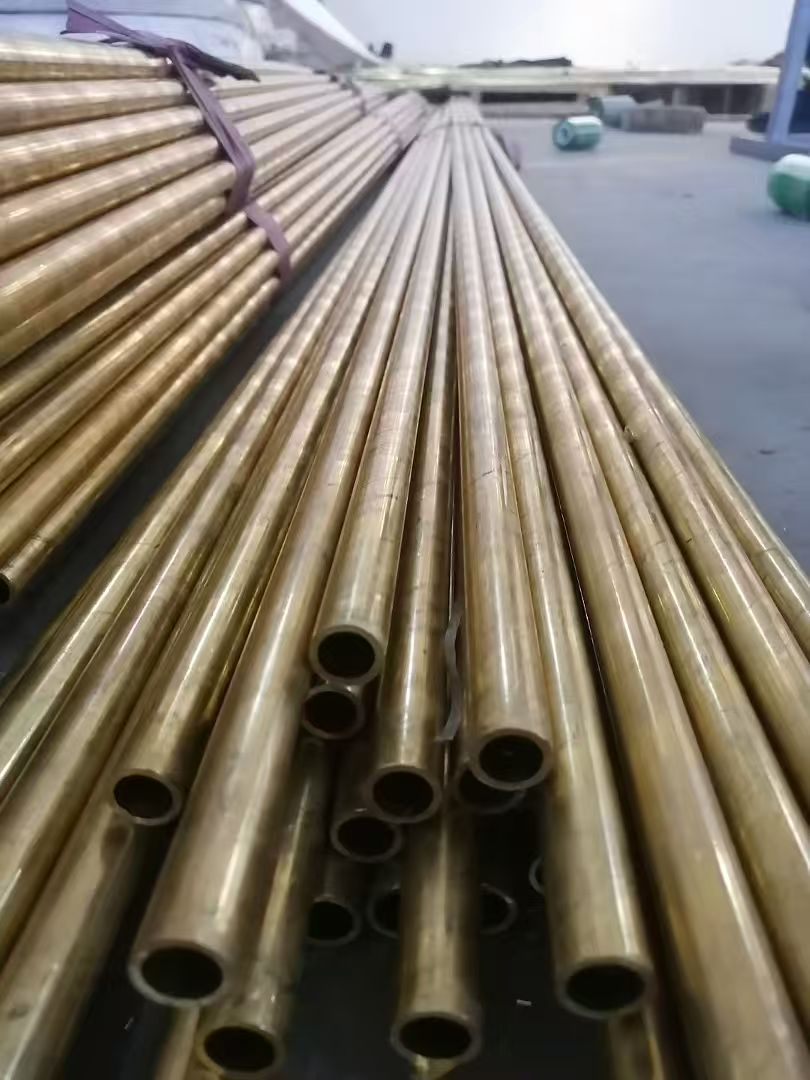
The first thing a plumber notices about our copper is how cleanly it cuts. No ragged edges, no collapsing under the tubing cutter—just a smooth, round profile that slides into fittings without a fight. That comes down to the mill we source from, one that still runs a slower draw process instead of chasing maximum tonnage. The walls are uniform, the temper is consistent, and you can feel the difference the moment you put a bend in it.
We also stock the full range of hard-drawn and annealed coils in the lengths plumbers actually use, not just the ones that look good on a spec sheet. If a job calls for 3/4-inch type L in the morning and 1/2-inch type K by noon, it's on the shelf, tagged, and ready to load. No waiting on a backorder, no subbing in a thinner wall and hoping nobody notices. That kind of reliability means fewer trips to the supply house and fewer headaches on the jobsite.
Beyond the metal itself, plumbers keep coming back because we remember what they're working on. A quick call about a repipe in an old victorian, and we'll set aside the extra couplings and the odd 45-degree elbows they always need for those tight stud bays. It's not a loyalty program or a punch card—it's just knowing the trade and treating a plumber's time like it's worth more than the copper on the truck.
Fittings That Seal Right the First Time
A leak can undo hours of careful assembly in seconds, which is why the right fitting matters as much as the pipe it joins. For applications where access is limited or downtime is expensive, the seal has to be correct on the first attempt. This means moving past one-size-fits-all threads and paying attention to the actual contact surfaces: the angle of the seat, the finish of the mating faces, and the way the fitting responds to torque under real operating temperatures.
Some installers rely on extra tape or compound to force a stubborn joint to hold, but that habit often hides a mismatch between the fitting style and the fluid it carries. A well-matched fitting cuts that guesswork. When the flare, bite, or O-ring is designed for the specific pressure range and chemical exposure, tightening becomes a repeatable motion rather than a gamble. The result is a connection that stays quiet, dry, and stable through thermal cycling and vibration.
The real test isn't the initial pressure check; it's the months that follow. Fittings that seal right the first time tend to share one trait: they were selected around the whole system, not just the thread size. That includes clearance for wrenches, support near heavy components, and a tolerance for expansion. Choosing this way doesn't eliminate every leak risk, but it turns a common failure point into one of the least likely places for trouble.
No Middlemen, No Markups, No Nonsense
Pricing stays honest when you cut out the layers. We skip distributors, brokers, and resellers entirely, so the product ships straight from our facility to your door. That means nobody tacks on a fee for simply passing a box along.
Markups exist because middlemen need their cut. Remove them, and the math gets simple: cost of materials, labor, and a small margin to keep the lights on. You see the real number, not a padded one designed to fund someone else's overhead.
And we don’t bury you in jargon or fine print. Specs, shipping times, return policies—all written in plain English you can read in under a minute. No upsells, no bait-and-switch, just what you ordered at a price that makes sense.
Copper Pipe in Every Size You Actually Need
Finding the right diameter shouldn't mean settling for whatever is left on the shelf. Our stock spans from slim 1/4-inch lines for tight refrigeration work up to hefty 4-inch type K for commercial plumbing, with plenty of stops in between. Half-inch, three-quarter, one-inch—whatever your layout calls for, the size is already sitting in the bin, ready to cut.
More importantly, we keep these sizes in actual depth, not just as a list in a catalog. You won't hear 'we can order that' and wait a week. If a job shifts and you suddenly need 2-inch type L instead of 1-1/2, the change is a matter of walking to the rack, not reworking the schedule.
And because we cut to the foot rather than forcing full sticks on small repairs, you pay for the copper you use, not the leftover you haul away.
We Test What We Sell—Before It Leaves the Yard
Every piece of equipment that rolls into our yard gets put through its paces long before a buyer ever sees it. We don't trust spec sheets or seller promises—we hook up the machine, fire it up, and run it under real working conditions. If it stumbles, we fix it. If it can't hold up, it never gets listed.
Hydraulic lines get pressure-tested, engines are run hot and cold, brakes are slammed, and attachments are cycled until they move like they should. Our mechanics don't just glance at a checklist; they operate the machine the way a customer would on a job site. That means loading, digging, lifting, or hauling with actual loads, not just revving in neutral.
It's a slower way to sell, but it's the only way that makes sense to us. The buyer gets a machine that's already been through its worst day in our yard, not on their project. And that's the whole point of the sign out front.
Old-School Service With Modern Precision
There’s a quiet confidence in the way things were done before shortcuts became the norm. A handshake that means something, a phone call answered on the second ring, a name remembered without glancing at a screen. Old-school service isn’t about resisting change—it’s about holding onto the human thread that makes an experience feel genuine. We pair that with modern precision: schedules synced across devices, updates sent before you think to ask, and details tracked so nothing slips through the cracks.
Imagine a concierge who still writes notes in a leather journal but cross-references them with a real-time database. Or a repair crew that arrives not just on time, but with the exact parts loaded the night before, because a smart system noticed a pattern in your equipment’s history. That’s the sweet spot—where traditional courtesy meets data-driven foresight. It means fewer surprises for you, more time saved, and a service that feels both familiar and refreshingly efficient.
FAQ
Each length starts as 99.9% pure copper and is drawn to a consistent wall thickness, so joints seal cleanly without weak spots or surprise leaks.
Yes, you'll find elbows, tees, couplings, and adapters sized from 1/2 inch up to 2 inches, all machined to grip standard copper tubing without extra filing.
We buy directly from mills in bulk and pass the savings along, while every batch still goes through pressure testing and visual inspection before it leaves our warehouse.
Absolutely. Give us a cut list and we'll prep pieces to within a 1/16-inch tolerance, which means less scrap on site and fewer trips back to the supply house.
Yes, all fittings are lead-free and meet NSF/ANSI 61 standards for potable water, so you can use them on cold or hot supply lines without worry.
You can call or email our product team during business hours. We don't hide behind ticket queues—real people walk through fitting selection, soldering tips, or pressure concerns with you.
We back every order with a 25-year limited warranty against manufacturing defects, and we'll replace any piece that fails due to material or workmanship issues.
Orders placed before 2 p.m. typically ship the same day, and we can arrange next-day delivery in most regions if you're working against a deadline.
Conclusion
Walk into any supply house and you'll hear the same complaints about copper pipe—thin walls, inconsistent diameters, fittings that fight you on the thread. That's exactly why so many plumbers keep coming back to us: our copper is different from the moment it arrives. We buy direct from the mill, cutting out middlemen and their markups, so the price you see reflects the metal, not a chain of handlers. Every stick and coil in our yard is checked before it leaves—pressure-tested, visually inspected, and measured against the spec stamped on the side. If a batch doesn't meet our tolerance, it doesn't ship, period. That means fewer callbacks and fewer wasted trips to the job site.
Our fittings are machined to seal right the first time, with clean threads and proper seat angles that don't need a half roll of tape or an extra crank of the wrench. We stock copper pipe in the sizes you actually use—from half-inch repair work to two-inch mains—so you're not waiting on a special order. And while our methods are modern, the service is old-school: a real person answers the phone, knows your name, and loads your truck in the right order. No nonsense, no surprise fees, just copper you can trust when the walls are closed up and the water is back on.
Contact Us
Contact Person: Zoe Liang
Email: [email protected]
Tel/WhatsApp: 86 189 2128 6299
Website: https://www.jycomat.com