

Cold Forged Parts Wholesaler Guide to Sourcing Precision Components Without Supply Chain Disruptions
2026-11-19
Sourcing cold forged precision parts at wholesale volume often forces a trade-off between dimensional accuracy, lead time, and unit cost—until a delayed batch stops production. This guide strips away the usual supplier-speak and focuses on practical checks for material traceability, capacity planning, and contingency sourcing. We also examine where BOYIKUN can strengthen a buying strategy designed to avoid the next supply chain shock.
Auditing a Cold Forging Partner Beyond the Sample Crate
Sample crates tell you a supplier can hit a dimension on a good day, but they rarely reveal how they behave when tooling wears down at hour six of a shift. A real audit starts on the floor, watching how operators read a print, where they keep their inspection records, and whether anyone reacts when the first piece of a new coil comes out with a slightly different grain pattern. You're not just checking parts; you're looking for the habits that keep variation from reaching your dock.
Ask to see the die maintenance log, not just the die itself. A well-run cold forging operation tracks hits between polish cycles, records minor galling before it becomes a crack, and can explain why a particular punch was swapped two days early. If the manager points to a shiny final inspection area but hesitates when you ask about the corner where incoming wire is tagged, that hesitation is data. Trace one part number backward from finished crate to raw material heat lot, and see how long the paper trail actually holds up.
Finally, run a small audit on their problem-solving reflex. Give them a borderline nonconformance from your last shipment and watch what happens: do they reach for a corrective action form, or do they argue about the spec? The response time and the depth of their containment plan matter more than any certificate on the wall. A partner worth keeping will treat your audit question as a shared engineering problem, not an interruption.
Pinpointing the Real Tolerance Drivers Before Tooling Begins
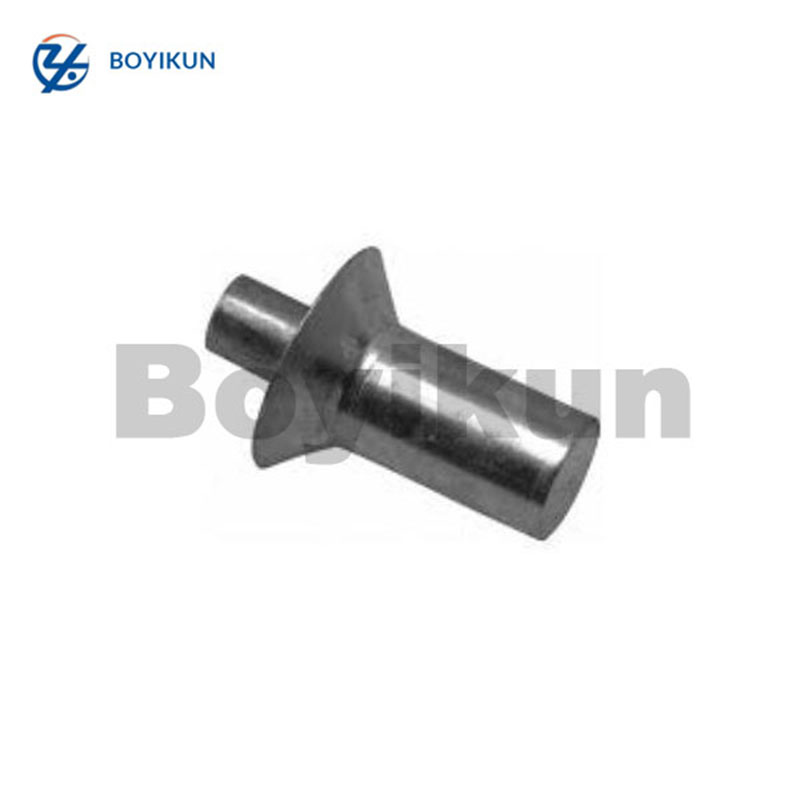
Most tolerance stacks in a new part are inherited, not designed. A nominal dimension gets a default block tolerance, and the toolmaker is left to guess which surfaces actually do the work. Before cutting steel, the more direct route is to follow the part through its assembly: locate the surfaces that touch, the holes that receive fasteners, and the features that control alignment. Those contact points are the real drivers. Everything else can wait.
It is also worth separating dimensions that survive the process from those that merely survive the drawing. Thin walls, deep ribs, and areas near gates or weld lines move in ways a print cannot fully capture. If a feature will be machined in a second operation, holding a tight molding tolerance on it only adds cost without improving the final result. Asking how the supplier will hold a number, and what happens to the material after it leaves the tool, usually exposes which tolerances are structural and which are decorative.
The earlier those drivers are named, the less time gets spent arguing over numbers that do not affect the product. It shifts the discussion from blanket precision toward targeted control at the handful of features that carry the assembly. That is not loosening the print for convenience; it is giving the tooling budget a clear reason to exist.
Designing a Supplier Pool That Absorbs Transit and Policy Shocks
A supplier pool built purely for cost leaves you exposed the moment a border closes or a port backs up. The fix starts with treating geographic spread as a form of insurance, not inefficiency. Instead of clustering vendors around one logistics corridor, we map each supplier by the transit nodes it depends on, the chokepoints it shares with other suppliers, and the political boundaries its goods cross. That map usually reveals hidden concentration: different factories, same port, same customs regime, same single rail link.
The second shift is harder because it challenges procurement habits. You stop asking who is cheapest today and start asking who stays operable when a specific policy or route fails. That means carrying a few suppliers you do not use at full volume, giving them small but real orders so they remain warm. It also means checking how exposed your tier-two and tier-three suppliers are, because a disruption two layers down can idle your direct partner just as effectively as a strike at their own dock.
Finally, the supplier pool has to be treated as a living portfolio rather than an annual list. Contracts need built-in optionality for volume shifts, priority access, or alternative shipping terms that activate quickly. Suppliers that share risk information early get more business; those that hide bottlenecks get less. Over time, the pool becomes less about having many names in a database and more about having enough genuine, independently operable options to move when transit or policy shocks hit.
Tracing Every Batch Without Piling on Bureaucracy
Tracking a batch usually gets treated as extra paperwork, but the lightest approach is to capture what already happens on the floor. A lot number scribbled on a receiving tag, a photo of the supplier invoice, or a quick note on the day's production sheet can link raw material to finished goods without asking anyone to learn a new system.
The useful core is small: supplier lot, date received, amount used, and the customer orders that pulled from that batch. When something goes wrong, those four points are often enough to narrow the field fast. Extra fields might look thorough, but they mostly add clutter and slow down the people doing the real work.
Keep the record where the work happens. A shared log at the blending station or a simple spreadsheet updated from the floor beats a monthly data cleanup. Once tracking becomes part of the routine instead of a separate project, the history stays reliable and a recall drill no longer feels like digging through forgotten boxes.
Smoothing Demand-Cycle Whiplash With Reserved Capacity
Reserved capacity gives a team room to breathe when order patterns lurch from overbooked to almost idle. Rather than forcing production to ride every spike and trough in real time, it keeps a measured portion of capability open so sudden pull-ins or cancellations do not immediately cascade into supplier panic, overtime spikes, or idle crews.
The operational benefit is most visible in scheduling and inventory. A reserved slot absorbs the first wave of a demand shift, buying planners enough time to see whether a change is a short-lived blip or the start of a longer trend. That cushion prevents the usual overcorrection where a single strong month triggers excess raw material buys and a weak month sparks abrupt cutbacks.
There is a carrying cost, so the buffer should not be set and forgotten. Many teams tie the reserved amount to recent volatility, expanding it only when forecast error or order swings pass a certain point, then shrinking it as conditions settle. That keeps the protection practical and frames the expense as a deliberate hedge rather than idle waste.
Sequencing Secondary Work So It Never Sits Waiting
The reason secondary work sits waiting is rarely a lack of time; it is a lack of a clear trigger. Tying each supporting task to a specific event changes that. When the order batch closes, when the support queue drops below five, or when the weekly report is filed, the next step begins on its own. The trigger, not the calendar, decides the sequence.
Size matters here. Small tasks should be shaped to fit into the gaps between deeply focused blocks, not saved for a perfectly clean afternoon that never arrives. Larger tasks need to be placed alongside related work so they inherit the same mental setup. That placement removes the warm-up cost that makes people avoid them.
Maintain a visible overflow list and review it on a fixed day. Any item passed over twice gets assigned to a specific morning slot, even if it is short. That one rule keeps secondary work from turning into a hidden queue that only surfaces when it becomes urgent.
FAQ
Look at how they handle tool life, material batch records, and process control. A solid wholesaler will share initial sample reports, PPAP Level 3 documentation, and Cpk values for critical dimensions without being asked twice. Check whether they have secondary operations like thread rolling, heat treatment, or surface finishing under control, either in-house or through proven partners. If a supplier quotes a low price but never asks about load conditions, tolerance stack-ups, or failure history, treat that as a warning sign.
Ask for a simple supply chain map: where the steel billet comes from, who supplies the die steel, and which outside processors handle coating or heat treatment. Flag any single-source dependency. A good supplier should also state how many weeks of raw material they keep and whether they have backup tooling. If they can tell you exactly where a batch would be rerouted if a furnace or thread rolling machine goes down, that is far more useful than a generic promise of on-time delivery.
For many cold forged parts, outside diameters can be held around +/-0.05 mm and lengths around +/-0.15 mm, but the real answer depends on geometry and material. Bore position, concentricity, and thin sections often require looser limits. If a drawing calls for +/-0.01 mm everywhere, the supplier should identify which features need turning or grinding after forging. A trustworthy shop will mark those secondary operations at the quote stage instead of discovering them during production.
Common carbon and alloy steels like 10B21 or SCM435 are usually easier to source than specialty microalloyed or high-alloy grades. Ordering an uncommon specification can add eight to fourteen weeks and leave you exposed to mill scheduling. In many cases, the supplier can recommend an equivalent grade that is already in stock or regularly purchased. Insist on heat traceability, but avoid turning every lot into a special approval unless the application truly requires it.
At minimum, request material certificates, dimensional inspection reports, and hardness test results. For safety-critical or high-volume parts, an initial sample report with process capability data is worth requiring. Also agree in writing on the acceptance criteria for typical cold forging surface marks, because those are a common reason for rejected shipments. If document formats are not exchanged early, incoming inspection can turn into a bottleneck even when the parts themselves are good.
Put capacity commitments and rolling forecast responsibilities into the supply agreement, then track work-in-progress updates every week or two instead of waiting for a monthly status call. For critical components, negotiate a safety stock or consignment arrangement so you are not dependent on one perfect production run. Also discuss alternative shipping routes and ports before a disruption happens, because a reliable supplier should not be tied to a single logistics path.
Cold forging makes the most sense when annual volumes are high, the shape suits upsetting or extrusion, and the required tolerances stay within the process window. Shafts, bolt heads, sleeves, and complex pins are common examples. If you only need a few hundred pieces or the part requires extensive material removal, machining is usually more practical. The best results often come from near-net forging followed by a light finishing operation, not from forcing the forging process to hold every feature tight.
Include a clear material surcharge mechanism, define when currency or energy costs trigger a price review, and set minimum and maximum inventory levels. The agreement should also state how rejected lots are returned and how quickly replacements must ship. An exit clause matters, but the more useful part is a quarterly forecast review where both sides can adjust before small issues become delivery failures.
Conclusion
Sourcing cold forged precision parts rarely fails at the quote stage. The breakdowns happen later, when a supplier's sample crate looks flawless but their production controls drift, or when a single routing decision leaves goods stuck at a port for weeks. A wholesaler should treat the initial audit as the start of the relationship, not the finish line. That means walking the shop floor with an eye on how dies are maintained, how process capability is measured before tooling starts, and whether the partner can actually hold the true tolerance drivers, including grain flow, fillet radii, and surface finish after secondary operations. Equally important is building a supplier pool that spans more than one logistics corridor, so a policy change or a blocked route does not freeze the entire pipeline.
Batch traceability does not need to mean a wall of paperwork. Simple lot-level identifiers, tied to the forging recipe and the secondary work sequence, can make recalls faster without slowing the line. Demand swings are another quiet killer. Reserving capacity at a forge, even in small bands, smooths the whiplash that turns steady programs into panic buys. Finally, sequencing secondary work so nothing waits between machining, heat treat, and coating keeps working capital from piling up on a loading dock. The wholesalers who stay predictable are usually not the ones with the cheapest parts; they are the ones who manage these handoffs before a disruption exposes them.
Contact Us
Contact Person: Xianchen Hu
Email: [email protected]
Tel/WhatsApp: 86-13248645200
Website: https://www.hexnb.com/