

China Water Pump Generator Set - Key Considerations for Industrial Use
2026-09-19
Industrial water pump generator sets in China face a unique set of demands: unstable grid supply, extreme temperatures, and round-the-clock operation. Yet many buyers still focus only on horsepower, ignoring the details that determine long-term reliability. Hichai Power has spent years refining designs for exactly these conditions. Here, we cut through the noise and highlight the key considerations you need to evaluate before making an investment — so your next generator set doesn't become a costly lesson.
Matching Pump Curves to Actual Site Duty
A pump curve shows what a pump can do under ideal test conditions, but the real question is where it will actually run once tied into piping, valves, and elevation changes. The system curve represents the pressure required to move a given flow through that specific network. Plotting both on the same axes makes the intersection the only stable operating point. If that intersection sits far from the pump’s best efficiency point, energy waste and accelerated wear often follow, even when the pump itself is perfectly healthy.
Field measurements rarely match catalog assumptions because friction factors, fouling, and transient demands shift the system curve over time. A common mistake is selecting a pump based on a single design flow without checking part-load behavior. Throttled valves may force the operating point leftward on the curve, while oversized impellers can push it right into cavitation territory. Comparing logged suction and discharge pressures against the original curve quickly reveals whether the pump is working with the system or fighting it.
Rather than treating the curve as a fixed promise, treat it as a diagnostic map. Small trim adjustments to the impeller, variable speed control, or correcting a control valve setting can move the operating point back toward the high-efficiency zone. The goal is not to make the pump match the datasheet but to make the installed system and the pump agree on a duty point that balances flow, pressure, and long-term reliability.
Separating Continuous Rated Sets from Standby Impostors
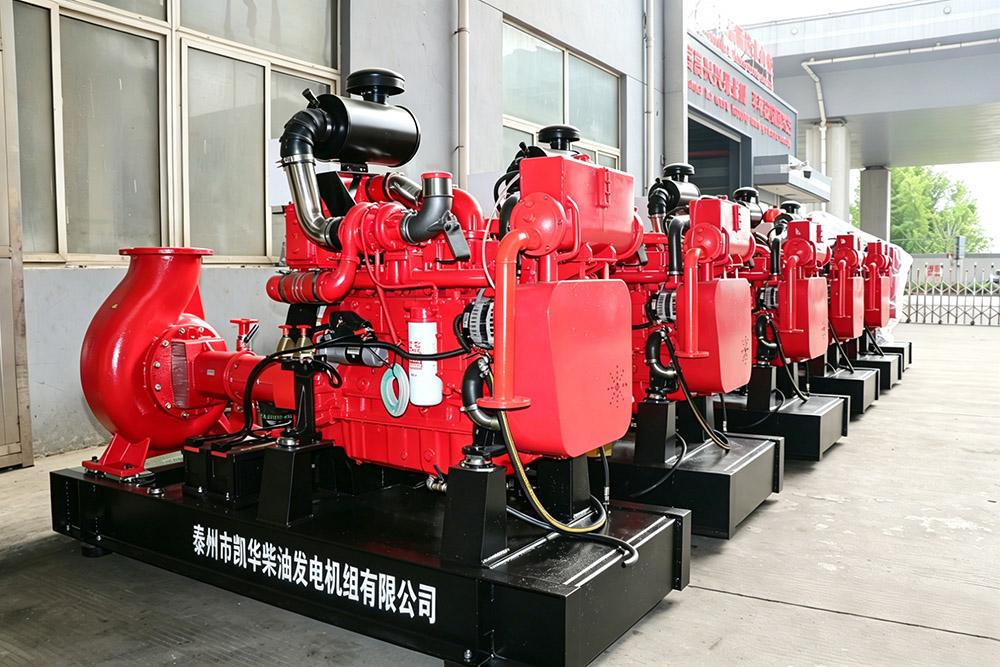
A generator's nameplate can say one thing while its internals tell a different story. Continuous rated sets are designed for unrestricted operation at full load, often in prime or baseload roles, with cooling, exhaust, and bearing systems sized for nonstop duty. Standby impostors, by contrast, are built around short-duration emergency runs and carry smaller radiators, lighter-duty alternators, and fuel systems that struggle under sustained high load. The fastest way to tell them apart is to ask for the manufacturer's full-load temperature rise test and compare insulation class ratings — continuous units run cooler at rated output.
Another separator is the warranty language and published load factor. True continuous sets carry a 100% load factor with no annual hour restrictions, while standby units often show a 70-80% average load factor and an annual runtime cap, commonly 200 to 500 hours. If a dealer avoids sharing the ISO 8528 rating definitions or cannot produce a prime power rating certificate, that set is probably a standby machine dressed up in continuous clothing. The difference in wet stacking, carbon buildup, and oil degradation becomes obvious within the first few hundred hours of attempted prime operation.
Engine derating also leaves a clear fingerprint. From the same displacement block, a continuous-rated version is usually derated by 10-15% compared with the standby configuration to protect piston crowns, turbochargers, and valve seats from thermal fatigue. This derating is not a defect; it is the mechanical equivalent of pacing a long-distance runner instead of a sprinter. Choosing a standby unit for continuous duty may cut the initial purchase price, but the shortened overhaul intervals and higher fuel consumption per kilowatt-hour usually erase those savings before the first major service.
Altitude Dust and Heat Quietly Derate Your Set
A generator that runs fine at sea level can lose a noticeable chunk of output once you move it into the mountains. Thinner air means less oxygen reaches the combustion chamber, so the engine simply cannot burn fuel as aggressively. Some units start shedding power at elevations as low as 1,000 meters, and the drop becomes steeper with every additional climb. The engine may not sputter or smoke, but the wattage you thought you had quietly shrinks.
Dust works differently but erodes output just as effectively. Fine particles pack into air filters, forcing the engine to work harder to breathe. That extra intake restriction shifts the fuel-to-air balance, robs horsepower, and can push exhaust temperatures higher. If the dust is abrasive enough, it also wears down cylinder walls and turbocharger blades, turning a temporary loss into a permanent one.
Heat compounds both of these problems. Hot air is already less dense, so a generator operating on a scorching afternoon is effectively working at a higher altitude than the one on a cool morning. Cooling systems also lose their edge when ambient temperatures climb, forcing the engine to pull timing or reduce fueling to stay within safe limits. Together, altitude, dust, and heat rarely announce themselves with a breakdown—they just leave you with less power than the nameplate promised.
Load Bank Testing Before You Wire the Check
The phrase "load bank testing before you wire the check" isn't just a saying—it's a safeguard. Too many buyers accept a generator based on a quick no-load start or a manufacturer's spec sheet. A load bank test, where a resistive or reactive load simulates real demand, reveals whether the unit can actually hold voltage and frequency under stress, not just idle. If you skip this step, you might discover governor hunting, overheating, or fuel delivery problems only during the first real outage, and by then the vendor's invoice has long cleared.
Treat the test as a condition of final payment. Have the supplier or commissioning agent run the generator at 50%, 75%, and 100% of rated load for at least 30 minutes each, logging voltage, frequency, exhaust temperature, and oil pressure. Watch for gradual droop, unusual vibration, or alarms that reset between runs. If the set fails any stage, withhold the wire transfer until corrections are made and the test is repeated. This turns a symbolic handshake into a contractual checkpoint—and saves you from owning a very expensive paperweight.
The Real Cost of Cheap Spare Parts
A cheaper replacement part can look like a win on the invoice, but the real price usually shows up weeks later. Bearings that wear unevenly, seals that don't quite seat, or electrical connectors with the wrong plating all create small failures that cascade into downtime. A machine idled for half a shift often costs more than the difference between the bargain part and the OEM spec.
There's also the question of what you're actually comparing. A low-cost supplier may skip the hardening, coating, or tolerance checks that keep a component alive under load. That doesn't mean every aftermarket option is bad, but it does mean price alone is a poor filter. Mechanics end up replacing the same part twice, or chasing intermittent faults that never existed with the original.
Warranty costs, labor for repeat repairs, and the risk of damaging adjacent components turn a supposed savings into a liability. The real cost of cheap spare parts isn't on the purchase order. It's hidden in unplanned maintenance, lost production, and the slow erosion of equipment reliability.
Maintenance Habits That Outlast the Warranty
Many car owners treat the warranty period as the finish line, but the real longevity play starts after the paperwork expires. The habits that keep a vehicle running past 100,000 miles are rarely flashy—they’re the unglamorous routines of checking fluids before a road trip, replacing filters a little earlier than the manual suggests, and listening for the small sounds that signal wear. These aren’t repairs you wait to make; they’re small investments that prevent the expensive ones.
A habit worth building is documenting every service, not just the dealer’s stamp but the date, mileage, and what was actually done. This record becomes a diagnostic tool when something goes wrong and a trust signal if you decide to sell. Another underrated routine is the monthly driveway inspection: tire pressure, coolant level, belt tension, and a look underneath for fresh leaks. Ten minutes a month can outlast the warranty by years because it catches problems while they’re still cheap to fix.
FAQ
The main differences come down to the engine block, alternator rating, and cooling system. Industrial units are usually sized for prime power rather than standby, meaning they can run for days without derating. Look for a heavy-duty radiator, a brushless alternator with an AVR, and an engine block designed for constant load—things you won't always find in residential-style sets.
Start with the pump's locked rotor or starting current, not just its running amps. Electric motors can draw three to six times their rated current at startup, so the generator's surge capacity matters as much as its continuous kW rating. Add at least 20-25% headroom above the pump's running demand, and if multiple pumps start at once, size for the worst-case combined surge.
Yes. Ask for a certified load bank test report at 100% rated output for at least four hours, not just a factory start-up video. Also request documentation for the alternator winding insulation class (Class H is preferable), engine brand and origin, and a vibration test report if the set will sit on a skid or trailer. A factory audit or third-party inspection is worth the cost for larger orders.
Underestimating local compliance requirements, choosing the cheapest control panel, and ignoring derating for high altitude or hot climates. Many buyers also skip asking about spare parts availability for the specific engine model. Cheap analog gauges without remote monitoring will cause headaches later, and not confirming whether the stated power is standby or prime rating leads to overloaded units.
It is often the difference between a reliable setup and frequent downtime. Look for a controller that supports auto start/stop on float switch or pressure sensor input, low oil pressure and high coolant temperature shutdowns, and phase failure protection. Remote monitoring via RS485 or a simple dry contact alarm output is practical for sites that are not always staffed.
It depends on the pump starting sequence and total load diversity. A single larger set can be more fuel-efficient and easier to maintain if the pumps never all start simultaneously. But if you have two or more large pumps that start under load at the same time, separate sets or a soft starter/VFD on the pumps will reduce voltage dips and protect the generator and motors.
Confirm whether the engine is mechanical or electronic injection, as electronic injection offers better fuel economy and lower emissions but requires cleaner fuel and more skilled service. Ask for a fuel consumption curve at 50%, 75%, and 100% load, not just a single brochure number. Also consider fuel tank capacity relative to the desired runtime between refills, especially for remote agricultural or mining sites.
In harsh conditions, shorten standard intervals. Check and clean the air filter every 50-100 hours, inspect coolant and hoses weekly, and change oil at least every 250 hours or earlier if the unit runs in high dust. Install a water separator in the fuel line, and if the set is near saltwater or chemicals, apply anti-corrosion coating to the frame and use a marine-grade alternator.
Conclusion
Most industrial buyers in China eventually learn that a pump generator set's nameplate rating is only the beginning of the story. Matching the pump curve to actual site duty is not a one-time calculation but a recurring adjustment, especially where suction lift, pipe friction, or fluctuating water demand changes through the day. A machine that looks perfect on a datasheet can fall far short when the real operating point drifts left of the best efficiency range. This is why separating continuous rated sets from standby impostors matters more than any glossy brochure. A set built to run a few hours a month during power cuts will not survive a week of non-stop dewatering or mine drainage without overheating, oil degradation, and eventual bearing failure. In that same spirit, altitude, dust, and heat quietly derate your set even before you turn the key. Thin air reduces cooling and combustion efficiency; airborne grit clogs filters and wears cylinder liners; high ambient temperatures shorten insulation life and lower alternator output. Ignoring these site-specific factors turns a well-chosen set into a liability.
Before any payment changes hands, insisting on a proper load bank test is one of the few ways to verify that the assembled unit actually delivers its promised kilowatts under a sustained load, not just in a free-run demo. A load bank exposes weak voltage regulation, overheating joints, and fuel system restrictions that no visual inspection will catch. Once the set passes, the owner's focus shifts to long-term economics. Cheap spare parts from unverified suppliers often cost more after factoring in premature failure, unplanned downtime, and potential damage to adjacent components like injectors or turbochargers. The initial saving evaporates quickly when a failed bearing takes out a generator end or a substandard gasket allows coolant into the oil. Maintenance habits that outlast the warranty are not about following a generic checklist; they are about logging operating hours, trending oil samples, checking belt tension and cooling system pressure, and replacing filters based on actual site conditions rather than fixed calendar intervals. A well-documented service history becomes the difference between a set that quietly runs for a decade and one that becomes a recurring emergency.
Contact Us
Contact Person: Ms. Lu
Email: [email protected]
Tel/WhatsApp: 8618917899306
Website: https://www.hichaipower.com