

China Tri-isobutyl Phosphate Properties, Applications, and Market Trends Explained
2026-11-02
Tri-isobutyl phosphate might not be a household name, but it works behind the scenes in everything from metal extraction to flame retardants. As China strengthens its position as a global hub for phosphorus-based chemicals, understanding TIBP’s properties and shifting demand becomes more than academic—it’s a practical necessity for formulators and procurement teams alike. At Fortune, we’ve watched these market currents shift firsthand, and in this post we’ll break down exactly what makes this ester tick, where it’s used, and where the Chinese market is heading.
Why Tri-isobutyl Phosphate Remains a Workhorse Solvent in China
Tri-isobutyl phosphate (TIBP) has held its ground in Chinese industrial settings for decades, and the reasons are more practical than theoretical. Its low volatility, high boiling point, and excellent solvency for a wide range of resins and polymers make it a dependable choice in coatings, adhesives, and extraction processes. Unlike some niche solvents that come and go with shifting regulatory winds, TIBP continues to be produced at scale by domestic manufacturers, keeping prices stable and supply chains short.
Beyond raw performance, the existing infrastructure around TIBP gives it an edge that newer alternatives struggle to match. Many plants have built their mixing, recovery, and waste-treatment lines around its properties, and switching would mean costly retrofits with no guaranteed gain. Chinese formulators also value its predictable behavior in metal extraction and plasticizer systems, where a slight change in polarity or evaporation rate can throw off entire batches. This inertia is not laziness; it is the result of years of fine-tuning that still delivers consistent results.
Regulatory pressure has pushed some users toward greener solvents, but TIBP has not been displaced because the replacements often fail on cost or compatibility in high-volume applications. In a market where margins are tight and production volumes are massive, a solvent that does the job without surprises remains hard to beat. As long as domestic production capacity stays robust and downstream processes continue to rely on its unique balance of properties, tri-isobutyl phosphate will likely remain a quiet but essential workhorse.
Breaking Down the Chemical Profile That Shapes TIBP Performance
Tri-iso-butyl phosphate, often shortened to TIBP, earns its place in industrial formulations through a deceptively simple structure: three branched iso-butyl groups hanging off a central phosphate core. That branching is not cosmetic. It lowers the molecule's tendency to pack tightly, which keeps viscosity down and makes TIBP a practical choice where easy pouring or spraying matters. Meanwhile, the phosphate ester linkage delivers a strong solvating punch, dissolving resins, oils, and certain polymers that would shrug off weaker solvents.
What sets TIBP apart from its linear cousins is how the iso-butyl arms shift the balance between polarity and hydrophobicity. The oxygen-rich phosphate head remains polar enough to wet metal surfaces and displace moisture, yet the carbon-heavy side chains resist water uptake. This duality shows up in real-world behavior: TIBP acts as a reliable anti-foam agent in hydraulic fluids and coatings, while also serving as a plasticizer that softens PVC without making the final product feel tacky. Its moderate evaporation rate further extends working time in adhesives and ink formulations.
Performance under stress also hinges on thermal and hydrolytic stability. The iso-butyl geometry creates steric hindrance that slows down unwanted reactions at elevated temperatures, letting TIBP hold up in processes where heat exposure is routine. At the same time, the branched structure does not fully shield the phosphate from water attack, so formulators often pair TIBP with acid scavengers when long-term moisture contact is expected. That careful tailoring—balancing solvency, viscosity, and stability—is what turns a simple chemical profile into dependable field performance.
From Rubber to Rare Earths: Where Chinese Manufacturers Rely on TIBP
Triisobutyl phosphate (TIBP) rarely makes headlines, but in a number of Chinese production lines its role is hard to overstate. Rubber compounding is one example: the substance works as a defoamer and viscosity modifier, helping prevent trapped air and uneven flow during mixing and extrusion. Without a reliable supply, batch consistency would dip, and defect rates would climb in plants producing tires, seals, and industrial sheeting.
The same chemical appears in a very different setting: rare earth refining. Chinese processors use TIBP as an extractant in solvent extraction circuits, where it helps separate neighboring lanthanides such as praseodymium and neodymium. This is exacting work, since the differences between those elements in solution are subtle. A small variation in extractant quality can shift recovery yields or push impurities into the final oxide, which is why many facilities stick with suppliers that can document batch-to-batch consistency.
That dual footprint, spanning mature downstream manufacturing and high-end metallurgy, explains why TIBP remains a quiet but steady import item for Chinese buyers. Domestic capacity exists, yet demand for pharmaceutical-grade and low-acidity grades often exceeds local output. In practice, purchasing managers weigh freight time, packaging integrity, and acid value specs as closely as unit price, since a bad lot can stall both a rubber line and a rare earth separation train.
Inside China's Expanding Production Footprint for Tri-isobutyl Phosphate
The production landscape for tri-isobutyl phosphate in China has shifted dramatically over the past five years. Once concentrated in a handful of small-scale plants along the eastern coast, new capacity has mushroomed across inland provinces like Hubei and Sichuan, where local governments offer subsidized utilities and streamlined permitting for phosphorus chemical projects. Companies such as Hubei Xingfa and Sichuan Chuanheng have each added tens of thousands of metric tons of annual output, often by retrofitting existing phosphate ester lines rather than building greenfield facilities. This pragmatic approach keeps capital costs lower while allowing rapid scale-up to meet domestic demand.
What is driving this expansion is not a single factor but a convergence of market shifts. Downstream sectors—particularly metalworking fluids, defoamers for construction materials, and specialty plasticizers—have grown at double-digit rates, with buyers preferring locally sourced TiBP to avoid import delays and tariffs. At the same time, China's tightening environmental enforcement has pushed smaller, non-compliant producers out of the market, freeing up raw material supply and price bandwidth for larger integrated players. Many of these firms now co-produce TiBP alongside other phosphate esters, using shared feedstock infrastructure to maintain margins even as selling prices fluctuate.
Looking ahead, the challenge is balancing capacity additions with actual consumption growth. Some industry analysts warn that planned expansions through 2026 could outpace demand by 15–20 percent, particularly if construction activity cools and defoamer consumption dips. In response, leading producers are diversifying into higher-purity grades for electronics and pharmaceutical intermediates, where technical barriers are steeper but profit potential is stronger. This pivot may determine whether China's enlarged production footprint becomes a durable advantage or a source of overcapacity pressure within the next three years.
What Recent Price Trends Reveal About the Domestic TIBP Market
Recent price movements in domestic TIBP have been less about headline jumps and more about the shape of the curve. After a long stretch of flat-to-soft quotes, small but consistent upward revisions in spot offers began appearing, mostly tied to feedstock propylene and butanol costs. The fact that these increases stuck—even when downstream buyers pushed back—says more about inventory discipline among producers than about any sudden demand surge.
Regional spreads have also widened. TIBP from plants with captive raw material supply has stayed relatively stable, while independent producers have had to pass through cost swings more quickly. This divergence tells you the market isn't fully synchronized; buyers are starting to split orders between low-price contracts and smaller spot purchases to manage exposure.
Perhaps the clearest signal is the shrinking discount for off-spec material. When even slightly off-grade TIBP trades close to prime product, it usually means available supply is tighter than the official list prices suggest. That quiet tightening, more than any single quote, is what the recent trend reveals: the domestic market is moving from a buyers' cushion toward a more balanced, and occasionally seller-favored, footing.
The Road Ahead: Environmental Rules and Next-Generation Demand
Environmental rules have stopped being a background compliance exercise. They now shape product roadmaps, supplier contracts, and even packaging choices in ways that were hard to imagine a decade ago. Carbon border adjustments, stricter emissions ceilings, and expanding producer responsibility are forcing companies to look beyond the factory gate and account for the full life of what they sell.
Next-generation demand is adding pressure from the other side. A growing share of buyers no longer separates sustainability from functionality; they expect long-lived products, easy repair, and clear provenance as standard. That shift is pushing brands to phase out products that cannot meet higher material standards, even when those lines still generate steady revenue.
The result is a market where old assumptions about cheap, disposable goods are breaking down. Regions will move at different speeds, but the direction is consistent. Companies that use these rules as a design constraint rather than a legal hurdle are finding advantages in remanufacturing, modular design, and low-carbon logistics. Those waiting for demand to revert may find the next generation has already moved on.
FAQ
It generally appears as a clear, nearly odorless liquid with a boiling point around 261–264°C, density near 0.965 g/cm³ at 20°C, low water solubility, and stable behavior under ordinary storage conditions.
Strong demand comes from solvent extraction in rare earth and nonferrous metal processing, alongside uses as a defoamer in coatings and papermaking, a plasticizer for selected resins, and a flame retardant additive in niche polymer compounds.
China has a more vertically integrated phosphate ester supply chain, lower production costs, and a stronger export focus. Domestic consumption leans heavily on rare earth operations and construction chemicals, while other regions often prioritize high-purity grades for specialty chemical synthesis.
Most facilities react phosphorus oxychloride with isobutanol under controlled temperature, then neutralize, wash, and purify via vacuum distillation. Continuous processing is increasingly common to improve yield and reduce waste.
It can irritate the skin and eyes, and released material may pose risks to aquatic life. Chinese producers are responding with stricter wastewater controls, closed-loop equipment, and lower-residue formulations to meet tightening regulations.
Expanding rare earth output, stricter fire safety rules, and rising exports to Southeast Asia and India are boosting demand. At the same time, producer consolidation and a move toward higher-purity grades are influencing pricing patterns.
Common checkpoints include acid value, moisture content, color in APHA units, refractive index, and purity measured by gas chromatography. Reputable suppliers provide batch certificates and can arrange custom inhibitor packages for long-distance shipping.
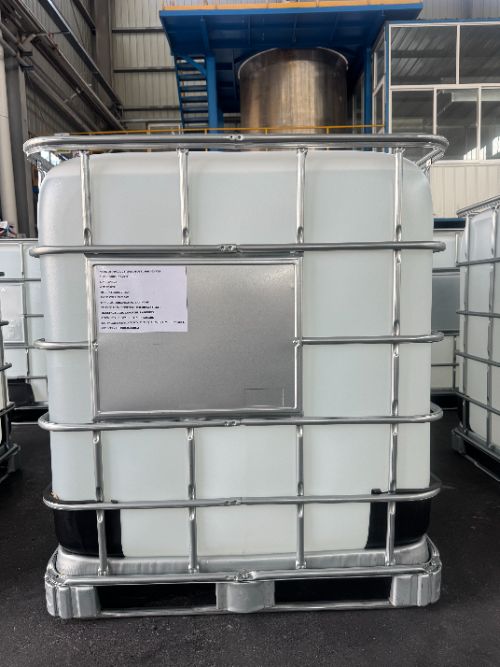
It is typically packed in galvanized steel drums or IBC totes, kept in cool, dry, well-ventilated spaces away from strong oxidizers, and sealed tightly to prevent moisture absorption that could raise acid values.
Conclusion
Tri-isobutyl phosphate has held its ground in Chinese industrial chemistry for decades, and the reasons are more practical than promotional. Its branched alkyl structure gives it a lower viscosity and better low-temperature flow than many straight-chain phosphate esters, which matters when it is used as a defoamer, leveling agent, or flame retardant additive. In rubber processing, textile auxiliaries, and coatings, TIBP quietly improves spreadability and reduces surface defects without demanding reformulation. The same compatibility shows up in rare earth solvent extraction, where Chinese producers depend on its selective stripping behavior to separate mixed rare earth chlorides. The chemical profile—moderate boiling point, low water solubility, and strong solvency for metal complexes—makes it a workhorse that is hard to replace with a single alternative.
China's production base for TIBP has expanded steadily, driven by both domestic demand and export opportunities, but capacity growth has not always tracked price. Recent price movements reflect raw material cost swings for butanol and phosphorus oxychloride, plus periodic environmental inspections in key provinces like Shandong and Jiangsu. When plants face tighter emission limits on volatile organic compounds, smaller operators often pause, tightening supply even when downstream orders stay flat. Looking ahead, environmental rules are pushing formulators toward lower-odor and lower-toxicity phosphate esters, but TIBP is not disappearing. Instead, next-generation demand from lithium battery separators and high-purity rare earth refining is creating specialized grades that command higher margins. The market is shifting from commodity volumes to performance-driven niches, and that transition will define the next phase for Chinese TIBP.
Contact Us
Contact Person: WANG SIHAI
Email: [email protected]
Tel/WhatsApp: +86-13815295628
Website: https://www.fortunechemtech.com/index_en.html