

China Fanfold Corrugated Cardboard: A Complete Guide for Packaging Buyers
2026-09-10
Every packaging buyer hunting for fanfold corrugated cardboard in China faces the same puzzle: specs look identical, but line performance tells a different story. Get the material wrong and you’ll see jams, weak corners, and wasted labor. This guide cuts through the noise, covering board grades, fluting, and supplier checks that actually matter—including how ShiTeng Packaging approaches fanfold consistency for high-volume buyers.
What Actually Determines the Strength of China Fanfold Corrugated Cardboard?
Most buyers assume that a thicker sheet automatically means a stronger carton, but that assumption falls apart quickly with fanfold stock produced in China. The real backbone of strength comes from the paper grades used for the liners and the medium, not from the total caliper. A board made with high ring crush test (RCT) liner and a well-formed semi-chemical medium will outperform a visibly thicker sheet built from recycled mixed fibers. On the production floor, the difference shows up most clearly when cartons are stacked in humid storage or shipped long distances.
Flute geometry also plays a quieter but equally important role. Chinese mills commonly run B, C, E, and BC flutes, and each profile distributes top load differently. A taller flute like A or C can absorb more vertical compression if the medium is rigid, but it also creates more unsupported span across the liner, which can lead to early sidewall buckling if the liner lacks stiffness. Getting the right match between flute height and liner basis weight is often what separates a fanfold that arrives flat and square from one that starts to lean in the warehouse.
Then there are the process variables that never show up on a spec sheet: adhesive application, heat balance, and moisture content at the singlefacer. Too much starch or uneven glue lines can create hard spots that crack under load. If the board leaves the corrugator with a moisture profile above twelve percent, the strength numbers on paper mean little because wet fiber loses its rigidity. That is why some Chinese suppliers have quietly shifted toward starch formulations with faster gel points and more precise tension control on the medium roll, gaining strength without adding a single gram of basis weight.
Reading a Chinese Supplier’s Spec Sheet Without Getting Misled
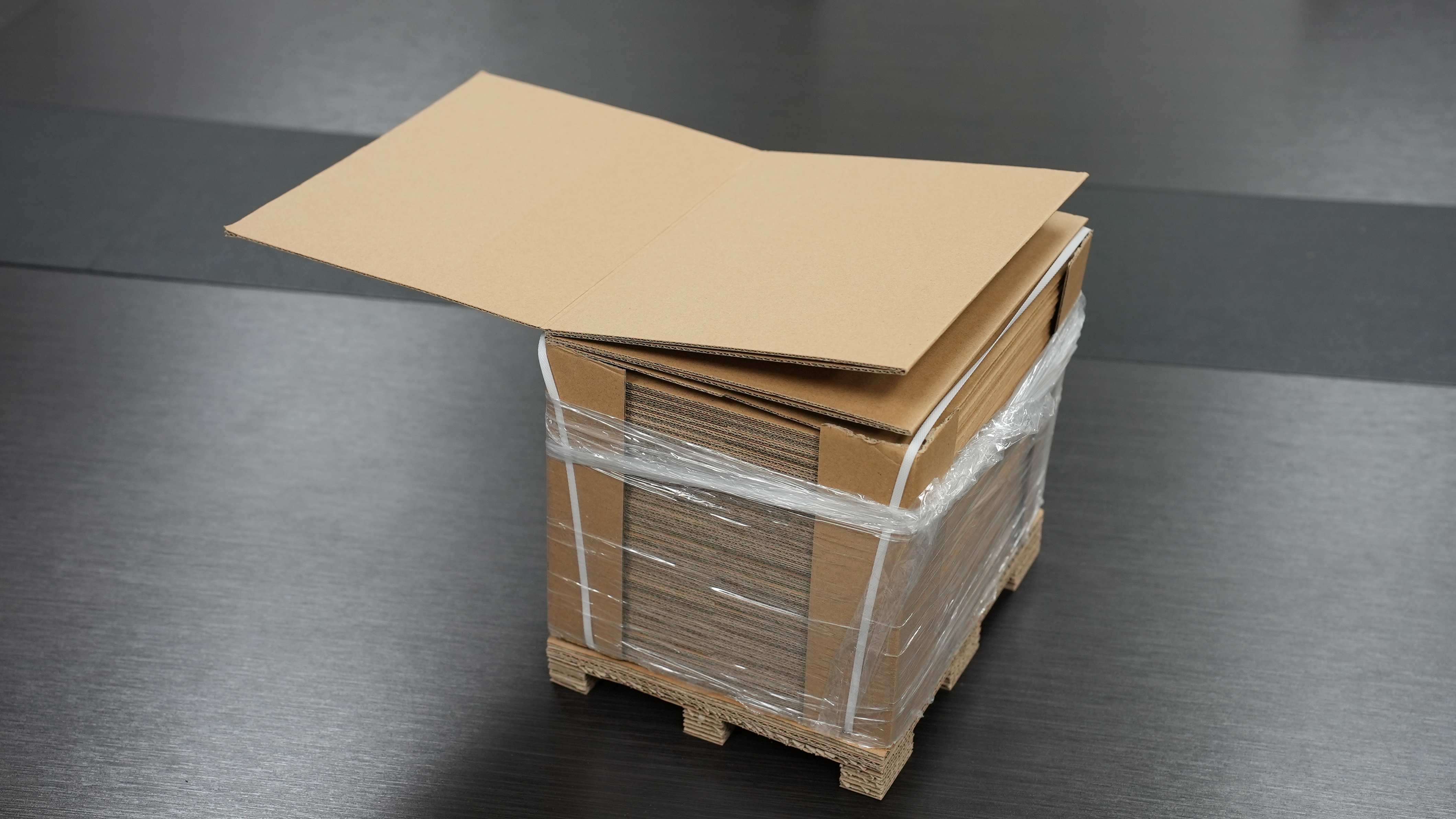
Spec sheets from Chinese suppliers often look impressive at first glance, with bold performance numbers and long lists of certifications. But those figures can be optimistic, reflecting ideal lab conditions that rarely match real-world use. Before taking any data at face value, ask yourself whether the listed specifications align with how you actually plan to use the component or material.
One common pitfall is the use of peak ratings instead of sustained ones. A motor might be advertised as '100W,' but that could be its stall current draw for a few seconds, not a continuous load. Similarly, LED lumen outputs may assume perfect heat sinking, and battery capacities might ignore voltage sag under load. Pay attention to footnotes and test conditions—if they are missing, treat the numbers with extra skepticism.
The most reliable way to avoid being misled is to request third-party test data or, better yet, order a small sample batch and run your own verification. Ask for the specific testing standard used, such as IEC or UL, and confirm that the production units will match the sample. A trustworthy supplier will welcome these questions; one that dodges them is probably hiding something.
The Real Cost Drivers Behind Fanfold Cardboard Quotes from China
When buyers first request fanfold cardboard quotes from Chinese suppliers, they often assume material thickness and sheet size explain most of the price gap. But the real story is more tangled. Mill run timing, linerboard grade shifts, and whether a factory is running single-wall or double-wall on the same corrugator can swing unit costs by double digits. Add in the cost of pre-creasing, perforation spacing, and stack alignment tolerances, and two quotes that look identical on paper can land in completely different budget bands.
Another quiet cost driver is machine utilization. Fanfold board runs best on wide corrugators, but many smaller plants still trim down from standard sheet stock, creating more edge waste and slower line speeds. If the order volume is below a certain threshold, the supplier may quote from inventory instead of a fresh production run, which changes moisture content, flute crush resistance, and ultimately the price. Freight consolidation at the export port also plays a role — a factory near Ningbo or Shenzhen can bundle fanfold pallets with other container loads, shaving hundreds of dollars off the landed cost compared to an inland mill.
Finally, don't overlook the cost of consistency. Chinese suppliers offering fanfold cardboard often compete on repeat order reliability: same flute profile, same kraft liner shade, same tear resistance batch after batch. That requires tighter raw paper sourcing and more frequent corrugator calibration, which is seldom advertised but always embedded in the quote. A cheap first order might come from opportunistic paper trading, while a slightly higher price often reflects a supplier who actually owns the production line and can hold tolerances across seasons.
Common Quality Defects in Fanfold Corrugated Board and How to Spot Them Early
Fanfold corrugated board often arrives with subtle flaws that only become obvious after printing or die-cutting. One of the most frequent issues is loose or uneven fluting, where the inner medium doesn't bond tightly to the liners. You can spot this early by gently pressing your thumb along the board's edge—if you feel soft spots or hear a faint crackling, the flutes are already separating. Another telltale sign is a wavy surface on the liner, which usually indicates trapped moisture or poor tension control during corrugation. Running a straightedge across the sheet will reveal low spots that may crush during folding.
Warping is another defect that can sneak through inspection if you only look at the board flat on a pallet. A slightly twisted sheet may still lie flat under its own weight but will jam in automatic feeders. To catch warp early, lift one corner and sight down the length—if the opposite corner lifts more than a few millimeters, you're dealing with cross-machine curl or diagonal twist. This often stems from uneven moisture absorption between the top and bottom liners. Storing fanfold stacks in a climate-controlled area for 24 hours before use can reduce this, but spotting it at receiving saves downstream headaches.
Edge crush and score line fractures are harder to see but easy to feel. Run a fingernail along the scored crease on a sample sheet; if the liner splits or the medium crumbles, the board was over-dried or the score profile is too deep. You can also fold a short section by hand and watch the inside of the crease—small cracks radiating outward mean the board will fail during high-speed folding. Catching these defects before the fanfold stack enters production avoids jams, poor box squareness, and customer rejections down the line.
Negotiating Custom Sizes and Printing with Chinese Fanfold Manufacturers
Custom size negotiations with Chinese fanfold makers quickly go sideways if you only give them a rough width and length. Most factories keep a range of standard die-cut templates, but they will often accommodate non-standard dimensions if you can commit to a reasonable minimum order quantity. Ask about the exact fold length tolerance and whether they can adjust the perforation depth to prevent tearing during high-speed printing. Some suppliers will quote a low base price but then add separate charges for a new cutting die, so clarify upfront whether that tooling cost is refundable after a certain volume.
Printing negotiations often stall over ink coverage and color matching. Instead of sending a digital file and assuming it will translate perfectly, request a physical proof on the actual paper stock you plan to use. This matters because fanfold paper can vary in absorbency between batches, and a Pantone reference that looks fine on coated stock may shift noticeably on uncoated carbonless or bond paper. Also discuss whether the printer will run your job on a flexographic or offset press—each has different setup costs and minimum run lengths, which affects how flexible they can be with small test orders.
Finally, don't treat the negotiation as a one-time price battle. Many Chinese manufacturers are willing to lock in better rates or extend credit terms if you can provide consistent repeat orders or agree to a rolling forecast. But be direct about your quality expectations, especially regarding ink adhesion and fold registration, because those are the two most common failure points in fanfold production. A short video call showing your end-use application can help the factory understand why a two-millimeter fold misalignment is a dealbreaker, and that clarity often leads to better cooperation than a long list of written specifications.
Shipping Fanfold Cardboard from China: Lead Times, Holidays, and Port Pitfalls
When you're shipping fanfold cardboard from Chinese factories, the standard lead time often sits between 20 and 35 days from order confirmation to port departure. But that number shifts depending on whether the mill is running full tilt, if you've asked for custom dimensions or edge protectors, and whether the booking gets bumped during peak export windows. Factories around Guangdong and Zhejiang typically need three to five days just to cut and bundle, then another week for ocean freight consolidation if you're not filling a container.
Chinese public holidays can quietly wreck a schedule. The big one is Lunar New Year, usually landing in late January or February, when production halts for up to three weeks and workers trickle back slowly. National Day in early October and the Dragon Boat Festival in June also cause mini-shutdowns. If your shipment is due around these dates, add at least ten days to the quoted lead time, and get written confirmation that the factory will reserve your slot before the holiday rush.
Port pitfalls are less predictable but just as costly. Yantian, Ningbo, and Shanghai have all seen COVID-related slowdowns, strikes, or typhoon closures that leave containers sitting for days. Blank sailings are frequent on transpacific routes, especially after a holiday backlog. Ask your forwarder for a backup routing via a secondary port like Xiamen or Qingdao, and insist on real-time tracking once the container is gated in. A single missed connection can push delivery back two weeks, so build that buffer into your purchase order.
FAQ
Fanfold cardboard is corrugated board scored at regular intervals and folded into a continuous stack rather than cut into individual sheets. It lets packers tear off the exact size needed for each item, which cuts waste and reduces the need to stock multiple sheet dimensions. For operations with varied product sizes, this flexibility often translates into lower material costs and less storage space.
Beyond price, check the mill's flute profiles, basis weight consistency, and scoring accuracy. Reliable suppliers will provide samples with measurable edge crush test values and burst strength, not just thickness descriptions. Ask about their raw paper sources, moisture control during production, and whether they can match a specific board grade. A supplier that can explain how they control warp and delamination is usually more dependable than one that only quotes low tonnage rates.
The flute height and pitch determine cushioning, stacking strength, and flexibility. A-flute offers excellent cushioning for fragile goods but is bulkier, while B-flute gives a flatter surface for printing and die-cutting. C-flute balances both. E-flute is thin and often used for retail-ready packaging. Buyers should match the flute to the product weight, shipping method, and whether the board will be folded by hand or machine.
Yes, many Chinese manufacturers can produce fanfold in custom widths, score depths, and perforation patterns to fit specific converting equipment. Specify the exact fold height, the direction of the corrugation relative to the score, and the tolerance your machine can handle. Some suppliers also offer pre-printed logos or handling instructions along the fold edges. Always request a trial reel or stack before committing to a full container load.
MOQs generally start around one to three tons for standard specifications, though custom flute combinations or special paper grades may push this higher. Lead times usually run 15 to 30 days for production, plus shipping time. Factors like Chinese holidays, raw paper availability, and export inspections can add delays, so it is wise to build in a buffer of at least two weeks beyond the supplier's stated date.
Cardboard is hygroscopic, so high humidity in containers can cause warping, weakened scores, or mold. Chinese exporters often use desiccant packs, moisture barrier liners, and pallet wrapping to reduce damage. Buyers should inspect the corners and edges of the stack upon arrival, because those areas absorb moisture first. Storing the fanfold in a climate-controlled area for 24 to 48 hours before use also helps stabilize dimensions.
It depends on the operation. Fanfold saves money when a business ships many different product sizes because it eliminates the need to stock dozens of box styles and reduces void fill. However, if your products are uniform in size, pre-made boxes may be cheaper due to lower labor input. Factor in labor time for folding and taping, plus any equipment investment, before deciding.
Look for FSC or PEFC chain-of-custody certification if recycled or virgin fiber sourcing matters to you. Some mills also carry ISO 14001 for environmental management. Ask for documentation on recycled content percentage and whether the board meets export regulations for heavy metals and restricted substances. A supplier willing to share third-party audit reports is generally more transparent about their material origins.
Conclusion
When sourcing fanfold corrugated cardboard from China, the first thing that separates a smart purchase from a costly mistake is understanding what actually gives the board its strength. It’s not just about the fluting or the paper grade—it’s how the liner and medium work together under real compression, and how the supplier’s spec sheet can hide misleading shortcuts. Chinese mills often play with burst strength versus edge crush values, so you need to read between the lines: ask for grammage per layer, not just total thickness, and insist on a physical sample before committing. The real cost drivers are rarely the paper alone—freight, waste factor, and the factory’s own scrap rate add up fast, especially when you request custom widths or die-cut shapes that don’t align with their standard production lines.
Quality defects like warp, delamination, or uneven flute profiles are easier to spot early if you know what to look for on a cross-section cut, but many buyers only discover them after the container arrives. Negotiating custom sizes and printing with Chinese fanfold manufacturers requires you to be specific about tolerances and ink adhesion, because vague orders often get interpreted in the cheapest possible way. Shipping brings its own traps: lead times stretch around Chinese New Year, port congestion in Ningbo or Shanghai can delay weeks, and last-minute holiday shutdowns leave your stock sitting on a dock. A complete guide for packaging buyers means treating the whole chain—from spec sheet to port—as one continuous risk to manage, not a series of isolated decisions.
Contact Us
Contact Person: Mr. Ge Man
Email: [email protected]
Tel/WhatsApp: 8613710506492
Website: https://www.shitengzx.com