

China Bogie Hearth Furnace Solutions for Efficient Industrial Heating
2026-08-24
Efficiency in industrial heating isn't about one magic component—it's the sum of small, deliberate decisions. In China's fast-moving manufacturing sector, bogie hearth furnaces are proving that point every day. But not every solution delivers the same thermal payoff. THINKING-LONG has taken a closer look at where these furnaces lose energy, time, and consistency, then rebuilt the approach around what actually drives throughput. The result is a line of bogie hearth solutions worth examining before your next upgrade.
Cutting Fuel Waste in Heavy Forging with Smarter Burner Control
Heavy forging operations burn through fuel at an alarming rate, yet most waste stems from one overlooked culprit: the burners themselves. Traditional control systems run on fixed air-to-fuel ratios that ignore real-time furnace conditions. A forging shop might be heating a 20-ton ingot, but the burner still blasts as if it were handling thin plate. The result is excess oxygen sweeping heat up the stack while the stock surface lags behind schedule. Smarter burner control flips this by continuously adjusting flame shape, velocity, and stoichiometry based on live load and temperature feedback. Operators no longer guess how much gas to push; the system trims the flame to match the actual heat demand of the workpiece.
The practical savings show up fastest in long soaking cycles. Instead of holding burners at high fire to maintain temperature, advanced controls modulate down to a lazy, luminous flame that radiates evenly across the forging. This prevents both overheating of thin sections and cold spots in thick webs. One mid-sized forge cut gas consumption by 18% in a single quarter simply by shifting from batch-fired to zone-based burner trimming. The bonus: less scale formation, fewer decarburized layers, and fewer reheats because the first heat actually gets the core to forging temperature without overshooting the surface.
Smarter control also changes how crews interact with the furnace. Rather than chasing temperature with manual damper and valve adjustments, operators watch a trend line that anticipates thermal lag. The burners respond to feed-forward signals from load cells and pyrometers, so they start ramping down before the part reaches setpoint. That eliminates the sawtooth temperature profile common in older forges, where burners slam on and off, wasting fuel on each ignition cycle. The better the burner learns the furnace's thermal inertia, the less it fires unnecessarily, and the more predictable the entire forging schedule becomes.
What a Bogie Hearth Furnace Actually Does for Aerospace Alloys
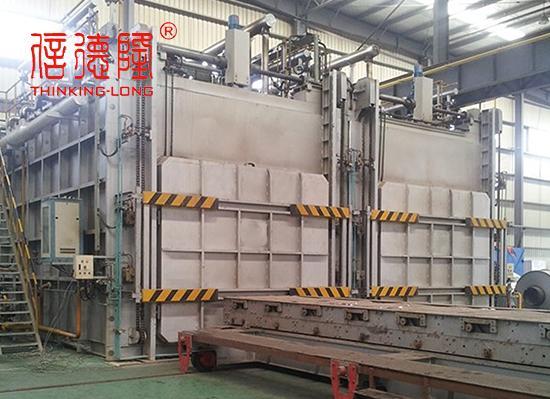
A bogie hearth furnace earns its keep in aerospace alloy processing by delivering the kind of thermal uniformity that forgings and castings demand. When a nickel-based superalloy turbine disk comes out of the forge, its microstructure is riddled with residual stresses and uneven grain distribution. The furnace’s movable hearth lets you load a multi-ton part without disturbing the carefully tuned hot zone, and the burner or element layout is designed to hold temperature spreads within a few degrees across the entire load. That consistency prevents localized overheating that would coarsen gamma prime precipitates or trigger incipient melting in segregated regions.
Beyond just heating, the furnace controls the atmosphere around reactive aerospace alloys. Titanium components, for instance, will readily pick up oxygen and hydrogen if exposed to air at solution temperatures, leading to a brittle alpha-case layer. Many bogie hearth units are sealed well enough to maintain a protective argon or nitrogen blanket, or they can be fitted with a retort for vacuum purging. The real advantage shows up during quenching, too: the hearth can be rolled out quickly and the load transferred to a controlled cooling station, locking in the desired precipitate distribution before diffusional processes ruin the strength.
There’s also the matter of stress relief on large structural parts. Wing spars, landing gear forgings, and engine cases often undergo rough machining before final heat treatment. A bogie hearth furnace provides the long soak times and gentle ramp rates needed to relax internal stresses without distortion. Because the entire floor of the furnace moves, parts can be spaced to avoid shadowing and heat can circulate underneath as well as above. This eliminates the hot spots you’d get in a fixed-hearth box furnace, so a batch of aluminum-lithium fuselage frames comes out dimensionally stable and ready for finish machining.
Why Adjustable Hearth Zones Beat One-Size-Fits-All Heating
A single fixed heat setting across an entire cooking surface often forces a compromise: the center runs hot while the edges lag, or everything gets the same intensity whether you're searing or gently warming. Adjustable hearth zones remove that compromise by letting you divide the surface into independently controlled areas. You can run one zone at full blast for a hard sear on a steak while another holds a low, steady warmth for sauces or resting bread. This matches how real cooking actually works—different foods, different stages, different needs at the same moment.
Beyond convenience, zoning cuts down on wasted energy. Instead of heating a large slab to one uniform temperature just to cook a small item or keep a pan warm, you only power the sections in use. It also prevents the common one-size-fits-all frustration of hot spots and cold corners, which often lead to uneven browning or burnt edges. With adjustable zones, the heat goes where you want it, not where the appliance decides for you.
The real difference shows up in everyday cooking. A baker can keep one zone hot enough for a pizza while a cooler zone holds toppings at the ready. A home cook can sear vegetables on one side and simmer a delicate sauce on the other without juggling pans or timing everything to a single blast of heat. That kind of control turns a heating surface from a blunt tool into a responsive partner, which is exactly why adjustable hearth zones beat the old one-size-fits-all approach.
Moving 200-Ton Loads Without Warping the Floor Structure
Before a single wheel or skid shoe touches the floor, the existing slab is mapped in detail—thickness, rebar spacing, concrete strength, and any hidden voids all matter. A 200-ton load concentrated on a small contact area can easily punch through or bend a floor that was only designed for normal warehouse traffic. The load path is studied first, so the move avoids joints, old repair patches, and areas where the slab spans between columns without intermediate support.
What actually prevents warping is turning that point load into a distributed pressure. Thick steel distribution plates or a welded grillage of beams are placed under the load to spread the weight across dozens of square feet. Hydraulic skidding systems with low-friction pads then move the entire assembly, while the floor sees only a fraction of the pressure it would from direct contact. In buildings with long spans, adjustable props or temporary towers are installed beneath the slab ahead of the load, transferring the extra force straight down to the foundation instead of letting the concrete flex.
During the move, dial indicators and laser displacement sensors are fixed at several points along the travel path. The lift sequence is synchronized so the load never tilts or rocks, because even a small angle can create a pressure spike at one edge. If a sensor shows deflection climbing toward the preset limit, the crew stops, slides additional steel mats under the load, and resumes at a slower pace. That step-by-step control is how 200-ton modules get positioned inside existing structures without leaving the floor bowed or cracked.
The Real Payback from Upgraded Insulation and Sealing
Upgraded insulation and air sealing often pay back faster than expected because they attack the largest energy loads in a home: heating and cooling. In many older houses, the stack effect pulls conditioned air out through attic gaps, rim joists, and top plates, forcing the HVAC system to run longer than it should. Once those gaps are sealed and insulation depth is brought up to current code levels, owners commonly see annual heating and cooling costs fall by 15 to 25 percent. For a typical single-family home, that often recoups the installation cost in five to eight years, even before utility rebates or tax credits are counted.
The everyday return is just as tangible. Rooms that used to swing five or six degrees between floors tend to hold within one or two degrees after the upgrade. Drafts near outlets, baseboards, and recessed lights fade, and summer humidity stops spiking in upstairs bedrooms. Outdoor noise also drops noticeably, which makes the house feel calmer. That kind of comfort is hard to put a dollar figure on, but it changes how people use their homes, turning rarely used rooms into comfortable living space year-round.
There is also a hidden durability payback. By keeping warm, moist air from leaking into attics and wall cavities, upgraded sealing prevents condensation that can lead to mold, wood rot, and ice dams in colder climates. Avoiding a single attic mold remediation or roof repair can easily equal the entire insulation and sealing project cost. So the real payback is not just lower bills, it is a house that stays drier, quieter, and structurally sound for longer.
Running Batch Annealing and Stress Relieving on One Line
Running batch annealing and stress relieving on one line often hinges on how the furnace zones are arranged. Instead of splitting the work between two separate cells, we keep the same carrier system moving through preheat, soak, and controlled cooling. The trick is to set the soak band wide enough to cover both subcritical stress relief and full recrystallization for the softer grades, while still letting operators lock in a slower cool for parts with heavier sections.
Temperature uniformity becomes the main variable when a single line handles both treatments. Thermocouples placed at the load center and near the door tell you whether the outer layer is heating too fast, which can leave the core under-treated. A common fix is to pause the ramp at about 600°F and hold until the spread narrows, then resume the climb. This is more about reading the actual load than following a preset recipe.
There is also a handling benefit that rarely shows up in the spec sheets. Because the same baskets and fixtures stay with the parts from annealing right into stress relief, you avoid re-stacking and the dents that come with it. In practice, that has cut our rework rate noticeably, especially on thin-wall stampings that would otherwise need straightening after a separate stress-relief cycle.
FAQ
A bogie hearth furnace is a type of industrial furnace where the floor is mounted on a movable car, or bogie, that rolls out for loading and unloading. The workpiece is placed on the bogie outside the furnace, then rolled into the heated chamber. This design minimizes heat loss during loading because the door is open only briefly, and it allows heavy or awkwardly shaped loads to be handled with cranes or forklifts. Many units in China are built with refractory-lined bogies and sand seals to keep the hot atmosphere contained.
They are common in heat treatment, forging, and metal processing plants. You'll see them used for stress relieving, annealing, normalizing, and tempering of large steel structures, pressure vessels, pipes, castings, and forgings. Ceramic and glass industries also use them for controlled heating of large batches. If a workshop needs to heat bulky or heavy items that are difficult to maneuver, a bogie hearth design is often the practical choice.
Chinese manufacturers have improved the traditional design by integrating better insulation materials, more precise burner controls, and modular construction. Many suppliers focus on energy recovery systems, such as preheating combustion air with waste flue gas. The engineering tends to be pragmatic, sizing the furnace to match existing plant cranes, door openings, and production flow. Customization is common, so a buyer can specify hearth dimensions, load capacity, temperature uniformity requirements, and even dual-fuel burners without huge cost penalties.
The movable hearth itself does not save energy; the savings come from faster loading and unloading. When the bogie is rolled out, it carries the hot refractory floor with it, which can cause some heat loss. However, well-designed Chinese systems use low thermal mass insulation and regenerative burners to recover heat from exhaust gases. Real-world efficiency depends on batch size, cycle time, and door sealing. In many cases, a bogie hearth furnace can cut fuel use per ton of processed material by 15-25% compared to an older fixed-hearth furnace with poor sealing, mainly because it reduces idle time and allows tighter scheduling.
Most standard bogie hearth furnaces operate between 600°C and 1200°C. Lower-temperature models for drying or aging might go as low as 200°C, while specialized high-temperature units for ceramics or certain alloy treatments can reach 1300°C or slightly higher. The exact ceiling depends on the heating elements or burners, the refractory lining, and whether the bogie is water-cooled or uses high-alumina bricks. Chinese suppliers typically offer a range of models, so it's important to specify the maximum working temperature and the required temperature uniformity (often ±5°C to ±10°C) during quotation.
Yes, customization is one of the stronger selling points. The bogie can be built as a flat car with removable posts, or with special fixtures for round vessels, long pipes, or stacked plates. Some designs include multiple zones of control to handle uneven load distributions. If a workshop has a very low ceiling or a narrow entrance, the furnace can be designed with a lower profile or split door. Chinese engineering firms often work from customer drawings to adjust the hearth width, length, and even the location of burners or fans to match the thermal mass of the load.
Regular maintenance focuses on the bogie wheels, rail alignment, and sand seal. The sand seal trough needs to be checked and refilled periodically, otherwise hot gases escape and the door area overheats. Burners or heating elements should be inspected every few months for carbon buildup or wear. The refractory on the bogie deck can crack from thermal cycling, so small repairs should be done before they grow. Many Chinese suppliers provide a spare parts list and recommend an annual inspection of the door lifting mechanism, limit switches, and control system. If the furnace uses a PLC or HMI, software updates and sensor calibration should be part of the routine.
Conclusion
China’s bogie hearth furnace builders have moved past the old assumptions about heavy industrial heating. In forging shops, tighter burner modulation now prevents the oversized flame cycles that used to waste fuel between heats, especially when handling large ingots. For aerospace alloys, the real value is in uniform soak times and slow, controlled cooling—something a well-designed bogie hearth manages with less distortion than pit or car-bottom alternatives. Adjustable hearth zones add another layer: instead of running the whole chamber at one temperature, operators can set distinct profiles along the length, which matters when a single load mixes thick sections with thinner parts. This flexibility reduces rejects and shortens heating curves without pushing burners harder than needed.
Moving 200-ton loads calls for a hearth structure that won't flex or warp under uneven thermal expansion, so manufacturers are reinforcing support beams and using interlocking refractory joints rather than relying on a single heavy slab. The payback often shows up first in insulation and sealing upgrades—replacing worn fiber linings and re-machining door seals can cut idle gas consumption by double digits before any burner work begins. Where batch annealing and stress relieving run on the same line, the furnace control recipe switches between slow ramp profiles and long holds without a full teardown. That kind of operational overlap is what makes a modern bogie hearth furnace more than just a big heated box; it becomes the bottleneck breaker for plants that cannot afford separate units for every thermal step.
Contact Us
Contact Person: Qian Xijun
Email: [email protected]
Tel/WhatsApp: 8613961736750
Website: https://www.thinkinglong.com/