

Bulk All-in-One BESS Solutions for Scalable Energy Storage
2026-11-02
Scaling energy storage shouldn't mean multiplying complexity. Yet for many project developers, bulk and all-in-one still sound like opposites — until you see how modern BESS platforms are changing the rules. From containerized blocks that click together to power electronics and thermal management already integrated, the path to multi-megawatt storage is getting shorter, faster, and far less messy. UNC is at the center of that shift, delivering bulk all-in-one BESS solutions that let you scale from pilot to grid-support without reinventing the system. Here's what makes that possible.
Containerized Power Blocks That Arrive Ready to Connect
Imagine rolling a complete electrical room off a flatbed and having it tied into your facility before the morning break. That’s the reality behind these containerized power blocks — every switchgear, transformer, and control panel is mounted, wired, and tested inside a weather-tight enclosure before it leaves the factory. There’s no chasing loose terminations or wondering if the schematic matches the field wiring; the only task on site is landing the incoming and outgoing feeders.
Because the assembly happens in a controlled shop environment, the usual cascade of delays from concrete pads, cable tray installs, and interconnects shrinks to a single crane lift and a handful of terminations. The block shows up with its own lighting, HVAC, and fire detection already in place, so you’re not piecing together a building around it. For operations that need power in weeks rather than months — whether it’s a mine expansion, a data hall retrofit, or a temporary process line — that reduction in site labor changes the entire schedule.
There’s also a quieter advantage: when the block isn’t needed in one location anymore, it can be de-energized, disconnected, and trucked to the next site without leaving behind a half-demolished electrical room. The connections are standardized, so the second installation is faster than the first. In that sense, it behaves less like permanent construction and more like a large, robust appliance that happens to deliver medium-voltage power.
Why Fire Suppression Belongs Inside the Cabinet
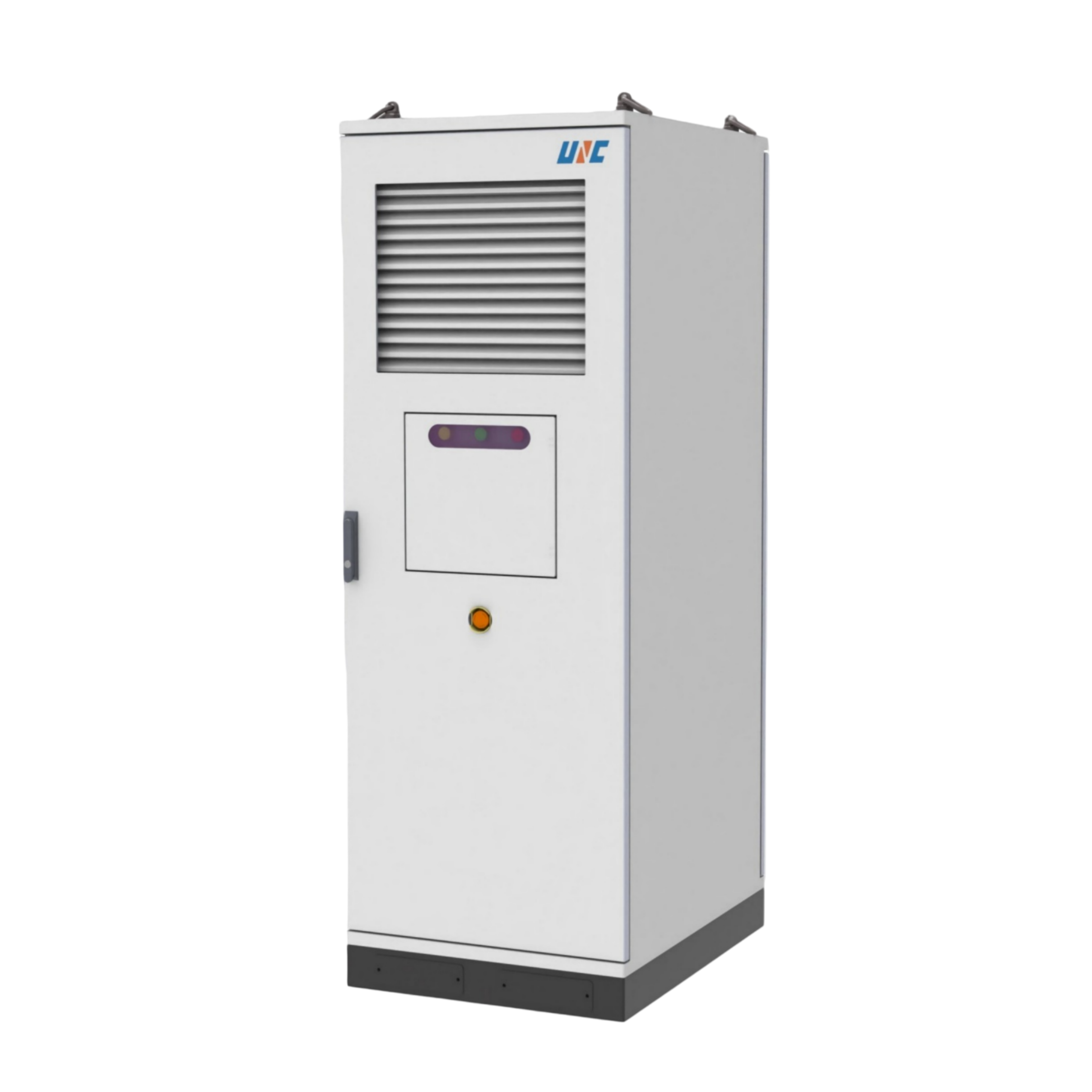
Most cabinet fires start at the component level, where heat builds faster than room-level detectors can react. By the time ceiling-mounted sensors trigger, flame has often spread through wiring bundles and into adjacent enclosures. Placing suppression directly inside the cabinet cuts that delay to a fraction of a second, releasing clean agent or mist at the source before the fire can establish itself.
Cabinets also create their own micro-environment. Closed doors trap heat and combustion byproducts, but they also contain the extinguishing agent when released locally. A room-wide system may waste discharge volume in open air while only a small concentration reaches the sealed enclosure. Internal suppression uses less agent, avoids damaging nearby electronics with overspray, and keeps the event isolated to a single asset.
Maintenance and false alarm pressure further favor cabinet-level solutions. External systems often require piping, floor space, and routine inspections across an entire facility. A self-contained unit inside the enclosure only needs checking during normal cabinet service. If it activates, you replace a cartridge rather than recharge a building-wide network, which shortens downtime and keeps protection exactly where the risk lives.
Scaling Energy Storage Without Pouring New Concrete
Most grid-scale storage discussions still start with a shovel and a fresh foundation, but the fastest megawatts are the ones that never require a new site. Retired peaker plants, warehouse basements, and even decommissioned substations are being repurposed as battery enclosures, using the existing grid connection, fencing, and access roads. The concrete stays untouched, but the system gets a second life. This approach cuts interconnection queues by months, sometimes years, because the point of grid access already exists. It also spreads storage across smaller, distributed footprints instead of concentrating risk in one massive new build.
A quieter shift is happening inside existing battery cabinets. Instead of adding more containers, operators are pushing the same hardware further with smarter thermal management and adaptive charge curves. A 20% gain in usable capacity from the same physical footprint is not unusual once you stop treating every cell like it has to follow a conservative factory profile. There are also second-life modules pulled from retired electric buses and delivery vans, stacked in industrial lots that already have concrete pads for dumpsters or loading docks. No new concrete, just new wiring and a decent inverter.
The less obvious lever is virtual storage. Demand response platforms that aggregate behind-the-meter batteries, UPS systems in office towers, and even cold storage warehouses with thermal inertia can shift load without a single new foundation. A refrigerated facility can pre-cool during midday solar peaks and coast through the evening ramp, effectively acting as a multi-megawatt-hour battery. It looks like demand reduction on paper, but it functions as storage for the grid. The best part: the concrete was poured decades ago for an entirely different purpose.
Matching Battery Chemistry to Your Toughest Demand Peaks
Not every battery handles a sudden, aggressive draw the same way. Flooded lead-acid might hold up fine for steady loads, but when your equipment slams into a peak demand—say a compressor or hydraulic pump kicking on—voltage sag can drop below usable levels even if the battery still shows half its rated capacity. Thin-plate AGM or lithium iron phosphate chemistries respond faster and maintain flatter voltage under high discharge rates, which matters more than total amp-hours when the peak is short, sharp, and repeats throughout the shift.
Temperature and cycle patterns also shape the right choice. In cold storage or outdoor winter operations, a chemistry with better low-temperature discharge efficiency—like lithium iron phosphate or nickel-zinc—can outperform traditional lead-acid, whose available capacity shrinks just when you need full power. If your toughest peaks come in short bursts dozens of times a day, look past the datasheet’s nominal capacity and check the discharge curve at the actual current draw you’ll see. A battery that sags badly at 2C will force you to oversize the bank or accept early low-voltage alarms.
Matching chemistry to demand peaks means sizing for the worst five minutes, not the daily average. Run a transient load profile and compare how candidate chemistries hold voltage under that exact waveform. You may find a smaller, lighter lithium pack replaces a much larger lead-acid bank once you account for usable capacity at high discharge rates, recharge speed between bursts, and acceptable voltage window. The payoff is fewer nuisance trips, longer service life, and equipment that behaves the same at the end of a shift as at the start.
Pre-Tested Modules That Skip the Commissioning Queue
Most modular systems still force you through the same slow commissioning line as every other unit. Pre-tested modules break that pattern entirely. Each one is run through a full functional check before it leaves the factory, so once it arrives on site, the usual queue doesn’t apply. You’re not waiting for a technician to find time, and you’re not burning days on basic setup tasks that should have been finished already.
The real payoff shows up in tight schedules. Instead of staging equipment in a holding area while the commissioning backlog clears, these modules land ready to plug in and power up. Teams can move straight to integration and calibration, which often cuts site time by half or more. For projects where every hour of delay costs money, skipping that queue isn’t a nice-to-have—it’s the difference between finishing on time and explaining another overrun.
There’s also a quality angle worth noting. Factory testing catches wiring faults, firmware mismatches, and sensor drift before shipping, not after. That means fewer surprise failures during final validation, and fewer return trips to fix what should have been caught earlier. The predictable result is a smoother handover, with less finger-pointing and more confidence in the as-built system.
Fleet-Wide Diagnostics From a Dashboard, Not a Crane
The days of sending a technician up a 200-foot lattice boom just to read a blinking fault code are fading fast. Modern crane telematics stream live hydraulic pressures, engine load percentages, wind speed at the hook, and a dozen other signals straight to a web dashboard that any fleet manager can open on a laptop or tablet. That shift changes the entire workflow: instead of the crane telling you something is wrong only when an operator notices a rough swing or a lagging winch, the dashboard flags subtle drifts weeks before they become downtime. A pressure decay test on the luffing cylinder, for example, can run automatically overnight and show a trend line on your screen by morning—no climbing harness required.
More importantly, this kind of visibility scales across every machine on every job site at once. One screen can compare idle time, duty-cycle counts, and error history for a tower crane in Houston against a crawler in Seattle. When a specific sensor on a specific model starts throwing intermittent voltage faults across three different machines, the pattern becomes impossible to miss. Fleet managers can then dispatch a mechanic with the right part already on the truck, instead of sending someone up for a visual inspection that might not even reveal the problem. That is the real difference: diagnostics stop being a reactive, per-crane chore and start operating like a continuous health check for the whole fleet.
FAQ
Large solar farms, wind parks, and industrial facilities that need to shift energy loads or provide backup power often see the biggest benefits, since the integrated design removes the hassle of coordinating separate battery, inverter, and cooling vendors.
The main components arrive pre-wired and factory-tested inside a single enclosure, so field crews mostly connect the DC and AC sides, set up communications, and run commissioning checks rather than assembling dozens of parts on site.
Yes, the modular architecture lets you parallel additional units as demand increases. You can begin with a modest capacity and expand in steps without replacing the original core equipment.
Keeping cells within a narrow temperature band is vital for safety and cycle life. Many all-in-one units use liquid cooling or intelligent airflow to prevent hot spots and maintain consistent performance across the entire bank.
Configuration options typically cover voltage levels, reactive power control, and communication protocols like Modbus or IEC 61850, so the same platform can be adjusted for different regional requirements.
Daily upkeep is minimal because remote monitoring tracks state of health and alerts you to anomalies. On-site visits usually involve checking connections, cleaning filters, and swapping a module only if a fault is flagged.
The integrated approach avoids compatibility guesswork and reduces the time spent on design reviews, wiring, and troubleshooting. Over the life of the asset, that often translates into lower labor costs and fewer commissioning delays.
Enclosures are typically rated for outdoor use with corrosion-resistant coatings and wide operating temperature ranges, so they can be deployed in deserts, coastal areas, or cold climates without custom shelters.
Conclusion
When energy storage needs to scale fast, shipping container-sized power blocks that show up fully wired and ready to tie into the grid change the whole timeline. These aren't bare racks waiting for onsite assembly; the battery cabinets arrive with fire suppression already mounted inside, so the safety system isn't an afterthought bolted on later. Because the enclosures are self-contained, adding capacity often means simply dropping another block next to the existing ones—no new concrete pad, no re-engineering the site, just more megawatt-hours where you need them.
That plug-and-play approach carries through to the battery chemistry too. Instead of forcing one cell type into every job, the system can pair high-power or high-energy chemistries with the specific peaks your facility actually hits, whether it's a short violent spike or a long evening discharge. The modules leave the factory already tested and balanced, so they skip the usual commissioning bottleneck on site. And when something does drift out of spec, the diagnostics don't require a crew with a crane and a ladder—it's all visible from a dashboard, letting operators spot a weak module across the entire fleet before it becomes a shutdown.
Contact Us
Contact Person: Manager Leng
Email: [email protected]
Tel/WhatsApp: 8613764878967
Website: https://www.unc-energy.com