

Boron Carbide Ceramic Factory: How Ultra-Hard Armor Plates Are Made
2026-11-02
What does it take to stop a high-velocity round without weighing a soldier down? At HUAYI TECH’s boron carbide ceramic factory, the answer is forged from one of the hardest materials known to man. From raw boron carbide powder to finished ultra-hard armor plates, every step blends precision chemistry, extreme pressure, and relentless quality control. In this inside look, you’ll see how microscopic grains become monolithic shields that save lives – and why not all armor ceramics are created equal.
The Starting Powder: What Makes Boron Carbide So Hard to Beat
Boron carbide doesn't get its reputation from a single trick. It starts at the powder stage, where the mix of boron and carbon crystals locks into a rhombohedral lattice that resists deformation at nearly every angle. Because the atoms share electrons in short, rigid bonds, the raw powder already sits close to 9.5 on the Mohs scale—third only to diamond and cubic boron nitride—and it keeps that hardness without the weight penalty of tungsten or steel.
What separates a good batch from a great one comes down to how the powder is handled before sintering. Tighter particle size distributions, low oxygen pickup, and clean grain boundaries allow hot pressing to reach near full density without letting those hard grains grow into weak spots. The result is a ceramic that shrugs off sliding wear, cracks from high-speed impacts, and even neutron radiation. That combination of light weight, extreme hardness, and thermal stability is why boron carbide starting powder remains the benchmark for armor, nuclear shielding, and precision nozzles.
Pressing Matters: Building Density Before the Plate Exists
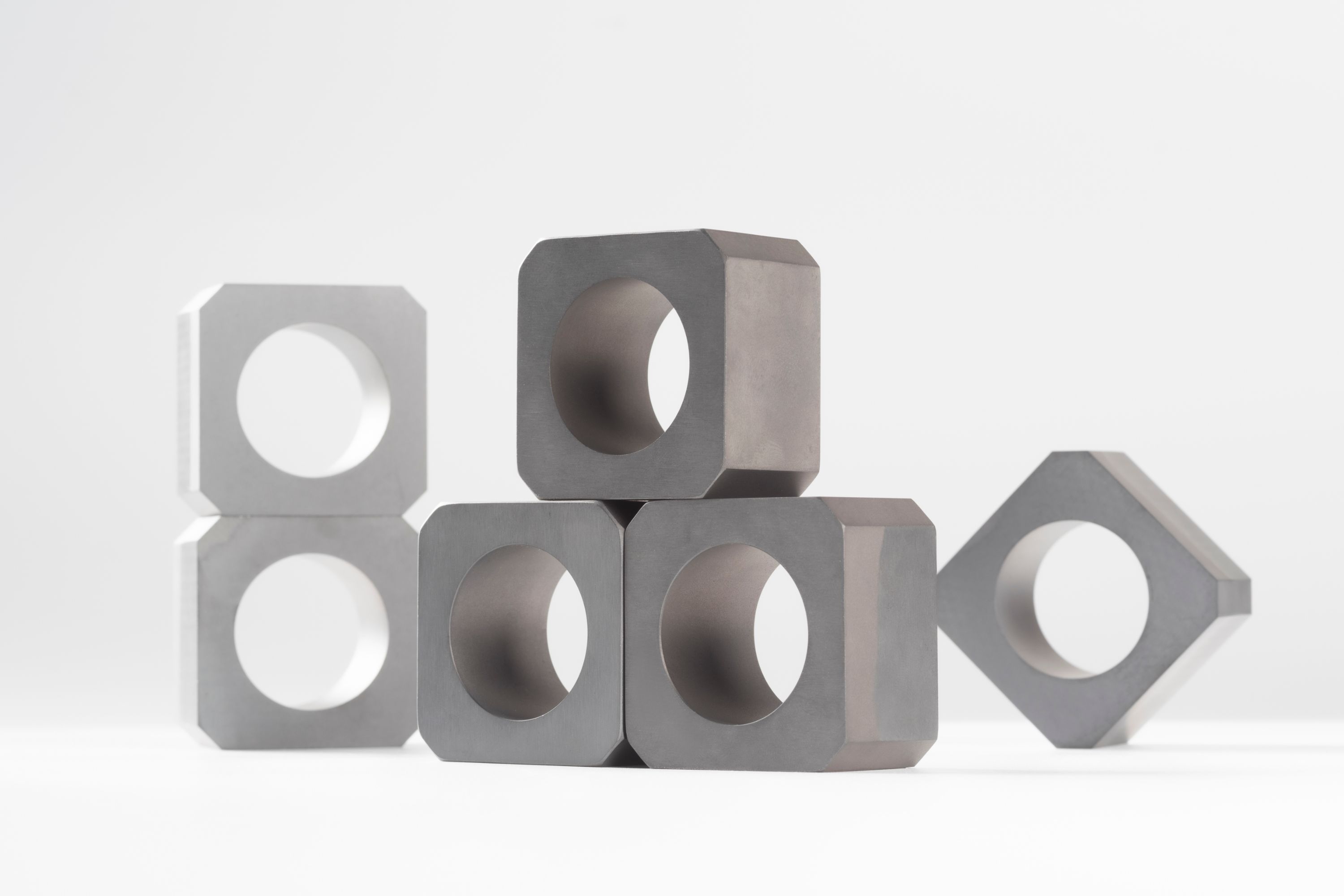
Developers often chase density long before the first plate is even designed, pouring concrete into vertical stacks while the surrounding streets remain empty. This push for height and compactness is driven by land prices, zoning bonuses, and a stubborn belief that people will simply appear once the units are ready. Yet without a pre-existing pedestrian fabric, transit connections, or even a corner store, these dense towers can feel like islands dropped into a void, their lobbies quiet and their upper floors echoing with unleased space.
The real challenge is that density isn't just a number of units per acre; it's a relationship between people, services, and daily rhythms. When you build density before the plate exists, you're assuming a demand pattern that may never materialize. A neighborhood needs reasons to gather, not just places to sleep. Without those reasons, high-rise clusters become monuments to speculative zoning rather than functioning communities.
A smarter approach flips the sequence: allow the plate to form first—small businesses, pop-up markets, temporary public spaces—then layer in density as those anchors prove their pull. This way, each new floor of housing supports and is supported by an already breathing street life. Density that follows the plate doesn't have to beg for residents; it simply gives them a reason to stay.
Inside the Furnace: The Sintering Step Most People Never See
When a batch of metal powders slides into the furnace, the real transformation starts long before any visible glow. The powders aren't simply heated; they're held just below melting point, letting atoms migrate across particle boundaries. That slow, almost invisible dance creates necks between grains, turning a loose pile into a solid, load-bearing part. It's a process that rewards patience—rush the ramp rate and the whole compact can crack.
What most people miss is how the furnace atmosphere does half the work. A controlled flow of hydrogen or dissociated ammonia scrubs away oxides, pulling oxygen out of the powder surfaces. If the atmosphere drifts even slightly off spec, the final part comes out stained or brittle. Operators learn to read the flame at the exit end; its color and height tell you more than any dashboard readout.
Then there's the cooling zone, often overlooked but just as critical. The part doesn't just cool—it settles into its final microstructure. Quench it too fast and you lock in stresses; too slow and grain growth erodes strength. Skilled furnace crews adjust belt speed and temperature profiles by instinct, sometimes tapping the side of a cooling tube to judge how the part rings. That's the kind of knowledge that never shows up in a textbook.
Finishing Touches: Why Diamond Grinding Is Non-Negotiable
Plenty of crews still think of diamond grinding as an extra step they can skip if the slab looks decent. But what you see on the surface rarely tells the whole story. Grinding removes the weak, chalky laitance layer, old curing compounds, and minor high spots that interfere with proper bonding. Leave that layer in place, and even the best coating or overlay is stuck to a surface that will eventually let go.
The profile left by a diamond grinder isn't random texture—it's controlled roughness. That consistency matters because it dictates how sealers, stains, and toppings penetrate the slab. Without it, absorption varies from spot to spot, leading to blotchy color, uneven gloss, and premature wear in high-traffic areas. A few passes with the right metal-bond diamonds turn an unpredictable floor into one that takes finish evenly.
The payoff shows up months later when the floor still looks uniform and holds up under daily use. Skipping the grind to save an afternoon often results in peeling coatings, hollow spots, or complete rework that costs far more than the original step. That's why finishers with a reputation to protect treat diamond grinding as non-negotiable, not as an optional upgrade.
Proving the Plate: Ballistic Testing Without the Guesswork
Ballistic testing often conjures images of lab coats and clipboards, but the real work happens in microseconds. A plate either stops the round or it does not, and failure is never a simple yes or no. Without controlled velocities, calibrated barriers, and consistent shot placement, results drift into anecdote. Proving a plate means locking down every variable before the trigger is pulled.
The guesswork disappears when each test round is weighed, chronographed, and fired through a validated barrel. Temperature and humidity get logged, backing material is matched to the spec, and the plate is mounted exactly as a carrier would hold it. Backface deformation readings then tell you whether blunt force would have turned a stopped bullet into a fatal injury. That number, not the dramatic crack of the shot, decides pass or fail.
Repeatability is the quiet backbone. A plate that stops one round under perfect conditions proves little. The real proof comes from multiple samples, multiple velocities, and edge shots that punish weak spots. When a lab publishes results without raw chronograph data or ambient conditions, treat it as theater rather than testing. True ballistic validation leaves no room for interpretation.
Beyond the Factory: Where Ultra-Hard Armor Actually Goes
Once ultra-hard armor leaves the production floor, its most visible destination is military vehicles and personal protection. Ceramic strike faces made from alumina, silicon carbide, or boron carbide are bonded to aramid or ultra-high-molecular-weight polyethylene backings, then cut into small arms protective inserts that slide into tactical vests. Larger composite modules are bolted onto the hulls and turrets of infantry fighting vehicles, mine-resistant ambush protected trucks, and main battle tanks. These panels rarely rely on sheer thickness alone; angled layouts and layered materials force incoming penetrators to deflect, yaw, or shatter before they can reach the crew compartment.
A less talked-about route leads to aviation and maritime platforms. Attack helicopters receive lightweight ceramic-polyethylene armor around crew seats, critical hydraulic lines, and transmission housings to survive ground fire during low-altitude operations. On naval vessels, command spaces and ammunition hoists are lined with ballistic panels, while some patrol boat bridges use transparent armor composed of glass, polycarbonate, and polyurethane interlayers that preserve visibility while stopping rifle rounds at close range. Explosive ordnance disposal robots rely on thin ceramic tiles to protect cameras and manipulator joints, where every saved gram improves mobility.
Civilian demand has grown as well, though it takes less obvious forms. Armored cash-in-transit vans replace some steel plate with aramid or polyethylene liners to cut weight without sacrificing protection. Private security vehicles embed composite armor inside door panels and around fuel tanks, while high-end residences and jewelry stores install multi-layer glass-polycarbonate windows rated for handgun or rifle fire. These projects are often tailored to a specific threat level—from pistol rounds to rifle projectiles, and occasionally blast fragments—so the semi-finished sheets and inserts shipped from the factory become true armor only after being fitted into doors, walls, or vehicle bodies.
FAQ
Its hardness lands just below diamond and cubic boron nitride, yet it weighs far less than most other armor ceramics. That combination of extreme hardness and low density lets a plate stop high-velocity projectiles without adding excessive bulk.
The powder typically starts from a reaction between boric acid and carbon at high temperature. After synthesis, it's milled and classified to get a consistent particle size, then mixed with small amounts of sintering aids like carbon or silicon carbide to help densification.
Most facilities rely on hot pressing or pressureless sintering. Hot pressing applies uniaxial pressure while heating to roughly 2000-2200°C, driving the powder into a nearly pore-free solid. Some lines also use cold isostatic pressing first to pre-form the green body.
Boron carbide is excellent at shattering an incoming projectile, but it's brittle. A backing layer of aramid or ultra-high-molecular-weight polyethylene catches the fragments and absorbs residual energy. The ceramic face does the hard work; the backing prevents catastrophic failure.
They're checked for density, ultrasonic flaws, dimensional accuracy, and surface defects. Ballistic testing, either in-house or at certified labs, confirms a specific threat level such as NIJ III or IV. Some batches also get microstructural analysis to spot internal cracks or uneven sintering.
It's lighter than alumina and harder than silicon carbide, though more expensive and harder to sinter. Alumina is cheap and thick, silicon carbide sits in the middle, and boron carbide wins when weight savings matter most, as in helicopter seats or personal body armor.
They show up in body armor inserts, vehicle spall liners, helicopter crew seats, and occasionally in shields for aircraft. The military and law enforcement are the biggest buyers, but the ceramic also appears in nuclear shielding and abrasive nozzles.
Not easily. Once sintered, the material is extremely hard and brittle, so machining is limited to diamond grinding. Damaged plates are usually retired rather than reworked. Scrap from production can sometimes be crushed and reused as a minor additive, but not as a primary raw material.
Conclusion
Boron carbide ceramic plates start their journey not in a furnace, but in a powder hopper. The raw material—boron carbide, one of the hardest substances known after diamond and cubic boron nitride—arrives as a gritty, dark gray powder. What makes it so hard to beat is its unique atomic structure: short, covalent boron-carbon bonds create an incredibly rigid lattice while keeping the density remarkably low. Before any plate exists, this powder must be pressed into a solid preform. The pressing step isn't just about squeezing; it's about building density through careful control of pressure, binder distribution, and even the powder's particle size. Too much moisture or uneven compaction, and the future plate will have weak spots no furnace can fix.
Once the green body is formed, it enters a sintering furnace where temperatures climb high enough to fuse particles without melting them entirely—a delicate window that most people never see. Boron carbide's covalent bonds resist diffusion, so sintering often requires ultra-high temperatures or pressure-assisted methods like hot pressing. After the plate emerges, it's far from finished. Diamond grinding is non-negotiable because even minor surface irregularities can become crack initiation points under impact. The final proof comes in ballistic testing: plates are shot with armor-piercing projectiles, and every fracture pattern, every delamination, is analyzed. From there, ultra-hard armor plates find their way into soldiers' vests, helicopter seats, and even ceramic inserts for civilian law enforcement—places where a few millimeters of boron carbide can mean the difference between life and death.
Contact Us
Contact Person: Junting Leo
Email: [email protected]
Tel/WhatsApp: +86 18615009766
Website: https://www.huayimaterial-china.com/