

Best UPS Uninterruptible Power Supply Supplier for Dependable Backup Power Solutions
2026-11-16
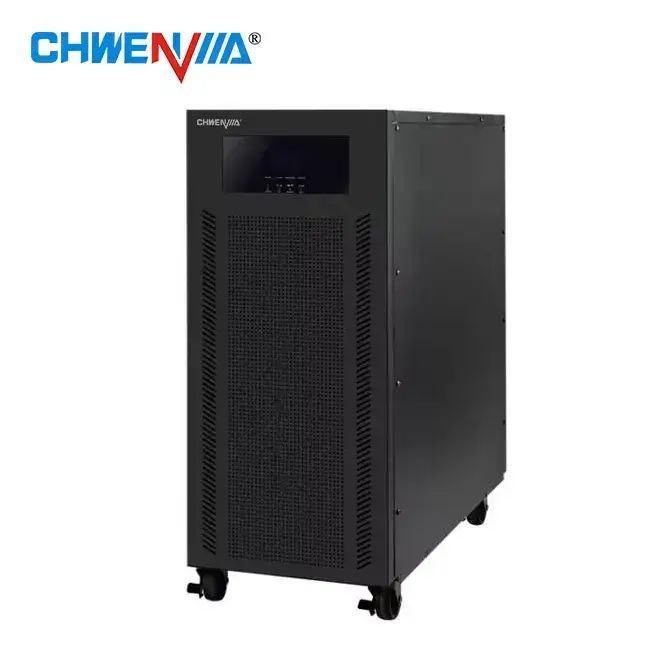
When the grid flickers or fails entirely, the real question isn't whether you have backup power—it's whether that backup can be trusted to keep critical systems running without a hiccup. From hospital monitors to server rooms and home offices, a dependable UPS is no longer a luxury but a quiet necessity. At Wenma, we focus on one thing: delivering uninterruptible power that doesn't flinch when you need it most. In this guide, we'll walk through what truly separates a reliable UPS supplier from the rest, and why your next power decision deserves more than a generic box on a shelf.
What Actually Happens When the Grid Goes Dark
A blackout rarely starts with a single master switch being thrown. Inside the first few seconds, a handful of relays sense a severe frequency drop or an overloaded line and open their breakers faster than a person can blink. That trip is meant to protect transformers and generators, but it also cuts a large block of load from the network. Other lines then absorb the extra current, heat up, and sag into trees or trip their own protection. Before anyone can intervene, the failure cascades across interconnections, separating the grid into isolated islands that cannot all hold their frequency. Some plants automatically shut down to avoid damage; others keep spinning but no longer have a stable path to their customers.
On the street, the effects move through ordinary systems in a predictable order. Traffic signals go dark right away, but many keep running on battery backup for a few hours before they blink off. Elevators stop between floors because their motor controllers lose power and the brake engages. Water pressure holds for a while because most municipal systems store water in elevated tanks, but pumps need electricity to refill those tanks, so tall buildings often lose water before low-rise homes. Cell towers switch to batteries and then to diesel generators if they have fuel; once those run dry, phones show full bars but calls will not connect. Grocery stores and gas stations become the first practical limit because point-of-sale systems, fuel dispensers, and refrigeration all rely on the same missing current.
Matching Battery Chemistry to the Way Your Facility Runs
Fleet managers often default to the battery spec sheet instead of the shift board, but that approach misses half the equation. A facility running three shifts with opportunity charging at breaks can lean on lithium-ion or thin plate pure lead chemistries that tolerate frequent partial top-ups. A single-shift operation with a long overnight window still gets strong economics from flooded lead-acid, provided the watering and equalization routine is actually followed.
Temperature and air quality deserve equal weight. Cold storage or unheated docks punish batteries that need regular water maintenance, while high-ambient areas shorten the life of chemistries that already run hot. When lift trucks spend most of their time outdoors or in poorly ventilated spaces, sealed options reduce maintenance and remove the temptation to skip a weekly check because a technician is short on time.
The right match usually shows up in the exceptions. Watch where trucks sit idle, where they get parked for lunch, and which aisles see the heaviest loads. Those patterns will tell you whether you need fast opportunity charging, tolerance for partial state of charge, or simply the lowest cost per cycle over a predictable eight-hour day. Matching chemistry to rhythm instead of reputation tends to cut both downtime and early replacement surprises.
Why Runtime Claims Fall Apart Under Real Loads
Most runtime benchmarks are shot in a clean room: a single container, no competing services, warmed caches, and a request shape that repeats like clockwork. Put that same runtime behind a real gateway with bursty traffic, malformed payloads, slow downstream dependencies, and a few noisy neighbors, and the measured numbers stop meaning much. The first things to go are usually p99 latency and queue depth, not average throughput. A runtime can maintain a respectable mean while a large slice of requests waits on a connection that should never have been accepted.
Blocking I/O is where the damage often starts. Under light load, worker threads are plentiful and the scheduler looks cooperative. Under sustained pressure, one sluggish database call can occupy a thread long enough to create a line behind it. Timeouts begin to fire, clients retry, and those retries enter the same overcommitted pool. The result is not a graceful slowdown but a feedback loop where the system spends more effort managing retries than completing original work.
Memory behavior changes too. Short test runs rarely expose the effect of an aging heap: objects that survive repeated collections, fragmentation that makes allocation slower, and garbage collection pauses that grow as the live set swells. A runtime that pauses for ten milliseconds in a lab can pause for two seconds after running for a week under mixed workloads. Those pauses are never printed on the datasheet, but they are the first thing users notice at 3 a.m.
Installation Mistakes That Quietly Shorten UPS Lifespan
Most people assume a UPS fails early because the battery was cheap or the unit was undersized. In reality, plenty of installations die quietly from small oversights that never show up on a spec sheet. Placing the unit against a wall, cramming it into a cabinet with no airflow, or setting it on a carpet where vents get blocked can push internal temperatures high enough to cut battery life in half. Even a few extra degrees above the recommended operating range accelerates chemical degradation, and the damage is cumulative, meaning the unit looks fine right up until it doesn't.
Another silent killer is ignoring the input wiring and grounding details during setup. Loose terminals, shared circuits with heavy motor loads, or using an undersized extension cord can introduce voltage drops and transients that force the UPS to switch to battery far more often than it should. Every unnecessary transfer event burns through a small slice of battery capacity, and over a few months that adds up to a noticeably shorter runtime when you actually need it. Grounding mistakes can also prevent the surge suppression from doing its job, leaving connected equipment exposed while the UPS itself works harder than necessary.
Finally, many installations overlook the simple fact that a UPS is not a set-and-forget device. Mounting it in a spot that's hard to reach means nobody checks the battery connections, clears the dust from the fans, or notices the subtle beeping that signals an impending failure. Batteries can loosen over time from vibration or thermal cycling, and a single high-resistance connection can turn into a hot spot that damages the entire string. The unit may still power on and pass a basic self-test, but its actual backup time slowly erodes until a real outage exposes how little capacity remains.
Support Response Time as an Unseen Part of Backup Power
When a generator fails during an outage, the clock that matters most is rarely the one on the wall. It’s the gap between the first alarm and a technician who actually knows the site. Backup power is often sold on kilowatts, fuel capacity, and transfer switch speed, but those specs mean little if the support line rings into a queue while a hospital wing or a production floor waits in the dark. Response time lives in the same critical path as the equipment itself, even though it never appears on a spec sheet.
The quiet risk shows up in small details: a remote monitoring platform that flags a low battery at 2 a.m., but no one on call can reach the site for four hours. Or a service contract that promises annual maintenance but doesn’t define how quickly parts arrive after a failed start. In those hours, the cost isn’t measured in lost runtime alone. Perishable inventory, patient safety, or a half-finished batch can turn a brief mechanical fault into a much larger operational wound.
Treating support response as part of the backup power design changes the questions buyers ask. Instead of stopping at “how many kVA,” they look at dispatch radius, on-site spares, escalation paths, and whether the provider has local technicians rather than a national call center. None of that shows up in the generator nameplate, but it often determines whether backup power is an actual safeguard or just a hopeful piece of hardware.
Balancing Upfront Cost Against Years of Silent Service
A low purchase price has a way of looking decisive on a spreadsheet, especially when the alternatives are sitting right there with a higher number. What tends to get left out is the quiet arithmetic of ownership: a unit that asks for nothing over a decade may cost more because the materials and assembly tolerances were never trimmed to hit a retail target. That difference is not a surcharge—it is the cost of not being forced to think about the equipment again.
The value shows up in the silence between service calls. Cheaper hardware often announces itself through small failures: a seal seeps, a bearing grows louder, a connection loosens after a few seasons. Each incident is small enough to ignore on its own, but together they consume calendar time and labor budgets. A more expensive unit with a long service interval simply does not generate that stream of interruptions, which changes what the workday actually feels like.
There is no honest way to settle this on price alone. The decision has to weigh the upfront outlay against the expected years of unattended operation, the cost of downtime, and whether spare parts will still be available when something eventually wears. Once those are placed next to the sticker figure, the cheaper-looking option frequently turns out to be a series of future invoices dressed as a single low bid.
FAQ
Start with the total wattage of the equipment you plan to protect, then add about 20 to 25 percent headroom so the unit is not running near its limit. For devices with motors or certain medical equipment, check the VA rating as well because those loads can draw power differently than simple electronics.
Runtime depends on the battery capacity and the load connected. A lightly loaded unit may keep a router and small switch running for over an hour, while a heavily loaded tower might only last a few minutes. The goal is usually enough time to save work and shut down safely, not to run everything indefinitely.
Most UPS batteries last between three and five years, but heat, frequent discharges, and poor ventilation can shorten that lifespan. If the unit starts failing self-tests or the runtime drops noticeably, it is better to replace the battery before a complete failure happens.
Smaller plug-and-play units can be set up in minutes without special tools. Larger hardwired systems or units that connect to a main panel should be installed by a qualified electrician to meet local codes and avoid unsafe wiring mistakes.
Line-interactive units regulate minor voltage changes using a transformer and switch to battery when power fails. Online double-conversion models continuously convert incoming AC to DC and back to clean AC, so connected equipment never sees a transfer delay. For sensitive electronics or locations with very unstable power, online double-conversion is worth the extra cost.
Not always, but it is a good idea if you run equipment with active power factor correction, certain power supplies, or small motors. Pure sine wave output matches utility power more closely and avoids the buzzing, overheating, or unexpected shutdowns that can happen with stepped approximation output.
Many can, but generator power may drift in frequency and voltage enough to make some UPS units repeatedly switch to battery. Look for models with adjustable sensitivity or generator-compatible settings so they do not fight the generator during extended outages.
Keep the vents clear, avoid placing the unit in direct sunlight or dusty areas, run a self-test every few months, and replace batteries before they swell or leak. For larger systems, check terminal tightness and keep a log of runtime tests so you notice any decline early.
Conclusion
When the grid drops, a UPS has only a few milliseconds to pick up motors, drives, and servers that rarely behave like the resistive test loads used in brochures. Inrush current, crest factor, and leading power factor can pull a battery much harder than its rated amp-hours suggest, so quoted runtime often unravels under real loads. Matching battery chemistry to how a facility actually operates matters more than raw capacity: lithium iron phosphate handles frequent short outages and compact layouts well, while quality VRLA can still be the right fit for lighter cycling and stable temperatures. A supplier earns trust by asking about load sequencing, harmonic content, and restart timing instead of reciting a single runtime figure.
Installation mistakes shorten UPS life long before the battery reaches its design limit. Restricted airflow, loose connections, high ambient temperature, or mounting the unit where dust and moisture collect all force components to age faster. Support response time is equally part of backup power: if a module fails during a storm, the difference between a four-hour site visit and a two-day wait can determine whether critical loads stay online. That shifts the purchase decision away from sticker price and toward total service cost over years of silent operation, including battery replacement, firmware support, and clear emergency protocols. The better UPS supplier for dependable backup power is usually the one that behaves like a long-term operations partner, not a box seller.
Contact Us
Contact Person: Mr. Jiang
Email: [email protected]
Tel/WhatsApp: +86-15057775503
Website: https://www.avrfactory.com/