

Best Programmable Power Supply Units for Precision Testing and Lab Applications
2026-05-13
Finding the right programmable power supply can make or break a precision testing setup. Whether you're running delicate lab experiments or validating high-stakes prototypes, the unit you choose needs to deliver unwavering stability, fine control, and real-world reliability. That's where TPS comes in—quietly redefining what engineers and researchers can expect from their bench equipment. In this guide, we cut through the noise to explore the standout options that pair smart features with rugged performance, helping you focus on results instead of wrestling with your gear.
What Makes a Power Supply Truly Programmable?
A truly programmable power supply isn’t just about twisting a knob or tapping a button. It’s about handing over full control to your test software, letting you tweak voltage, current, and even modulate outputs on the fly through common interfaces like USB, Ethernet, or GPIB. This digital command center means you can create intricate power sequences, mimic brownouts or surges, and capture precise measurements—all automated, without babysitting the hardware.
What really sets these units apart is the depth of their firmware. Look for high-resolution DACs and ADCs that give you millivolt and milliamp accuracy, plus the ability to generate arbitrary waveforms. With a solid command set behind it, a programmable supply can simulate a battery’s discharge curve or a processor’s startup surge, seamlessly integrating into your lab’s existing automation. It’s that mix of precision and scriptability that transforms a simple bench tool into a flexible test platform.
Precision Testing Demands: Why Accuracy Matters in Lab Power Supplies
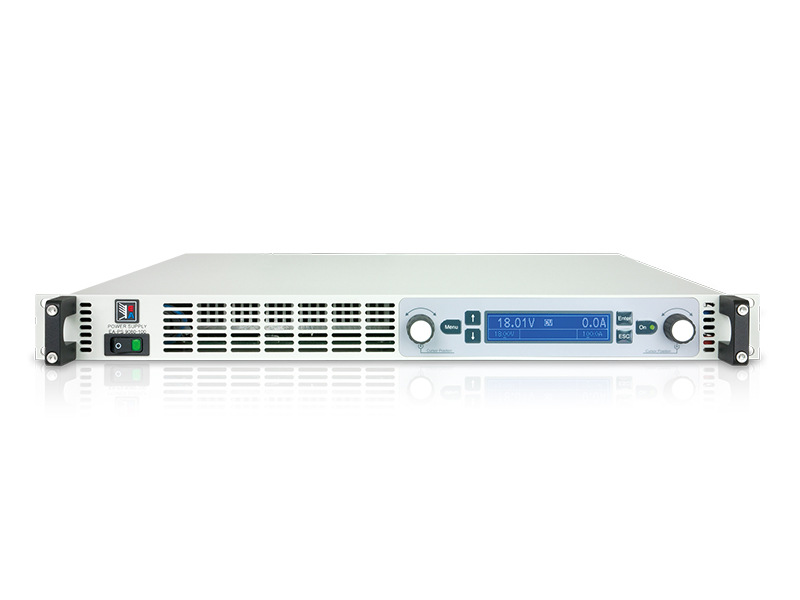
When you're testing a sensitive circuit or calibrating a precision instrument, even a tiny voltage fluctuation can throw off your results. Lab power supplies that promise high accuracy aren't just a luxury—they're a necessity for anyone who needs reliable, repeatable measurements. Without tight regulation and low noise, you can't trust that your device under test is behaving as expected, and debugging becomes guesswork.
Accuracy also matters because it saves time. A supply that drifts or has poor load regulation means you're constantly adjusting knobs or second-guessing readings. In R&D, that distraction can break your flow and slow down prototypes. In production testing, it risks passing faulty units or failing good ones, driving up costs and eroding confidence in your process.
Ultimately, the right lab power supply acts like a silent partner in your work. It delivers exactly what you set, stays stable over time, and lets you concentrate on the innovation rather than the setup. Investing in accuracy upfront pays off in cleaner data, faster iteration, and fewer headaches when things don't add up.
Top Picks: Programmable Units That Deliver Consistent Performance
When you need adaptable hardware that doesn’t compromise on reliability, the right programmable units make all the difference. We’ve highlighted options that balance raw processing power with the flexibility to handle evolving workloads, all while maintaining steady, predictable output.
What sets these units apart is their ability to handle real-time adjustments without the hiccups you’d expect from less refined designs. Whether deployed in factory automation or edge computing setups, they deliver the kind of unfaltering performance that keeps processes humming along.
Our selection focuses on devices backed by robust ecosystems—so integration is straightforward and long-term support is a given. Because ultimately, consistency isn’t just about specs; it’s about trust in the tools you rely on day in and day out.
Avoiding Common Pitfalls When Choosing a Lab Power Supply
One of the biggest mistakes is focusing solely on max voltage and current numbers. In real-world use, a supply’s performance at low voltages or near its current limit often matters more than its headline specs. Many cheap units become unstable when you actually need them to deliver, say, 0.5 V at 2 A. Always check the datasheet for load-regulation graphs or, better yet, test it yourself with a dynamic load if you can.
Another trap is underestimating the importance of clean power. Ripple and noise specs are where budget supplies cut corners, and that can wreak havoc on sensitive analog circuits or precision sensors. A few extra decibels of noise might not sound like much, but in a quiet lab, that noise can become a headache. Look for specs with typical ripple under a few millivolts RMS, and be wary of units that only advertise peak‑to‑peak values without context.
Finally, don’t overlook the physical interface you’ll be using every day. Awkward encoder knobs, tiny hard‑to‑read displays, or confusing menu systems can turn a simple adjustment into a constant frustration. A good lab supply should let you set voltage and current quickly, with clear feedback, and ideally allow you to lock settings to avoid accidental changes. If you can’t stand using it for an hour, you’ll regret the purchase no matter how accurate its specs look on paper.
How Programmability Simplifies Complex Testing Sequences
Traditional testing setups often involve rigid sequences that require manual reconfiguration between steps, which is both time-consuming and error-prone. Programmability changes this by allowing engineers to define, adjust, and execute multi-stage tests through code. This means complex test flows—such as those involving conditional branching, looping, or dynamic parameter sweeps—can be scripted once and reused, dramatically reducing human intervention and the potential for mistakes.
With programmable instruments, you can orchestrate intricate measurement routines that adapt in real time. For instance, a script can monitor a device's output and decide the next test action based on the results, creating a closed-loop validation process. This level of automation not only accelerates debugging and characterization but also ensures consistent execution across different units or test benches, which is critical for maintaining quality at scale.
Moreover, programmability simplifies the management of complex data. Instead of manually collecting and correlating results from separate instruments, you can integrate data logging and analysis directly into the test sequence. This seamless integration allows for immediate feedback and more thorough reporting, transforming what used to be a labor-intensive chain of tasks into a streamlined, intelligent workflow.
Future-Proofing Your Lab with Advanced Power Supply Features
Laboratories that stay ahead of the curve don't just buy equipment for today's needs—they invest in tools that adapt to emerging challenges. Advanced power supplies now come with programmable outputs and remote sensing, so your lab can handle evolving test protocols without replacing hardware. By choosing a unit that supports real-time load compensation and automated sequencing, you sidestep costly downtime and ensure your setups remain relevant as your research expands into higher precision or unconventional voltage ranges.
Another dimension of future-proofing lies in connectivity. Look for power supplies that blend industrial-grade interfaces like EtherCAT or CAN bus with user-friendly web dashboards. This hybrid approach lets your team monitor and adjust parameters from anywhere, while also integrating smoothly into legacy systems. Over-the-air firmware updates and modular architectures mean you can unlock new capabilities—like arbitrary waveform generation or energy recovery—through software upgrades rather than scrapping the whole unit.
Finally, think about data integrity and compliance. Advanced logging features automatically timestamp every voltage fluctuation, load spike, and environmental parameter, creating an audit trail that simplifies accreditation. When your supply can trigger protective shutdowns based on predictive analytics instead of hard thresholds, you protect both your experiments and the equipment itself. The real value isn't just in the specs—it's in a system that learns your lab's patterns and adapts over time.
FAQ
A programmable power supply lets you precisely control voltage, current, and often other parameters using digital interfaces like USB, LAN, or GPIB, unlike a standard bench supply that relies on manual knobs. This automation capability is essential for repetitive testing, data logging, and integrating into test systems where you need consistent, script-driven power sequences.
Look for low ripple and noise (typically under 5 mVrms), excellent load regulation, multiple output channels with isolated tracking, and fast transient response. Also check programming resolution and accuracy—16-bit or better is common for high-precision models. Overvoltage protection, remote sensing, and a clean user interface matter a lot in daily use.
The Keysight E36300 series is a solid choice for medium-power applications with its low-noise triple-output design. The Rigol DP800 series offers great value with color displays and flexible sequencing. For high-precision, the Keithley 2280S provides exceptional current measurement sensitivity. The BK Precision 9115 series is popular for multi-range output in a single unit.
Connectivity is critical if you're automating tests. USB and LAN are almost standard now, but GPIB is still used in legacy rack setups. Some advanced units offer LXI or even built-in web servers for remote monitoring. The ability to program across multiple interfaces simultaneously can save a ton of integration time.
Isolated channels let you power circuits that have different ground references without causing short circuits or ground loops. For example, you might need to power a digital logic section and a separate analog front-end in one device under test. It also enables series or parallel operation when you need higher voltages or currents.
Absolutely. The Aim-TTi QPX series and the Rohde & Schwarz NGL200 series pack a lot of power in a small footprint. Some models even run on batteries and offer decent resolution, making them ideal for on-site troubleshooting or educational labs where bench space is tight.
Start by listing your required voltage/current range, number of outputs, and whether you actually need remote programming or just occasional logging. Skip advanced arbitrary waveform generation unless you're simulating battery profiles or complex transients. Also, check if the included software meets your needs—licensing for full-featured control suites can be an hidden cost.
Entry-level units from reputable brands start around $400–$600 for single-output models. A good triple-output supply with advanced programming runs from $1,000 to $2,500. High-precision, ultra-low-noise instruments or those with built-in waveform generation can easily exceed $4,000, but for most lab work, the mid-range offers the best balance.
Conclusion
Precision testing environments rely heavily on power supplies that go beyond basic voltage and current delivery. A truly programmable unit isn't simply one with a digital display—it's a system that can be scripted, sequenced, and remotely controlled without constant manual intervention. In labs where accuracy is non-negotiable, even minor output fluctuations can distort sensitive measurements or damage delicate prototypes. The best lab-grade supplies maintain tight load and line regulation, minimal ripple, and rapid transient response, ensuring that the set value matches the delivered power under varying conditions. When selecting one, many engineers get tripped up by focusing solely on headline specs like maximum wattage while overlooking the quality of regulation or the convenience of remote sensing. Another common misstep is ignoring noise performance, especially when working with low-voltage digital circuits. Programmability isn't a luxury—it fundamentally changes how you approach repetitive validation tasks, enabling automated ramp profiles and soak tests that would be impractical to do by hand.
Choosing a consistent performer means looking at units that combine robust hardware with polished software integration. The top contenders in this space offer not just stable output but also flexible communication backbones—USB, LAN, and often LXI compatibility for seamless control from a PC or a test executive framework. This connectivity becomes invaluable when a complex test requires multiple outputs to change in a coordinated sequence, perhaps simulating a power-up curve or intentionally stressing a device with brown-out scenarios. Advanced features like arbitrary waveform generation, data logging, and digital I/O synchronization allow a single supply to replace racks of auxiliary equipment. Looking ahead, future-proofing your lab means prioritizing supplies with upgradeable firmware, modular output channels, and support for next-generation automation protocols. While upfront cost may be higher, a thoughtfully chosen programmable unit pays for itself by reducing setup time, minimizing human error, and delivering repeatable results that stand up to scrutiny in research and production alike.
Contact Us
Contact Person: Lily
Email: [email protected]
Tel/WhatsApp: +49 (0) 2161 49526-0
Website: https://tps-elektronik.com/en/