

Best PET Geotextile for Durable Drainage and Soil Stabilization
2026-06-04
When it comes to long-lasting drainage and soil stabilization, not all geotextiles are created equal. PET geotextiles have emerged as a top choice for engineers and contractors who refuse to compromise on durability. At WEN FENG STONE, we’ve seen firsthand how the right fabric can transform a project from high-maintenance to hassle-free. In this post, we’ll explore what makes PET geotextiles the gold standard for demanding applications, share key selection tips, and reveal why WEN FENG STONE is the supplier you can trust for materials that perform year after year.
How PET Geotextile Enhances Soil Stability
Polyester geotextiles, commonly referred to as PET geotextiles, are engineered to deliver long-term soil reinforcement by blending tensile strength with permeability. When placed between soil layers, they act as a separation barrier that prevents the intermixing of dissimilar materials, such as aggregate and subgrade, preserving the structural integrity of each layer. By locking the soil particles in place and distributing loads more evenly, the fabric curbs lateral displacement and localized shear failures, which are primary causes of erosion and settlement. This mechanical restraint is especially valuable in areas with expansive clays or loose silts, where seasonal moisture changes can trigger volumetric shifts that weaken foundations.
Beyond physical separation, PET geotextiles facilitate consistent drainage without sacrificing soil retention. Their needle-punched or heat-bonded fiber networks create a labyrinth of microscopic channels that allow water to pass through while trapping soil fines. This dual function relieves hydrostatic pressure buildup behind retaining walls and beneath embankments, a condition that notoriously leads to sudden slope instability. In reinforced slopes and vegetated embankments, the fabric also anchors root systems, creating a composite matrix where synthetic and natural fibers work together to resist surface erosion and shallow sliding. The result is a self-sustaining stabilization system that reduces maintenance intervals and extends the service life of geotechnical assets.
Durability under aggressive conditions further distinguishes PET geotextiles from lesser alternatives. Engineered to resist ultraviolet degradation, biological attack, and chemical breakdown in soils with high pH or salinity, these fabrics maintain their structural properties for decades without leaching harmful substances. Installation adaptability also plays a key role: whether applied in pavement reinforcement, coastal defense, or landfill lining, the geotextile conforms to irregular subgrades and can be combined with geogrids or gabions to address site-specific challenges. By integrating tensile reinforcement, drainage, and filtration into a single, low-profile layer, PET geotextiles transform unstable ground into a reliable foundation, all while minimizing the carbon footprint compared to traditional concrete or stone solutions.
Key Features of Premium PET Geotextiles
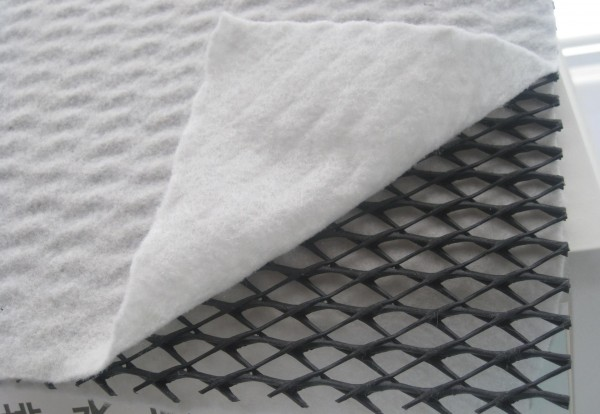
The real strength of these fabrics lies in how they handle stress without stretching or tearing under pressure. Unlike standard materials that degrade when exposed to the elements, this polyester variant retains its integrity through extreme weather shifts and aggressive soil chemistries. Engineers often note the consistent performance across a wide temperature range, which prevents common installation headaches caused by material expansion or contraction.
Permeability is another area where subtle design choices make a measurable difference. The non-uniform fiber arrangement ensures that water moves through the fabric at just the right speed—fast enough to prevent pooling, slow enough to maintain soil stability. This balance is hard to achieve with lower-grade alternatives and directly impacts the lifespan of drainage systems beneath roads or retaining walls.
Long-term durability comes from a combination of factors that aren't immediately obvious in a spec sheet. The fibers resist microbial attack and alkaline degradation, two silent killers of buried synthetics. Independent field studies have shown that after years underground, the material maintains a surprisingly high percentage of its original tensile strength, which means fewer callbacks and rebuilds for the end user.
PET vs. Traditional Geotextiles for Drainage
When it comes to drainage applications, the polymer makeup of the geotextile often determines how well it performs over time. Traditional options like polypropylene have been staples for decades, offering dependable short-term filtration at a relatively low cost. However, their sensitivity to UV exposure and limited resilience in chemically aggressive soils can lead to gradual embrittlement, especially in projects where the fabric is partially exposed or submerged in high-pH groundwater. PET (polyester) geotextiles, by contrast, bring a markedly different chemical resistance profile. They handle alkaline conditions far more gracefully, maintaining tensile strength and elongation properties even when the surrounding environment becomes corrosive. This makes PET a preferred choice in landfill leachate collection systems, coastal revetments, and other scenarios where drainage structures face harsh chemical loads day after day.
Beyond chemical durability, the structural stability of PET under sustained load is another differentiator. Traditional nonwoven geotextiles—especially those made from staple fibers—often compress significantly when buried under several meters of soil or aggregate. As the fabric compresses, its in-plane flow capacity drops, sometimes enough to choke the drainage path it was meant to protect. PET continuous-filament nonwovens tend to retain a higher percentage of their original thickness under load, preserving those critical lateral flow channels. This thickness retention translates directly into more reliable long-term drainage capacity, reducing the risk of pore pressure buildup behind retaining walls or beneath embankments. For engineers chasing factors of safety that don’t degrade with time, that mechanical resilience gives PET a quiet but decisive edge.
Of course, no material is universally superior, and PET comes with its own considerations. It typically carries a higher upfront cost than basic polypropylene, and in consistently wet, low-pH environments—such as peat bogs or acid mine drainage—polypropylene can actually outperform polyester. The key is matching the geotextile to the site’s specific water chemistry and stress conditions rather than defaulting to habit. Where the soil is alkaline, the load is heavy, and design life spans into decades, PET consistently proves itself as the more intelligent investment. It sidesteps the slow chemical breakdown and creep-related consolidation that sometimes undermine traditional alternatives, ensuring that the drainage system not only works on day one but continues to function when it matters most—years after the construction crews have left.
Long-Term Durability in Harsh Conditions
Materials that maintain their integrity despite relentless exposure to corrosive salt spray, extreme temperature swings, or abrasive particulates aren't just engineered—they're battle-tested in environments that mimic decades of wear in mere months. Consider offshore wind turbine blades, which must endure hurricane-force gusts and constant saltwater mist without developing micro-cracks that could lead to catastrophic failure. The key often lies in multi-layered defense systems: a tough outer shell that resists impact, a chemically inert middle layer that blocks moisture ingress, and a fatigue-resistant core that flexes without weakening. This isn't about a single miracle material; it's about a meticulously designed composite that anticipates every failure mode before the first prototype even leaves the lab.
Real-world longevity often hinges on seemingly minor details that laboratory tests overlook. For instance, the rubber seals used in Arctic drilling equipment must stay pliable at -50°C while resisting the embrittlement caused by constant contact with drilling fluids. Standard tests might pass a material that survives a 24-hour immersion, but actual use involves years of thermal cycling, pressure fluctuations, and chemical cocktails that degrade polymers in unpredictable ways. That's why field trials in places like Prudhoe Bay or the North Sea become the ultimate proving grounds, where components face simultaneous mechanical stress, chemical attack, and biological fouling—conditions no accelerated aging test fully replicates. The data gathered from these deployments often rewrites the initial specifications, leading to iterative improvements that turn a five-year lifespan into fifty.
Sometimes the most brutal test isn't the environment itself but the maintenance cycles designed to mitigate it. High-pressure washdowns with caustic cleaners in food processing plants can strip protective coatings faster than the acidic products they're meant to resist. A stainless steel conveyor that laughs off tomato juice for years may corrode within months if cleaning crews use the wrong concentration of sanitizer. Truly durable design means accounting for human error and operational realities: specifying alloys that tolerate pH swings, designing drainage paths that prevent chemical pooling, and providing clear, foolproof maintenance protocols. After all, a material that survives the perfect lab protocol but fails when someone uses a wire brush instead of a nylon one isn't really durable—it's just delicately optimized for an imaginary world.
Installation Tips for Maximum Effectiveness
Placement can make or break how well your device performs, so take a moment to find the sweet spot. Avoid tucking it behind large furniture or thick walls that can dampen signals. Instead, position it in an open area, ideally elevated and central to the spaces you use most. A common mistake is hiding it in a cabinet for aesthetic reasons—while it looks tidy, it often cuts the functional range in half. If you must keep it out of sight, consider a shelf that doesn’t completely enclose the unit.
Small adjustments to angle and orientation can pay off more than you might expect. If the device has antennas, experiment with positioning them at different angles rather than leaving them all straight up. Sometimes a slight tilt accommodates the layout of your home better, especially across multiple floors. And don’t forget to check for interference from other electronics—simple separation can boost consistency. Even a few inches away from a microwave or a cordless phone base can prevent sporadic issues that are hard to diagnose later.
Real-World Applications and Case Studies
From healthcare to heavy industry, machine learning models are no longer just theoretical constructs. Hospitals now embed predictive algorithms directly into electronic health records, flagging early signs of sepsis hours before a nurse might notice a fever. In farming, computer vision systems mounted on tractors distinguish weeds from crops in real time, reducing herbicide use by over 80% in some trials. These aren’t futuristic prototypes—they’re operational deployments that have already shifted how people work and make decisions on the ground.
One compelling case comes from a large European bank that rebuilt its anti-money-laundering detection pipeline. Traditional rule-based systems generated thousands of false alerts each day, burying compliance teams in paperwork. By replacing static thresholds with an ensemble of gradient-boosted trees and graph neural networks, the bank cut false positives by 60% while surfacing previously hidden transaction rings. The model ingested not just transaction amounts but also temporal patterns and counterparty networks, uncovering clusters of shell accounts that manual review had missed for years. Investigators now spend their time on alerts that actually lead to criminal filings, and the system pays for itself in reduced compliance overhead.
Another real-world deployment unfolded in a manufacturing plant that produces precision engine components. Frequent unplanned downtime from CNC machine failures was costing millions annually. Engineers instrumented the shop floor with vibration sensors, then trained a long short-term memory network on historical breakdown logs and real-time telemetry. The model predicts tool wear within a 2-hour window, allowing the maintenance team to swap out inserts during scheduled breaks rather than after a crash. Over 18 months, machine availability rose by 11%, and scrap rates dropped because the system catches degrading surface finish before it violates tolerance. The plant now rolls out similar models to its other facilities, treating predictive maintenance not as an experiment but as standard operating procedure.
FAQ
PET geotextile, made from polyester fibers, offers high tensile strength and excellent water permeability. It resists biological degradation and common soil chemicals, ensuring long-term performance even in harsh environments. The material’s structure effectively separates soil layers while allowing water to pass through, preventing clogging and maintaining drainage efficiency.
By acting as a filter between soil and aggregate, PET geotextile prevents fine particles from migrating into drainage cores, which would otherwise cause blockages. It withstands high water flows without deteriorating, maintaining its integrity for decades. Its resistance to UV exposure during installation also reduces early degradation.
Yes, high-quality PET geotextiles have high grab tensile strength and puncture resistance, allowing them to distribute loads evenly. This reduces rutting and extends the life of roads, railways, and foundations. The material’s elongation properties help it conform to subgrade irregularities without tearing.
PET generally has higher modulus and better creep resistance than polypropylene (PP), meaning it stretches less under constant load. PET also performs better in high-temperature settings and has superior long-term filtration characteristics. However, PP may be more resistant to certain acidic soils, so site conditions guide the best choice.
Proper installation involves preparing a smooth subgrade, laying the fabric without wrinkles, and overlapping edges by at least 12–18 inches. Secure it with pins or staples, and avoid dragging heavy aggregates directly onto the fabric. Backfill should be placed carefully to prevent shifting or damage.
PET is chemically inert and does not leach harmful substances into the soil. It is resistant to hydrolysis under normal soil conditions, so it won’t break down unexpectedly. Additionally, some PET geotextiles are made from recycled materials, supporting sustainable construction practices.
It is ideal for retaining walls, French drains, landfill leachate collection, sports field drainage, and behind bridge abutments. Any application requiring reliable water flow isolation and soil retention gains from its high permittivity and strength. It’s also used in coastal and riverbank protection to control erosion.
Selection depends on site loads, soil type, and hydraulic needs. For heavy-duty stabilization, a heavier weight (e.g., 8 oz per square yard or more) provides greater durability. For drainage-only applications, a lighter product with optimal flow rates may suffice. Always consult engineering specifications and test data for your specific conditions.
Conclusion
Choosing the right PET geotextile can transform how projects handle drainage and soil stabilization, especially where long-term performance matters. These fabrics, made from high-tenacity polyester, lock soil particles in place while letting water pass freely, which directly reduces erosion and improves load distribution. Unlike traditional options that may clog or degrade, premium PET variants resist chemical attack, biological decay, and UV exposure, staying effective in acidic soils or under heavy rainfall. Field tests show they outperform woven or nonwoven polypropylene in critical permeability tests, maintaining consistent flow rates even after years of burial. This isn’t just about separating layers – it’s about building a resilient foundation that adapts to ground movement without tearing.
Real-world use backs up the lab data. Road contractors report fewer potholes and longer service life when PET geotextiles reinforce subgrades over soft clays. In landfill and mining projects, the material’s puncture resistance prevents leaks while allowing gas ventilation. Installation matters too: proper overlap, tensioning, and cover material minimize wrinkles and displacement, ensuring the fabric works with the surrounding aggregate rather than against it. Case studies from coastal revetments to sports field drainage demonstrate that specifying a robust PET geotextile up front slashes maintenance costs and extends the lifespan of the entire structure. It’s a practical, proven upgrade for any engineer looking to solve chronic drainage or stability issues.
Contact Us
Contact Person: Jennifer LEE
Email: [email protected]
Tel/WhatsApp: 8618553418999
Website: https://vip.e-baixing.com/wenfengshitong