

Best LTE Radio Options for Uninterrupted High-Speed Connectivity
2026-07-21
In today's fast-paced world, staying connected is non-negotiable. Whether you're a remote worker, a traveler, or an IoT enthusiast, the right LTE radio can make all the difference. Discover how solutions from lisheng are redefining high-speed connectivity, even in the most challenging environments. Let's dive into the best options that guarantee uninterrupted performance.
Picking an LTE Radio That Won't Drop Your Connection Mid-Stream
When you're relying on an LTE radio for live streaming or critical data sessions, connection stability isn't just a nice-to-have—it's everything. The radio's ability to maintain a steady link often comes down to its support for multiple carrier aggregation bands and advanced antenna designs. Cheaper units might connect fine in ideal conditions, but they struggle when signals fluctuate. Look for radios with 4x4 MIMO and higher-order QAM, as these features help sustain throughput even when coverage weakens, reducing the odds of a sudden drop. Also, pay attention to the chipset: newer modems handle network transitions more gracefully, seamlessly switching between towers without interrupting your session.
Beyond the hardware specs, firmware maturity plays a huge role. Some LTE radios suffer from bufferbloat or poorly tuned TCP stack implementations, causing latency spikes that can force a stream to buffer or fail. Devices that receive regular over-the-air updates from the manufacturer tend to iron out these issues over time. Additionally, consider how the radio manages heat. Intensive uplink activity can cause thermal throttling in compact designs, leading to intermittent drops. A well-ventilated enclosure or integrated heat sink can keep performance consistent during long broadcasts.
Finally, test the recovery speed after a lost connection. No radio is immune to dead zones, but a good one reattaches within seconds, often before the application times out. Check real-world reviews for how quickly it reacquires the network, and whether it supports features like dual-SIM failover for an extra layer of reliability. The right combination of modem quality, antenna sensitivity, and intelligent firmware can make the difference between a flawless stream and a frustrating dropout.
The Unsung Heroes of Mobile Connectivity: Compact LTE Options
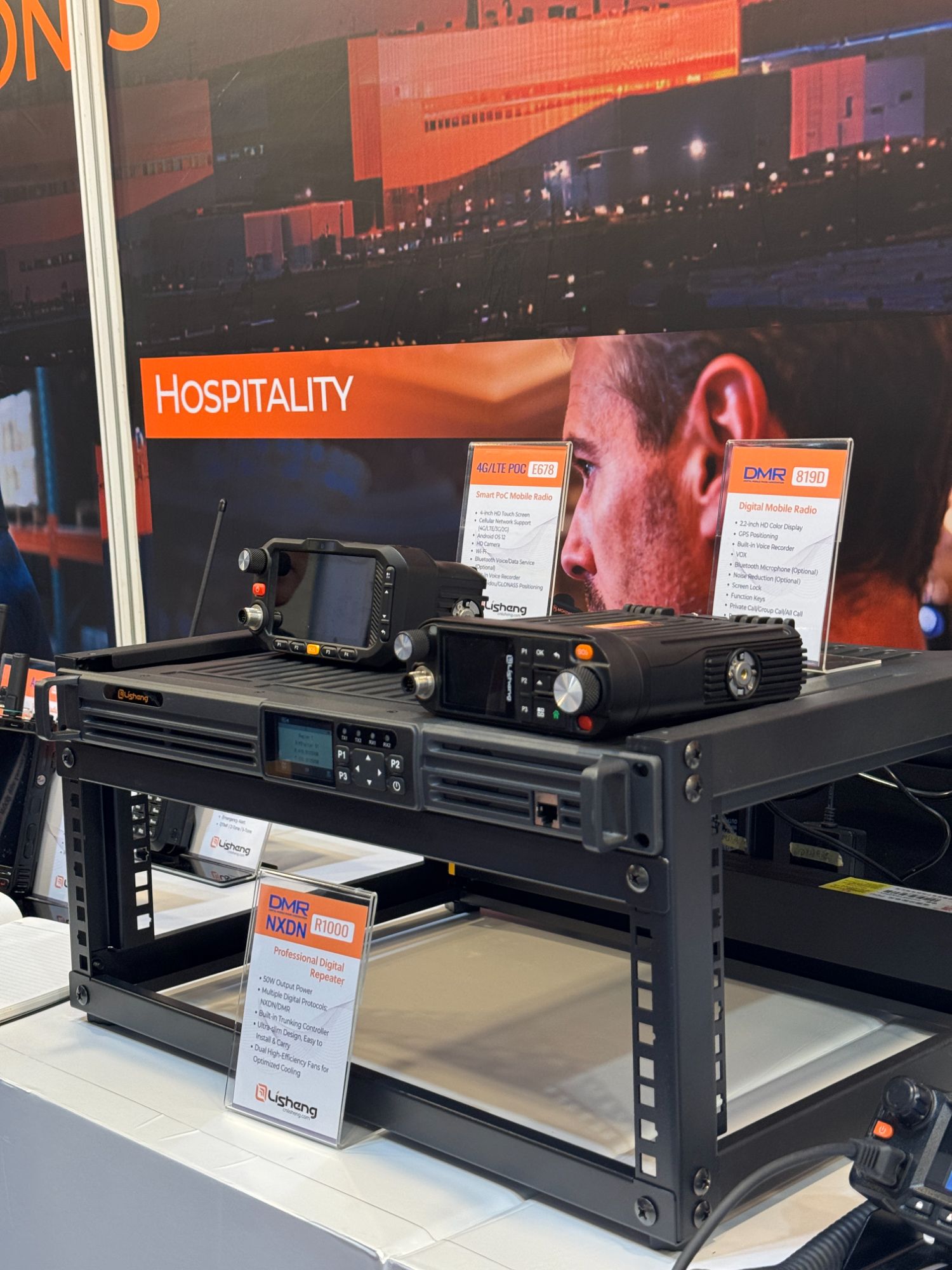
In a world obsessed with flashy 5G rollouts and lightning-fast fiber, a quieter revolution is keeping billions connected. Compact LTE modules—small enough to fit into your palm—are the backbone of everything from smart meters to rural telemedicine kits. They sip power, shrug off extreme temperatures, and reliably bridge the gap where wired infrastructure fears to tread.
What makes these tiny modems so indispensable is their chameleon-like flexibility. One day they’re tucked inside a delivery drone guiding its path over remote terrain; the next, they’re monitoring soil moisture on a farm sixty miles from the nearest cell tower. Unlike the bulky routers of yesterday, these stripped-down boards can be custom-designed for a single task, slashing costs and battery drain without sacrificing the LTE resilience that industries depend on.
Yet their greatest triumph might be how transparently they operate. When an ambulance transmits a patient’s vitals ahead to the ER, or a weather buoy warns of an approaching storm, few think of the thumbnail-sized radio that made it possible. Compact LTE isn’t just a fallback—it’s often the only viable link, proving that sometimes the most reliable connections come in the smallest packages.
Rugged Designs for LTE Connectivity That Survive the Outdoors
When you're out in the wild, your connection to the world shouldn't be something you worry about. The latest LTE devices strip away fragile consumer fluff and instead use materials like reinforced polycarbonate and rubberized edges that absorb drops onto rocks with barely a scratch. Sealed ports and waterproof membranes keep rain and dust out without needing fiddly caps that break off after a week. It's the kind of thoughtful engineering that means you can focus on the trail ahead, not on protecting a gadget.
These aren't just phones wrapped in a thicker case—the antennas themselves are tuned to punch through dense forest canopies and bounce off mountain ridges. By integrating high-gain MIMO arrays directly into the frame, they pull signals from towers that conventional devices wouldn't even detect. That means a reliable data link for maps, weather updates, or an emergency call even when you're miles from the nearest road. And with long-range Bluetooth and dedicated GPS modules that run independently of cell service, you're never truly cut off.
Battery life in remote areas matters as much as durability. Smart power management in these devices shuts down background processes when you're off-grid and extends standby time to days rather than hours. Some even let you swap batteries without tools, or top up straight from a portable solar panel via a standard USB-C port that's still accessible with muddy fingers. It's this blend of self-sufficiency and rugged build that turns a fragile piece of tech into a tool you can trust when the weather turns and the nearest power outlet is a day's hike away.
Unlocking Faster Speeds: What to Look for in LTE Radio Hardware
When chasing higher data rates, the radio hardware inside an LTE device is often the hidden difference between a sluggish link and a snappy connection. It’s not just about the number of antennas—though a 4×4 MIMO setup can double throughput compared to 2×2 in good signal conditions. The real game-changer lies in the quality of the RF front-end: low-noise amplifiers that pull in weak signals without drowning them in hiss, and power amplifiers that stay linear even when pushed, keeping the uplink clean and efficient. Equally important is the support for carrier aggregation. A solid LTE modem should be able to stitch together multiple frequency bands, turning separate chunks of spectrum into one fat data pipe. Without these basics, even a strong signal won’t translate into the speeds you’re hoping for.
Beyond the specs sheet, thermal design and sustained performance matter more than peak numbers. Many modules can hit a high burst speed for a few seconds, then throttle hard as heat builds up inside a sealed enclosure. Look for hardware with proper heat dissipation—metal shielding that doubles as a heatsink, or even active cooling in outdoor units—so the modem stays in its highest-order modulation and MIMO layers during long downloads. Also pay attention to the chipset’s age and firmware maturity. Newer releases often bring 256-QAM and 4×4 MIMO on more bands, but a well-optimized older platform with a proven driver stack can sometimes outperform a buggy new one in real-world latency and stability.
Don’t overlook the antenna ports and cabling. Using the right connectors and low-loss coax for the frequencies you care about prevents signal drop before it ever reaches the radio. If you’re aiming for the best possible upload and download on a crowded tower, an external antenna with good gain and isolation can make more difference than any modem upgrade. The combination of a sensitive receiver, smart thermal management, and a clean signal path is what ultimately unlocks the raw potential of the LTE network—far more than just chasing the latest 5G label on a spec sheet.
LTE Radios in Smart Devices: When Every Millisecond Counts
In the world of smart devices, LTE radios aren't just about fast downloads—they're the silent arbiters of split-second decisions. From an autonomous drone dodging a power line to a surgeon's remote-controlled scalpel, each data packet races against an invisible clock. A mere ten-millisecond hiccup in radio scheduling can mean the difference between seamless automation and catastrophic failure. This isn't about buffering videos; it's about the heartbeat of connected intelligence, where the radio's micro-negotiations with the network tower shape reality in real time.
Inside every smartphone, wearable, or industrial sensor, the LTE radio juggles a complex ballet of signal measurements, power adjustments, and handovers. When latency is the enemy, every millisecond saved in the radio resource control state machine or the uplink grant process becomes a competitive edge. Engineers obsess over transmission time intervals and hybrid ARQ retransmissions not as abstract specs, but as the difference between a smooth augmented reality experience and a nauseating one. The radio's ability to anticipate and adapt—rather than react—determines whether a device feels magically responsive or frustratingly sluggish.
Designing for ultra-low latency turns the traditional trade-offs on their head. Battery life, usually the darling of mobile optimization, often takes a back seat when milliseconds matter. Techniques like pre-granting uplink resources or shortening the discontinuous reception cycle keep the radio in a near-constant state of readiness, sipping power at rates that would make a power-constrained designer flinch. Yet in mission-critical applications—whether it's a vehicle-to-everything warning or a factory robot's safety stop—those sacrificed millijoules are a bargain. The art lies in knowing when to let the radio push its limits, crafting a profile that slices through network latency with surgical precision, even if it means glowing warm in your pocket.
Balancing Battery Life and Bandwidth in Portable LTE Solutions
The tug-of-war between battery longevity and high-speed connectivity defines the user experience in portable LTE devices. Every megabit of data pushed through the modem draws a toll on the power cell, making real-time optimization a moving target. Engineers often juggle transmission power levels, sleep intervals, and carrier aggregation settings to stretch every watt while keeping video calls crisp and file transfers snappy.
On the device side, adaptive algorithms have shifted from simply toggling low-power modes to predicting usage patterns. A news reader app won’t need the same burst throughput as a cloud gaming session, and modern firmware can now dial bandwidth up or down before the user even notices a lag. The trick lies in integrating modem-side fast dormancy with host-side application awareness, so background pings don’t become battery vampires.
The industry’s move toward open RAN and software-defined radios is reshaping this balance further. By offloading signal processing to centralized servers, portable hotspots can shed bulky heat sinks and sustain stable links with a fraction of the energy. Field tests show that granular control over resource blocks—assigning just enough frequency–time slots for a given task—can extend operational hours without compromising the responsiveness that professionals demand in remote environments.
FAQ
A dependable LTE radio integrates advanced MIMO antenna configurations, carrier aggregation, and robust signal processing to maintain stable, fast links even in challenging environments. It's not just about peak speeds, but the ability to hold a connection without drops.
Industrial units are built for continuous operation, with rugged enclosures, wider temperature tolerance, and dedicated firmware optimizations for low latency and failover. Unlike consumer hotspots, they often support external antennas, PoE, and VPN pass-through for secure, always-on networking.
Absolutely. By bonding multiple frequency bands, carrier aggregation significantly boosts throughput and resilience. In areas where a single band is congested, the radio can combine available resources to deliver smoother streaming, faster downloads, and reduced buffering under load.
External antennas are critical for pulling in weak signals, especially in fringe areas or buildings with metal cladding. High-gain directional antennas can focus on a specific tower, while omni-directional ones balance multiple paths, mitigating interference and maintaining steady data flow.
Yes, many models feature vibration resistance, GPS/GNSS for location tracking, and seamless handover between towers. They're engineered to handle varying signal conditions while moving, often with dual-SIM failover to switch carriers on the fly for true seamless connectivity.
A multi-WAN radio acts as an automatic failover bridge. If the primary wired connection drops, it instantly switches to LTE without session interruption. This design ensures critical POS systems, remote monitoring, and cloud applications stay online, reducing downtime and revenue loss.
Prioritize radios with hardware-based QoS, support for low-band private LTE or CBRS, and low packet-loss specs. Units with edge computing capabilities can process data locally, cutting round-trip delays for SCADA, telemetry, or real-time video analytics in utility and manufacturing settings.
Definitely. Using an LTE bonding router that aggregates links from diverse operators creates a unified, ultra-resilient pipe. If one network suffers congestion or a tower issue, traffic instantly redistributes, ensuring constant uptime for live broadcasting, emergency communications, or remote surgery guidance.
Conclusion
Choosing the right LTE radio is about more than just grabbing the fastest module on the spec sheet; it’s a delicate balance of reliability, form factor, and environmental resilience that directly shapes your connected experience. A radio that suddenly drops mid-stream can ruin a critical video call or interrupt a live data feed, so look for hardware with advanced antenna diversity and carrier aggregation that can gracefully switch between bands without missing a beat. Compact modules have quietly become the unsung heroes in wearables, portable hotspots, and even industrial sensors, packing powerful connectivity into impossibly small footprints without sacrificing range. If your use case takes you outdoors, a ruggedized design with proper ingress protection and extended temperature tolerance isn’t optional—it ensures the radio survives the rain, dust, and shocks that would sideline standard electronics.
On the performance side, unlocking faster speeds means digging into the chipset’s category level, MIMO support, and how efficiently it handles signal at the cell edge, since raw peak numbers mean little if the radio stumbles in a busy urban canyon. In smart devices where every millisecond counts—think autonomous drones or remote surgical tools—ultra-low latency and quality-of-service features keep real-time data flowing without jitter. Meanwhile, portable solutions demand a thoughtful approach to balancing battery life and bandwidth; dynamic power scaling and intelligent sleep modes can let you stay connected for a full day without hunting for a charger. Ultimately, the best LTE radio isn’t a one-size-fits-all pick but a carefully matched component that aligns with your specific demands for speed, ruggedness, size, and endurance, delivering that uninterrupted high-speed link you count on.
Contact Us
Contact Person: andrea
Email: [email protected]
Tel/WhatsApp: (+86)13960400802
Website: https://www.lishengradio.com/