

Best Fixed Roller Gate Solutions for Enhanced Home and Business Security
2026-07-21
When it comes to safeguarding your property, fixed roller gates offer a sturdy and reliable barrier that blends strength with convenience. But with so many options on the market, how do you choose the right one? This guide cuts through the noise, spotlighting solutions that truly elevate security for both cozy homes and bustling businesses. From precision engineering to durable materials, we’ll reveal what makes a roller gate more than just a metal curtain. Stay tuned as we explore top picks that balance robust protection with smooth operation, and discover why THT has become a trusted name in the field. Whether you’re upgrading an existing setup or starting fresh, this is your roadmap to peace of mind.
Engineered Strength: Why Fixed Roller Gates Outperform Traditional Options
The core advantage of a fixed roller gate lies in its foundation-anchored design, which directly channels operational stress into the ground rather than relying on the gate's own structure to absorb repeated impacts. Traditional sliding or cantilever gates often develop sag, misalignment, or premature wear at pivot points because their weight and motion concentrate force in unsupported spans. In contrast, a properly installed fixed roller assembly maintains precise alignment over years of daily cycling, as the load is distributed evenly across a steel track and load-bearing wheels that resist lateral sway.
Material selection and manufacturing tolerances further separate these gates from lighter-duty alternatives. Fixed roller systems typically use hot-dip galvanized frames, stainless steel rollers with sealed bearings, and thick-gauge track that resists deformation under heavy commercial traffic. These components are engineered as an integrated system, not an afterthought kit, which means less onsite fabrication and fewer points of failure compared to chain-driven or wheeled-carriage gates that rely on multiple adjustable brackets. The result is a gate that feels solid from day one and stays that way without constant tinkering.
Operationally, the fixed roller design eliminates the need for overhead clearance and reduces the impact of wind loading, which is a notorious problem for taller gate panels. Because the bottom track carries the majority of the weight, side clearances can be minimized, improving perimeter security without sacrificing smooth operation. For facilities facing high cycle counts or harsh climates, the simplicity of a ground-tracked system means fewer maintenance calls and a longer service life—making it a pragmatic upgrade over traditional sliding or swinging gates that struggle under the same conditions.
Tailored Security: Customizing Gate Solutions for Your Property
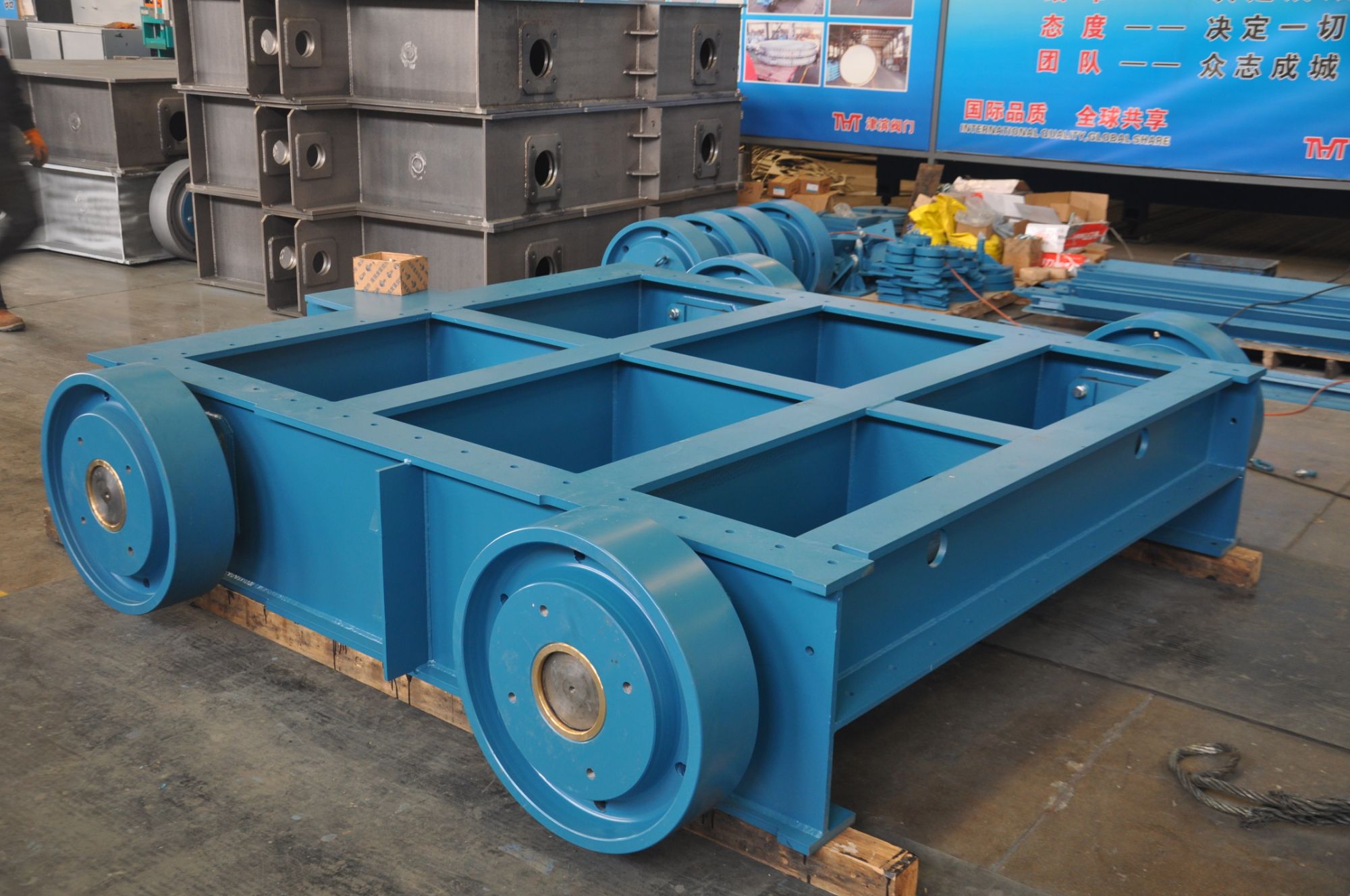
Every property has its own character, and a one-size-fits-all approach rarely delivers the right blend of protection and curb appeal. Instead of settling for mass-produced options, we focus on understanding how you use your space daily—whether it's a private residence needing discreet access control or a commercial site managing frequent deliveries. The goal is to design a system that integrates naturally with your existing architecture and landscaping, reinforcing boundaries without making them feel like fortresses.
From the choice of materials to the mechanics of operation, customization touches every detail. Powder-coated steel may suit a modern industrial aesthetic, while wrought iron adds a classic, ornate feel. But it goes beyond appearance: we configure opening speeds, access methods (keypad, remote, intercom), and safety sensors to match your routine. For challenging sites, like steep driveways or uneven ground, we adapt tracks or pivot points so the gate functions reliably year after year, regardless of weather.
Ultimately, a tailored gate solution should feel intuitive and almost invisible in its operation. That means engineering for quiet performance, integrating it with your smart home or business security system, and future-proofing for evolving needs. When the design truly fits your property, it not only secures but also enhances daily life, welcoming you home with a seamless entry that reflects your personal standards of style and safety.
Beyond the Barrier: Advanced Locking Mechanisms That Deter Intruders
Most people think of a lock as a simple barrier—a bolt that slides into a strike plate, or a padlock that clamps shut. But modern security demands far more than a hardened steel shackle. Intruders have become smarter, using everything from lock-picking tools to power drills, and today’s most effective locking mechanisms are designed to outwit them at every turn. These systems don’t just block entry; they sense, react, and make tampering an exercise in frustration.
One of the more intriguing developments is the integration of biomimetic principles into lock design. Inspired by the twisted, maze-like burrows of trapdoor spiders, some high-security cylinders now feature internal pathways that shift under pressure, guiding picks into dead-end channels. Others use magnetic pin systems that require a specific polarity pattern—something that can’t be felt or heard. When paired with materials like ceramic-composite detainer discs that shatter drill bits rather than yielding, the lock becomes a self-defending puzzle, not a passive obstacle.
Then there’s the quiet rise of electro-mechanical hybrids that sit in plain sight but stay virtually invisible to attackers. These locks may appear to be standard key-in-knob models, but they contain hidden RFID readers or capacitive touch sensors that only activate when a specific electronic token is nearby. They can also log every attempted access, silently alerting a property owner to suspicious patterns without a single flashing LED. The barrier itself becomes an intelligent sentinel, blending physical resilience with digital vigilance in a way that pure software systems cannot replicate.
Seamless Integration: Blending Security with Architectural Aesthetics
For too long, security features have been treated as necessary eyesores. Bulky cameras and imposing gates often clash with the very spaces they are meant to protect, undermining the visual harmony architects and designers work so hard to achieve. The modern approach flips this narrative, embedding safety into the skeleton of a building with such care that it becomes indistinguishable from deliberate design choices. From bollards that mimic sculptural elements to security glass layered with artistic film, every protective measure can serve a dual purpose—fortification that flatters.
This fusion demands more than just hiding technology; it requires a rethinking of how materials and forms collaborate. A reinforced wall need not appear brutal—innovative cladding can wrap it in warmth, while surveillance sensors tuck discreetly into lighting fixtures. Even perimeter defenses, like fencing, evolve into textural ribbons that guide movement rather than restrict it. By blurring the boundary between safety and style, these integrated solutions produce spaces that feel open yet instinctively secure, where protection never compromises the poetry of place.
The result is an environment where people move freely, seldom aware of the layers of security woven into their surroundings. This quiet confidence comes from a design philosophy that treats threat mitigation as one ingredient among many, not a dominant afterthought. It’s the art of making the robust invisible—a seamless skin where every line, texture, and surface contributes to both the conscience and the countenance of a building.
Durability in Design: Weather-Resistant Materials for Long-Term Protection
Choosing the right materials from the start defines how a structure weathers the years. Think beyond standard options—fiber cement siding, marine-grade stainless steel, and high-density polyethylene lumber offer a rugged composition that laughs at moisture, salt spray, and temperature swings. These materials aren’t just tough; they keep their shape and color without demanding constant upkeep, which changes the entire cost equation over a building’s life.
What often goes unnoticed is how modern polymers and advanced coatings are quietly revolutionizing weather resistance. Polyurea and silicone-based coatings create a seamless, waterproof skin that flexes with thermal movement instead of cracking. They bond at a molecular level, shielding concrete and metal from the corrosive effects of acid rain and UV radiation. When applied correctly, they form a barrier that active weather patterns simply can’t penetrate.
Long-term protection also hinges on how materials interact at connection points. Even the best siding will fail if fastened with ordinary steel screws that rust and bleed. Architects are now pairing galvanized or titanium fasteners with purpose-made rubber gaskets and drainage planes, ensuring that water is channeled away rather than trapped. It’s this attention to detail—specifying materials as a complete system—that yields structures which stand solid decade after decade, in any climate.
Smart Access Control: Modernizing Entry Systems for 24/7 Safety
Gone are the days when a simple lock and key defined building security. Today's smart access control merges biometric authentication, real-time monitoring, and adaptive permissions into one seamless frame—no more fumbling for fobs or worrying about lost keys after hours. It’s a shift from static barriers to dynamic, intelligence-driven checkpoints that learn occupant patterns and alert you the moment something looks off.
What makes these systems truly stand out is how they blend into daily operations without becoming intrusive. Frictionless entry via smartphone credentials or facial recognition lets authorized individuals pass through in milliseconds, while restricting tailgating and unusual access attempts. Managers get live dashboards showing exactly who’s on site, which zones are occupied, and how traffic ebbs throughout the night—turning raw data into actionable oversight.
Around-the-clock safety isn’t just about keeping intruders out; it’s also about giving occupants freedom to move confidently. Modernized entry systems pair sleek hardware with cloud-based controls, so security teams can remotely unlock doors for deliveries at 3 AM or instantly revoke permissions when a contractor’s job ends. That kind of responsiveness, paired with encrypted audit trails, builds a protective layer that evolves alongside your facility’s needs.
FAQ
Fixed roller gates are sturdy, ground-tracked barriers made of interlocking metal slats that roll up into a compact hood. They act as a robust physical deterrent, shielding entry points like storefronts or garage doors from forced entry while maintaining visibility and airflow.
A fixed roller gate offers a blend of open-air feel and serious protection. It lets you secure a driveway or patio without cutting off light or breeze, making it ideal for those who want to deter trespassers without feeling locked inside a dark box.
For businesses, fixed roller gates provide after-hours protection without sacrificing daytime curb appeal. They’re tough enough to withstand repeated impact attempts and can be customized with branding, all while keeping insurance premiums in check due to enhanced perimeter security.
Unlike solid shutters that block everything, fixed roller gates have see-through perforations or bar designs. This means they obstruct access but not sight, which is great for retail displays or areas where you want security without a fortress-like feel.
Focus on the material grade—galvanized steel resists rust, while aluminum is lighter. Look for a reliable locking mechanism like a shoot bolt, a manual override for power outages, and a smooth track system that won’t jam after years of use.
Absolutely, if you choose the right finish. Powder-coated or stainless steel gates stand up to rain, salt spray, and UV rays. Regular cleaning and occasional lubrication of moving parts keep them gliding smoothly no matter the climate.
Professional installation is strongly recommended. These gates are heavy and need precise alignment of tracks and tension settings. A poorly hung gate can become a safety hazard or fail exactly when you need it most.
Yes, many models can be paired with smart openers that connect to your Wi-Fi. You can check the gate’s status, receive alerts if it’s left open, and control it remotely—turning an old-school barrier into a connected security asset.
Conclusion
Fixed roller gates deliver a level of engineered resilience that far surpasses traditional swing or sliding barriers. Their rigid, continuous curtain design resists bending, prying, and impact, making forced entry considerably harder. This structural advantage is amplified by custom fabrication, allowing gates to be built to the exact dimensions and security profile of any property—whether a compact residential driveway or a sprawling commercial yard. Deep racking posts and reinforced tracks ensure smooth operation under heavy use, while material choice plays a pivotal role: marine-grade stainless steel, hot-dip galvanized finishes, and powder-coated aluminum defeat corrosion from rain, salt, and UV exposure. The result is a long-lasting perimeter that maintains its protective integrity year after year without warping or sagging, effectively blending brute strength with tailored precision.
Security, however, extends beyond the physical barrier. Advanced locking mechanisms integrated into the roller assembly—such as slam-lock deadbolts, anti-lift hoods, and internal ground locks—disable common bypass methods. Paired with smart access controls like encrypted keypads, biometric scanners, and app-based monitoring, the gate becomes an active component of a 24/7 safety ecosystem. Homeowners can grant temporary codes for deliveries, while businesses log all entry events in real time. Crucially, these technological layers are housed within designs that complement the surrounding architecture: sleek perforated patterns, subtle color matching, and recessed housing boxes ensure the gate enhances curb appeal rather than detracting from it. Together, these features forge a security solution that is unobtrusive yet formidable, balancing everyday convenience with an unyielding defense against intrusion.
Contact Us
Contact Person: Su Zhang
Email: [email protected]
Tel/WhatsApp: +86-25219206
Website: https://www.tht-valve.com/