

Best Air Bubble Detector for Reliable Fluid Line Monitoring
2026-09-28
Air bubble detectors are a critical safeguard in fluid delivery systems, yet many still fail silently—until a patient alarm triggers or a batch is ruined. If you're searching for a solution that actually holds up under real-world pressure, Siansonic has redefined what reliable monitoring should look like. In this post, we'll break down what separates a truly dependable detector from the rest, and why fluid line precision matters more than you think.
Ignoring Microbubbles Costs More Than You Think—Here's Why
The hidden expense of microbubbles rarely shows up on a single invoice. Instead, it leaks into your system through accelerated equipment wear, inconsistent product quality, and repeated rework cycles. Every tiny air pocket that survives filtration creates microscopic voids in coatings, adhesives, or medical formulations—voids that later become points of failure under stress, temperature shifts, or chemical exposure. What looks like a minor oversight during mixing or dispensing quietly multiplies into warranty claims, batch rejections, and unexpected downtime.
Consider the labor hours spent troubleshooting defects that only appear after curing or setting. Technicians chase pressure fluctuations, adjust nozzle settings, and recalibrate sensors while the real culprit—entrained gas—remains invisible. Each failed trial run consumes raw materials, energy, and operator attention that could have gone toward productive output. Over a quarter, these fragmented costs compound into a figure that dwarfs the initial investment in proper degassing equipment or process redesign.
There's also the reputational cost that never appears in a spreadsheet. Customers remember the batch that failed in their application, not the three that worked perfectly. In industries where purity and consistency are non-negotiable—pharmaceuticals, electronics, high-performance coatings—a single microbubble-related defect can trigger audits, requalification, or loss of a long-term contract. The real price of ignoring microbubbles is paid in trust, and that's the most expensive currency of all.
Ultrasonic vs. Optical Detection: What Actually Works in Turbid Fluids
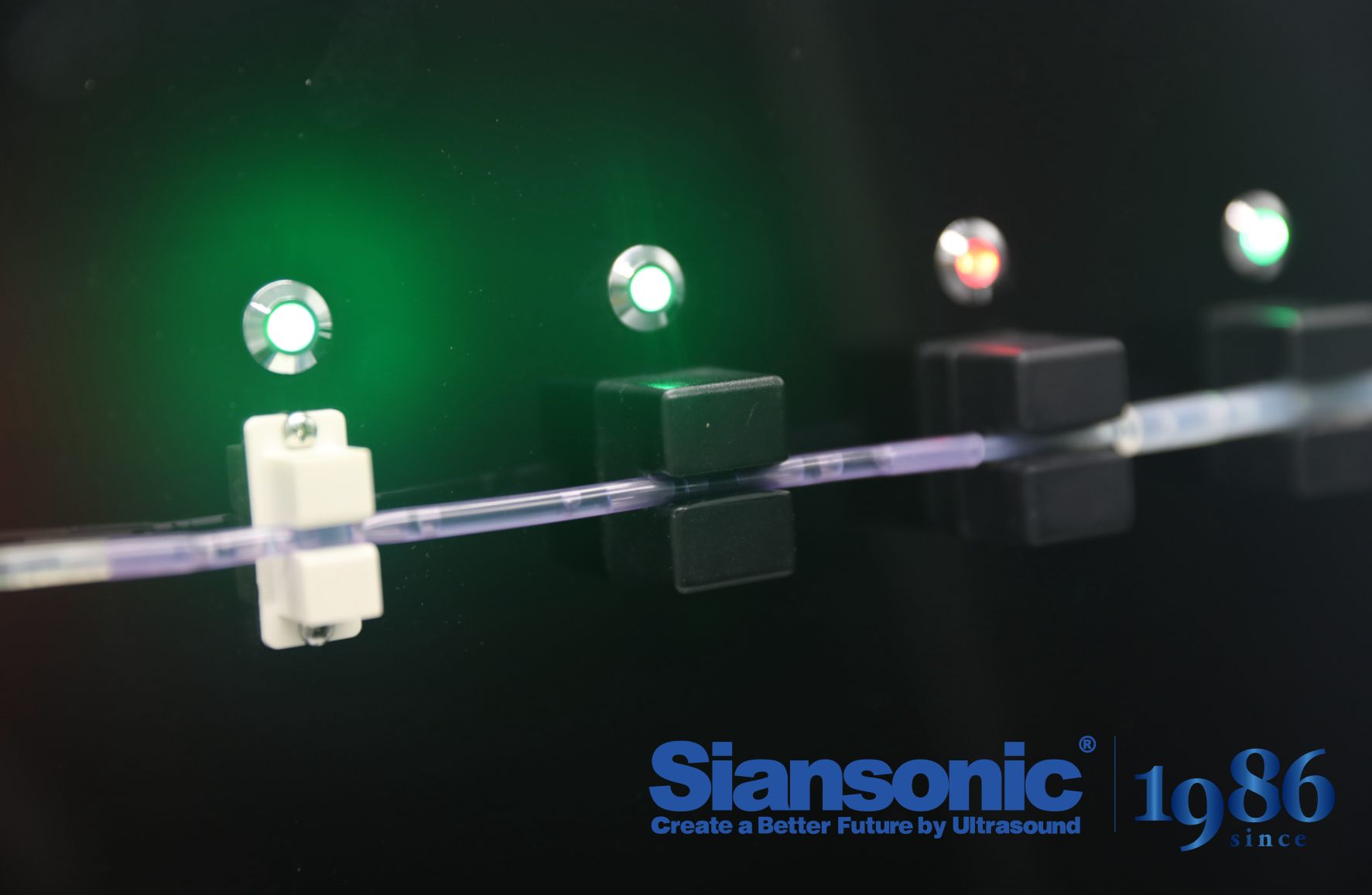
In most industrial fluid systems, turbidity is more than just a visual nuisance—it fundamentally changes how sensors behave. Optical methods, for example, rely on light passing through a medium and returning a measurable signal. But once suspended solids, emulsified droplets, or biological particulates enter the picture, photons start scattering in every direction. The result is often a noisy, unstable reading that drifts as particle density changes. Some operators try to compensate with higher-intensity LED sources or narrower beam angles, but those fixes rarely hold up when the fluid shifts from slightly hazy to completely opaque.
Ultrasonic detection sidesteps this entire problem by ignoring light altogether. It sends high-frequency sound waves through the liquid and measures how they behave—whether that's velocity, attenuation, or reflection from a target. Sound doesn't care if the fluid looks like coffee, mud, or diluted latex; it keeps propagating as long as there's a continuous acoustic path. That's why ultrasonic level sensors, flow meters, and concentration monitors often become the default choice in wastewater treatment, mining slurry lines, paint mixing, or fermentation broths. The readings stay consistent even when optical sensors would have already given up.
There's a trade-off, of course. Ultrasonic equipment tends to be less sensitive to very fine compositional changes that optical sensors can sometimes pick up—like a subtle color shift indicating a trace contaminant. And ultrasonic signals can be affected by temperature gradients or aeration in ways that differ from optical interference. But for the core task of reliably detecting an interface, measuring a level, or monitoring flow in genuinely dirty fluids, the verdict from field experience is fairly clear: ultrasonic technology works where optical technology merely struggles. The choice isn't about which method is superior in a lab; it's about which one still gives you a usable signal when the fluid turns opaque.
How to Read a Bubble Detector's Specs Without the Marketing Hype
Most datasheets lead with a single sensitivity number, but that figure usually comes from ideal lab conditions. Temperature affects the superheated liquid inside a bubble detector much more than the brochure lets on. If you plan to use it in a cold basement or a hot equipment room, ask for the sensitivity curve across a realistic temperature range instead of trusting the headline value.
The “zero maintenance” claim often hides the fact that some units need periodic visual inspection for pre-existing bubbles. A detector that sits on a shelf for months can develop spontaneous nucleation, especially after rough shipping. Look for specs on false positive rate after storage and transport simulation, not just fresh-out-of-the-box performance.
Another number worth ignoring is the maximum measurable dose. In practice, you want to know the linear range where the bubble count actually tracks exposure reliably. Marketing sheets like to stretch that range by using log scales or averaging. Ask for the raw count-to-dose conversion table and check whether the error bars stay under 20 percent across the range you care about.
Placement and Tubing Choices That Sabotage Even Premium Sensors
A premium sensor can only report what its installation lets it see. Mounting a flow meter just after an elbow or a partially open valve strips away any meaningful velocity profile, sending bursts of turbulence across the sensing element. The electronics may be flawless, but the raw signal becomes noise. Even a top-tier pressure transducer placed below a process line with no drip leg will eventually fill its diaphragm cavity with condensate, shifting zero and damping response.
Tubing choices are often the silent killer. Long runs of small-bore impulse line turn a fast process change into a slow, attenuated signal at the sensor. Soft polymer tubing expands slightly under pressure and absorbs pulsations; the sensor never sees the true spikes. In analytical loops, using clear vinyl for oxygen-sensitive samples lets ambient oxygen migrate inward, so a dissolved oxygen probe reads high no matter how well it was calibrated.
One of the most common field finds is a sensor tapped into a dead leg or a bypass that rarely flows. The transducer sits at the end of a stagnant branch, measuring yesterday's process rather than today's. When you pair that with a missing or cracked check valve, backflow can contaminate the reference side. The result is a drift that no degree of sensor quality can fix, because the problem is outside the instrument.
False Alarms Are a Design Flaw, Not an Inevitability
Many security systems ship with default sensitivity settings that treat every unexpected motion as a threat. The result is a constant stream of alerts for shadows, pets, or passing cars. This isn't an unavoidable consequence of sensing technology; it's a decision made during development to prioritize catching every possible event over filtering out noise. A well-designed system would learn from its environment and adjust thresholds accordingly.
Another overlooked factor is the lack of context awareness. A camera pointed at a driveway doesn't need to alert when leaves blow across the frame, yet many systems do exactly that. Incorporating simple rules—like only triggering after sustained movement or when an object crosses a defined zone—would eliminate a large portion of false alarms. These are straightforward design choices, not technical impossibilities.
Ultimately, false alarms erode user trust. People start ignoring notifications or disable the system entirely, which defeats its purpose. Treating false alarms as a design flaw means accepting responsibility for the user experience and actively working to reduce noise through smarter algorithms, better sensor placement guidance, and user feedback loops.
A 10-Minute Monthly Check That Prevents Most Sensor Failures
Set a recurring reminder on your phone for the first Saturday of every month. Grab a can of compressed air, a soft microfiber cloth, and a small flashlight. Walk to each sensor you rely on—motion detectors, door contacts, temperature probes, pressure transducers, or cameras. The goal isn't deep maintenance; it's catching the early signs before they become expensive callouts.
For optical sensors, blow out dust from the lens and housing with short bursts. Wipe the surface gently—never use Windex or anything ammonia-based, as it clouds plastic covers over time. Check that the mounting bracket hasn't loosened from vibration or temperature swings. A sensor tilted by half a degree can shift its detection zone enough to miss events or trigger false alarms.
Next, inspect wiring and connections. Look for corrosion on terminals, frayed insulation, or moisture inside junction boxes. Tighten screw terminals with a screwdriver—not your fingers—to ensure a solid contact. If a sensor runs on batteries, swap them once a year regardless of reported level. End the check by triggering each sensor manually: walk through a motion zone, open a door, block a beam. Log any odd behavior in a simple notes app. Ten minutes now beats a midnight failure later.
FAQ
A dependable unit catches tiny, intermittent air pockets without reacting to normal flow turbulence. Look for adjustable sensitivity, a fast response time under a millisecond, and solid repeatability across temperature shifts. The housing and sensor face also need to resist the specific fluid — saline, reagents, or fuel — without degrading or clouding over.
Ultrasonic sensors work through many opaque or colored tube walls and don't care about fluid clarity, which helps with whole blood or dark media. Optical types are simpler and often cheaper, but they need a relatively clear tube and fluid path. If your line has frequent condensation or slight misalignment, ultrasonic usually tolerates that better.
Some can, but it depends on the clamp design and the sensing method. A well-designed clamp-on detector with exchangeable inserts or a wide acoustic window can switch from silicone to PVC or from 1/16 inch to 1/4 inch without a full recalibration. Verify that the manufacturer specifies the exact wall thickness and durometer range; guessing here leads to missed bubbles.
The main ones are dry line startup, air entrainment from a loose fitting, and micro-bubble accumulation at tubing bends. A good detector not only flags the bubble but does it early enough to stop a pump or divert flow before the air reaches a critical point. It should also ignore transient vibration from peristaltic pumps.
Most industrial and medical detectors have a simple open-collector or relay output, plus an analog signal or RS-485 option. If your system already accepts a digital input or 4-20 mA, you can often wire it directly. Just check whether the detector latches the alarm or self-resets after the bubble passes, because that affects your PLC logic.
For IV lines or bioreactor feed lines, you want a detector that can flag a single bubble as small as 50 to 100 microliters, with a response fast enough to stop flow within a few milliseconds. Above that, you risk false positives from normal pump pulsation. Adjustable gain or a teach mode helps you tune out background noise without hiding real bubbles.
The biggest one is leaving a gap between the tubing and the sensor cradle, or forcing a tube that is too large or too stiff. Another is placing the detector too close to a peristaltic pump, where the tube flexes continuously. Keep the tubing straight and fully seated, and avoid cable strain that pulls the sensor out of alignment.
Clamp-on sensors are reusable and easy to move between lines, but they depend on consistent tube wall contact. In-line sensors deliver stronger signal and work with very low flow rates, but they add a sterile barrier or replacement cost. For high-value or single-use bioprocess lines, disposable in-line often wins; for long-term equipment, clamp-on is more practical.
Conclusion
A bubble detector that misses microbubbles can ruin a batch or damage downstream equipment long before anyone notices. The real cost shows up in wasted reagents, failed sterility tests, or a pump running dry overnight. Many teams assume any sensor will catch air, but small bubbles easily slip past a poorly chosen unit. When the fluid is cloudy or carries particles, optical sensors often struggle because they rely on light transmission through the line. Ultrasonic detectors handle turbid fluids far better—sound waves don't care about color or suspended solids, so they keep reading accurately when optics go blind. But don't trust a spec sheet that only lists "detection range" or "response time." Look for the minimum bubble volume at a given flow rate, the repeatability across temperature swings, and whether the output actually latches when air passes. Those details separate a sensor that works in your setup from one that only performs on a lab bench.
Mounting location matters as much as the sensor itself. Placing a detector right after a pump or on a curved section of tubing invites turbulence and false readings. Use a straight run of tubing, keep the sensor away from fittings that trap air, and match the tubing size to the sensor's specified inner diameter—mismatched walls dampen the signal. False alarms are not something you should have to live with; they usually come from poor grounding, electrical noise, or a sensitivity setting that was never tuned for the actual fluid. A good detector lets you filter out vibration spikes without losing real bubble detection. Finally, spend ten minutes a month checking the coupling surface for buildup, verifying the sensor is still snug against the tubing, and running a quick test with an empty line. That simple routine catches most failures before they turn into a costly shutdown.
Contact Us
Contact Person: Ivy Zhang
Email: [email protected]
Tel/WhatsApp: +86 1081502288
Website: https://www.siansonic.com/