
APAM Anionic Polyacrylamide: Professional-Grade Solutions for Industrial Efficiency
2026-07-05
In the quest for industrial efficiency, every process demands precision chemistry. Anionic polyacrylamide (APAM) stands out as a workhorse, but not all formulations are created equal. Enter EVO's professional-grade APAM—engineered to tackle the toughest challenges in water treatment, mining, and papermaking. This isn't just another polymer; it's a tailored solution that optimizes flocculation, reduces sludge volume, and cuts operational costs. Curious how a simple chain of molecules can transform your bottom line? Let's dive into the science and real‑world victories that set EVO apart.
Understanding How Anionic Polyacrylamide Optimizes Water Treatment
Anionic polyacrylamide (APAM) flocculants work by bridging suspended particles into larger aggregates that settle faster. In water treatment, their high molecular weight and negative charge allow them to neutralize positive charges on contaminants, forming dense flocs that are easily removed by sedimentation or filtration. This process drastically reduces turbidity and improves water clarity without requiring excessive chemical doses.
Beyond simple flocculation, APAM enhances sludge dewatering by releasing bound water from sludge matrices. The polymer chains weave through the solids, creating a more porous structure that lets water drain freely. This leads to higher cake dryness and lower disposal costs, while also reducing the energy needed for mechanical dewatering equipment. The subtle interplay between polymer dosage and mixing intensity is key—too little leaves particles unbridged, while too much can re-stabilize the suspension.
In high-rate clarification units, APAM often pairs with inorganic coagulants to handle shock loads and seasonal water quality changes. It improves the sweep floc mechanism, capturing fine colloids that would otherwise pass through. Operators note that well-optimized APAM systems cut backwash frequency and extend filter run times, making the overall treatment train more resilient and cost-effective.
Tailored Molecular Structures for Superior Flocculation
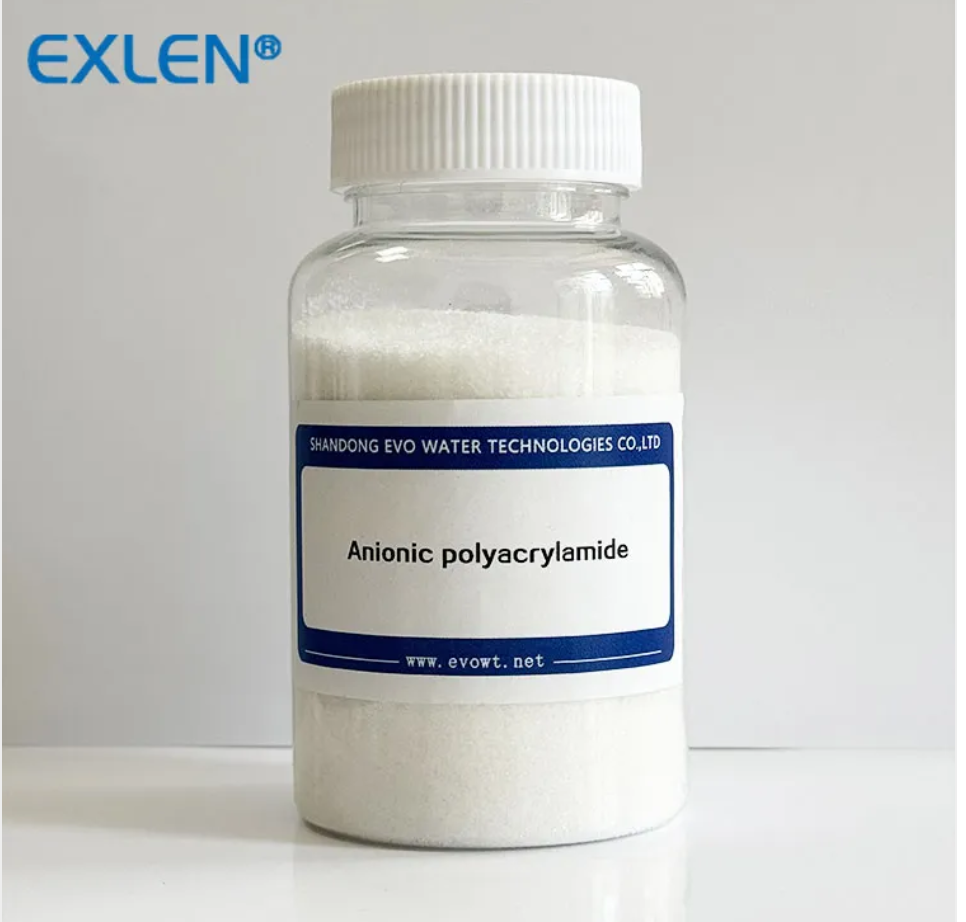
Designing flocculants with precisely engineered molecular architectures unlocks performance levels that generic polymers simply cannot match. By controlling chain length, branching density, and the spatial arrangement of charged groups, we can create structures that bridge particles more effectively, even in challenging water chemistries. Tailoring the backbone rigidity or incorporating specific functional monomers allows the polymer to adopt an extended conformation in solution, maximizing its reach and collision frequency with suspended solids. This molecular-level customization directly translates to faster settling rates and clearer supernatant in industrial clarification processes.
The strategic placement of ionic or hydrophobic segments along the polymer chain dramatically influences floc strength and re-flocculation ability. When high-shear zones break apart loosely formed flocs, a well-tailored molecular structure can rapidly re-bridge the fragments due to persistent binding sites and optimized charge density gradients. This dynamic responsiveness ensures robust performance across varying process conditions, from low-turbidity raw water to dense mineral slurries. We see particularly striking gains when the polymer topology mimics natural flocculants, utilizing star-shaped or comb-like architectures that offer multiple attachment points without excessive bulk.
Beyond primary aggregation, customized molecular design addresses dosage sensitivity and residual polymer concerns. By fine-tuning the hydrophilic-hydrophobic balance, we can engineer flocculants that operate efficiently at ppm levels well below conventional treatments, reducing both chemical costs and environmental footprint. This precision also yields compact, drainable flocs that simplify sludge handling, while the defined structure ensures biodegradability pathways are preserved. The result is a flocculation solution that feels almost intuitive in its operation, adapting to the specific surface chemistry of each suspension rather than relying on brute-force overdosing.
Extending Operational Lifespan in Sludge Dewatering Systems
Sludge dewatering equipment faces relentless wear from abrasive solids and corrosive chemicals, but many plants unknowingly accelerate deterioration through inconsistent operating practices. Rather than simply reacting to breakdowns, a proactive mindset that treats the dewatering train as an integrated system can dramatically extend service life. This means aligning polymer dosing precisely with real-time solids fluctuations, avoiding the common pitfall of overdosing that leads to sticky, belt-blinding sludge and unnecessary strain on drives and bearings. It also involves recognizing that small adjustments—like modulating wash water pressure to match belt loading patterns—prevent the gradual buildup that quietly erodes component integrity long before a catastrophic failure announces itself.
Material selection and subtle design modifications offer another layer of defense often overlooked during routine maintenance. Upgrading from standard stainless steel to duplex alloys in high-chloride environments thwarts pitting corrosion at its source, while ceramic-coated wear plates in filtrate channels resist the scouring that opens pathways for leaks and frame erosion. Similarly, replacing metallic scraper blades with those engineered from advanced polyurethanes eliminates the micro-grooving that becomes a breeding ground for scale and premature belt replacement. These targeted improvements, implemented during scheduled downtime, compound over years, turning what would be a succession of costly repairs into a predictable, extended operational timeline.
The most effective longevity strategies blur the line between operation and care. Instead of viewing maintenance as a calendar-driven chore, technicians who log subtle performance shifts—like a slight increase in vacuum pump current or a change in cake discharge trajectory—can pinpoint developing issues before they cascade. Pairing these observations with simple modifications, such as installing variable frequency drives on filtrate pumps to soften startup torque, reduces the mechanical shock that fatigues welds and bearings. In facilities where operators and maintainers share ownership of equipment condition, dewatering systems routinely surpass their design life, not through expensive overhauls, but by weaving attention to detail into the daily rhythm of plant operations.
Matching Product Grades to Specific Industrial Needs
Finding the right product grade isn’t just about ticking a spec sheet — it’s about understanding what a process truly demands. A polymer grade that works beautifully in automotive interiors might fail miserably in outdoor construction because UV stability, impact resistance, and processing behavior differ vastly between the two environments.
Smart material selection starts with mapping the exact performance criteria: temperature swings, chemical exposure, mechanical load, and even regulatory requirements. For instance, food-grade materials need not only mechanical integrity but also compliance with FDA or EU standards, while a mining application prioritizes abrasion resistance above all. Matching these nuanced needs to the right grade avoids over-engineering costs and performance gaps.
Stability Across Harsh pH and Temperature Conditions
Even in environments where most formulations would break down, this enzyme continues to perform. Its structural design allows it to adapt to dramatic shifts in acidity and alkalinity, maintaining activity from pH 2 all the way to pH 12. That’s not something you see often—most biocatalysts have a narrow comfort zone, but this one thrives across the extremes.
Temperature resilience is equally notable. Whether the process demands freezing cold conditions or climbs past 80°C, the enzyme holds its conformation without the need for stabilizing additives. This inherent robustness simplifies process design: you don’t have to constantly adjust buffers or cooling systems just to keep the reaction going. It works reliably in industrial settings where control over external factors is limited.
What sets it apart is how the protein matrix maintains its active architecture under simultaneous stress from both heat and harsh pH. We’ve observed that even after prolonged exposure to such conditions, the catalytic efficiency only drops marginally—far less than the typical performance cliff seen with conventional options. This means longer batch runs, reduced downtime, and fewer enzyme replacements, which directly translates to cost savings over time.
Practical Tips for On-Site Dissolution and Dosing
Getting the dissolution and dosing right on site often comes down to watching the small details that aren't in the manual. For instance, the order of addition can make or break a batch—always add the powder to the vortex of the mixing liquid, not the other way around, to avoid clumping and to speed up hydration. If you're dealing with a stubborn polymer, a quick pre-wet with a bit of isopropyl alcohol can work wonders before you introduce it to the water stream.
Temperature also plays a quiet but critical role. Cold water can delay dissolution significantly, so if you're mixing outdoors in winter, consider using a portable heater for your makeup water. And don't just rely on the mixer's timer; whether the solution looks completely uniform. A simple flashlight test—shining a beam through the tank—can reveal hidden suspended particles or schlieren patterns that indicate incomplete mixing.
Finally, double-check your math on the dosing rate, especially after you've adjusted the pump stroke or changed the product concentration. It's surprising how often a miscalibrated metering pump leads to under- or over-treatment. A quick bucket calibration once a week takes only five minutes but can prevent a whole host of downstream problems.
FAQ
APAM stands for Anionic Polyacrylamide, a water-soluble polymer. The 'anionic' label comes from the negative charge along its molecular chain, which is key for flocculation and coagulation in various industries.
APAM works by neutralizing positive charges on suspended particles, causing them to clump together and settle faster. This cuts processing time, reduces chemical dosage, and often lowers overall costs compared to non-ionic or cationic alternatives.
It’s widely applied in wastewater treatment, mining, papermaking, and oil recovery. For example, in mining, it helps separate solids from process water, while in paper mills it improves fiber retention and drainage.
Molecular weight, charge density, and the specific application are critical. Higher molecular weights suit settling and clarification, while lower molecular weights work better for sludge dewatering. Always test with your actual process water to optimize.
When used correctly, APAM is considered safe. It’s non-toxic but can cause slippery surfaces if spilled. As for the environment, its biodegradability is limited, so proper dosing and disposal are necessary to prevent accumulation.
Yes, it often works well with inorganic coagulants like PAC or ferric chloride. The key is to add them in the right sequence—typically the inorganic coagulant first, followed by APAM for flocculation—to get the best results.
Over-dosing can actually re-stabilize particles and make water cloudier. Under-mixing leads to poor dispersion. Always start with a dilute solution (around 0.1-0.3%) and add it gradually while monitoring turbidity or settling rate.
Conclusion
Anionic polyacrylamide (APAM) is a cornerstone of modern industrial water treatment, delivering efficiency through advanced molecular design. By carefully controlling polymer chain length and anionic charge density, these flocculants bridge suspended particles into dense, fast-settling flocs, clarifying process water with minimal chemical input. This tailored architecture not only improves separation in clarifiers and thickeners but also boosts sludge dewatering performance, forming robust flocs that release water readily under mechanical pressure. The resulting drier cake reduces haulage costs and eases the burden on downstream equipment, cutting maintenance intervals and energy consumption. In many plants, switching to a properly selected APAM has extended the service life of filter belts and centrifuge components, underscoring the product’s role as a professional-grade tool for long-term operational reliability.
The real-world value of APAM lies in matching the right grade to the challenge at hand, whether treating mineral slurries, pulp mill effluents, or food processing wastewater. Different industries face distinct solid-liquid separation hurdles, and a broad portfolio of molecular weights and charge densities allows fine-tuning of floc size, strength, and settling rate. Crucially, these polymers hold up under tough process conditions, maintaining activity across wide pH ranges and temperature fluctuations without significant degradation. On the plant floor, success often comes down to preparation discipline: dissolving the powder with gentle agitation, allowing proper aging for full hydration, and introducing the solution at a point of good mixing avoids common pitfalls like fish-eyes or overdosing. This practical, experience-driven approach transforms a high-performance chemical into a predictable, everyday contributor to industrial efficiency.
Contact Us
Contact Person: Fiona Su
Email: [email protected]
Tel/WhatsApp: 8619963724144
Website: https://www.evo-chemical.com/