

380V Vibrator Motor Factory Supplying Durable Industrial Vibrators
2026-11-16
Behind every smooth-running industrial operation is a piece of equipment quietly doing the heavy lifting—often a vibrator motor that just won’t quit. When downtime isn’t an option, the search for a 380V unit that balances raw power with real durability can feel endless. Enter Guangling, a factory-direct supplier that strips away the middleman markup while keeping industrial vibrators built for the long haul. But what actually separates a forgettable motor from one that keeps your line moving months down the road? Let’s dig into the details before you commit to your next purchase.
Why 380V Vibrator Motors Keep Heavy-Duty Lines Moving
A 380V supply gives these motors the torque headroom that smaller control-voltage units simply can't match when hoppers pack with wet sand or crushed aggregate. The higher phase-to-phase voltage keeps current draw lower for the same mechanical output, so a 2.2kW unit doesn't brown out the panel every time the eccentric weights swing past center.
The real benefit shows up on long vibratory conveyors and screen decks. Lower current means thinner supply cabling and fewer voltage-drop headaches across a 60-metre run, while the motor still hammers at full amplitude. Maintenance crews notice the difference too: windings run cooler because I²R losses drop, and that translates into fewer rewinds on a 24-hour shift.
There's also a resilience angle. In plants where the grid sags under load, 380V motors ride through short dips better than 220V designs on the same mechanical load. The result is a vibratory line that keeps feeding crushers and packing stations without the nuisance trips that stall the whole downstream process.
Inside the Factory: How We Build for Continuous Vibration Stress
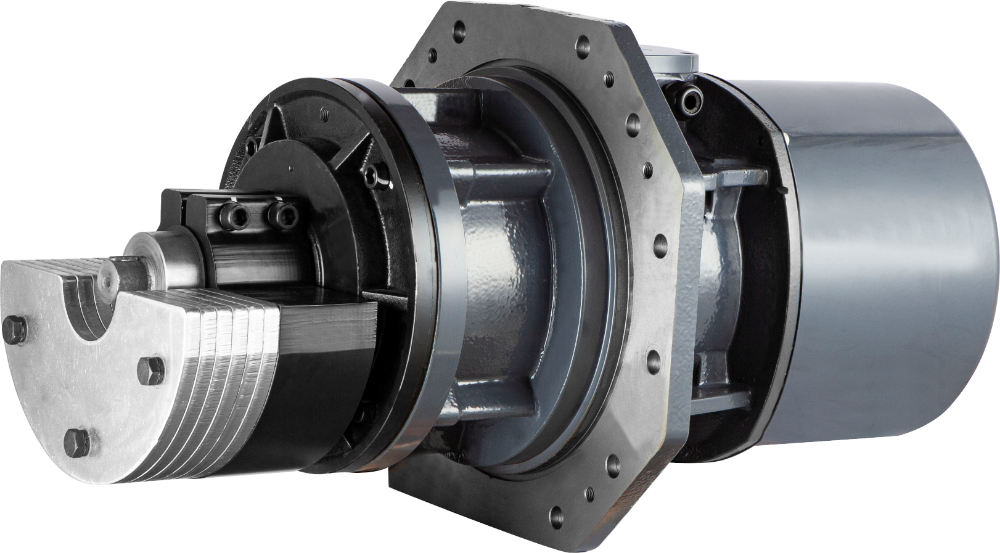
Walking the production floor, the hum of machinery isn't just background noise—it's the heartbeat of our vibration-testing philosophy. Every bracket, housing, and solder joint is designed not to survive a single shake, but to eat thousands of micro-oscillations a day without loosening its grip. We start with material selection: cold-rolled steel where flex matters, reinforced composites where weight is the enemy, and thread-locking compounds applied by robotic arms that never miss a bead.
What separates our line from a standard assembly is the deliberate torture before packaging. Each unit rides a shaker table for a full 48-hour cycle, hitting frequencies from 10 Hz up to 2 kHz, with accelerometers taped to critical seams. If a bolt backs out half a turn, the whole batch gets pulled—not for a band-aid fix, but for a root-cause teardown. That feedback loop runs straight back to the torque specs on the floor, so the next shift tightens smarter, not just harder.
The real trick is in the quiet corners: cable looms routed with deliberate slack to avoid fatigue cracks, potting compound poured into connector housings so pins can't fret against each other, and shock mounts tuned to the exact mass of the finished assembly. We don't build for the first day of vibration—we build for the ten-thousandth hour, when the machine is still humming and nothing has come loose.
Not All Industrial Vibrators Survive—Ours Are Made to Last
Most industrial vibrators fail early because they are built with thin castings, open bearings, and windings that can't handle dust or moisture. Once the housing cracks or the bearing seizes, the unit is done. Ours are different: the housing is thicker, the bearings are sealed and oversized for the load, and the motor windings get a double-dip varnish treatment. These changes sound simple, but they eliminate the three most common failure points we see in field returns.
We test every design on a shaker table running 24/7 for six weeks, cycling between -20°C and 60°C while blasting the unit with fine silica dust. If a bearing shows any play or the insulation resistance drops below 50 megohms, the design goes back to engineering. Few competitors run this kind of endurance test because it's time-consuming and expensive—but it's why our units keep running in cement plants and foundries where others quit after a few months.
The real proof is in the maintenance logs. A quarry in Ohio replaced three competitor units a year on their primary screen feed hopper; after switching to ours, they haven't touched the vibrator in four years. That's not luck—it's the result of using ductile iron instead of grey cast iron, a heavier eccentric shaft, and a terminal box that's actually sealed against washdown. When downtime costs more than the equipment, buying a vibrator that survives makes the decision easy.
Custom Voltage, Mounting, and Force: Built Around Your Setup
Most manufacturers make you adapt to their spec sheet. We flipped that. Tell us the voltage your line actually runs on—12V, 24V, 48V, or something in between—and the solenoid gets wound to match it, not the other way around. No more external converters, no more heat buildup from the wrong coil, no more derating at the edge of your tolerance band.
Mounting isn't an afterthought here. Whether you're bolting onto an extruded aluminum frame, threading into a manifold, or clamping around a pipe, the housing is machined to fit your existing geometry. Send us a sketch or a step file and we'll adjust the bracket, the port orientation, and even the connector location so the part drops in without re-routing hoses or cables.
Force curves are treated the same way. Need a soft start that ramps and a hard hold at the end of stroke? We can wind the coil and shape the plunger for that profile. If your application has a moving mass that changes, or a return spring that fights you, we'll tune the pull force at the working gap instead of quoting some ideal bench number that never happens in the field.
From Hoppers to Screens: Matching Vibrator Specs to Real Jobs
A hopper that struggles to discharge wet sand has almost nothing in common with a screen separating fine powders, yet both jobs get lumped under the word vibration. The hopper needs a low-frequency, high-amplitude punch to break bridges and ratholes. The screen wants a faster, smaller stroke to keep particles bouncing and passing through the mesh. Chasing a bigger force rating without matching the stroke character to the job usually makes the problem worse, not better.
Material behavior changes everything. Sticky or damp bulk solids in a bin demand sharper impacts and a wider amplitude range to overcome adhesion. Dry, free-flowing powders might only need a gentle nudge to prevent compaction. On a screen, fine particles respond to higher frequencies that multiply contact opportunities, while coarse granules often benefit from a slightly longer throw to help them flip and stratify. The mounting position and the stiffness of the hopper or screen body also shift how much of that rated force actually reaches the material.
Real matching starts with watching the flow failure, not the catalog. Note where the material hangs up, how the screen blinds, or when separation efficiency drops during a shift. Then pick a vibrator with adjustable frequency and force to run a field trial. Often a modest unit with the right mounting angle clears a bottleneck that a larger unit only aggravates through structural fatigue. The goal is to put just enough energy into the material to break its resistance, without rattling the equipment apart or causing fines to segregate.
The Real Cost of Downtime and How Durable Vibrators Prevent It
Every hour a production line sits idle drains more than just payroll. Missed shipments trigger penalty clauses, rush orders throw scheduling into chaos, and field service teams burn overtime on emergency repairs. The accounting department often sees only the surface number, but the real toll includes damaged customer trust, expedited freight charges, and the quiet resignation of operators tired of fighting the same failure points.
Durable vibrators break this cycle by surviving the conditions that kill ordinary units. Their hardened bearings, sealed housings, and oversized shafts tolerate dust, moisture, and constant vibration without seizing. When a standard unit fails every few thousand hours, a heavy-duty model can run for tens of thousands without attention. That difference means the line keeps moving through seasonal peaks, abrasive materials, and around-the-clock shifts.
Maintenance teams notice the change immediately. Instead of swapping out burned motors and rebuilding mounts, they schedule inspections at predictable intervals. Spare parts inventory shrinks, and the frantic phone calls to suppliers become rare. For plant managers, the payoff shows up as consistent output, fewer unplanned stops, and the ability to promise delivery dates without crossing fingers.
FAQ
The motors are built with reinforced bearings and high-temperature insulation, which lets them handle continuous operation in tough environments like mining screens or concrete compactors without overheating or premature wear.
Yes, we regularly adjust eccentric weight designs and foot or flange mounts to match specific equipment. Just share your operating voltage, frequency, and the material flow you need, and engineering will propose a layout.
Running at 380V typically reduces current draw for the same power output, so you can use lighter cabling and avoid voltage drop issues on longer runs. It’s a practical choice for plants with three-phase infrastructure.
Every unit is run for at least 30 minutes under load, with vibration amplitude and temperature recorded. We also do a high-potential test on windings to catch insulation weak points before the motor leaves the factory.
You’ll find them in aggregate screening, food processing hoppers, foundry shakeouts, and bulk material handling. Anywhere dry or damp material tends to bridge or stick, these motors help keep it moving.
The housing can be specified with IP65 sealing and epoxy-coated rotors. We also offer tropicalized insulation for humid environments, which extends winding life significantly.
For common sizes, we usually ship within 15 working days after deposit. Custom voltage or mounting changes may add a week, but we keep most components in stock.
Yes, we stock replacement bearings, shafts, and adjustable eccentric weights. Most parts ship within a few days, and we provide torque specs so your maintenance team can service the motor without special tools.
Conclusion
A 380V vibrator motor earns its place on the line only when it can shrug off the constant hammering that would crack a lesser housing or fry a standard winding. Inside our factory, every rotor is balanced after the eccentric weights are machined, and the bearings are sized for the side loads that come with running a hopper discharge or a screen deck day after day. We do not just stamp out a one-size-fits-all unit; voltage taps, mounting face patterns, and centrifugal force output are adjusted around the way your equipment actually operates. That is why these motors keep chutes flowing and separators shaking without the sudden stops that turn a minor repair into a stalled shift.
Downtime on a vibratory line is never just the cost of a replacement motor—it is the lost tonnage, the crew standing idle, and the overtime needed to catch up. A vibrator built for continuous vibration stress closes that gap. From bin activators to screeners, matching the right force and frequency to the job means the motor works within its design envelope instead of burning through bearings or snapping shafts. When you can specify the mounting, the voltage, and the force output before it ships, the unit arrives as a working part of your process, not a compromise bolted into place.
Contact Us
Contact Person: ZHUO
Email: [email protected]
Tel/WhatsApp: 86-576-86320988
Website: https://www.cnguangling.com